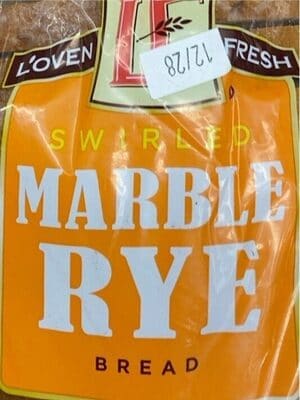
Breads
Aldi Marble Rye Bread
Score
- Ultra-processed
- High in salt
- Contains added sugars
- Contains seed oils
- No synthetic dyes
- Contains whole grains
Why it scores 28
Aldi Marble Rye Bread scores 28 out of 100 (Poor) under GoodSwap’s published rules. What moved the score most:
- minus 20 points Malt syrup: An added sugar. Strong
- minus 20 points Caramel color: The FDA says classes III and IV, which can contain 4-MEI, are the most commonly used food color additives by volume. Regulatory
- minus 18 points Ultra-processed (NOVA 4): Classified NOVA 4: made with industrial ingredients and additives. Strong
Every line of the math is on The Receipt below, with its evidence tier and sources.
Better sliced bread
-
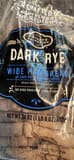 Dark Rye Wide Pan Bread Private Selection · 24 oz 680 g Not ultra-processed · No added sugars Score 79 out of 100 , 51 points higher
 -
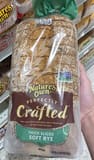 Perfectly Crafted Thick Sliced Soft Rye Bread Nature's Own · 22 oz Not ultra-processed · No malt syrup Score 67 out of 100 , 39 points higher
 -
 German Rye Bread Eurobake Less salt · No added sugars Score 73 out of 100 , 45 points higher
 -
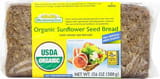 Sunflower Seed Rye Bread Mestemacher Not ultra-processed · Less salt Score 100 out of 100 , 72 points higher
 -
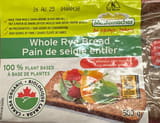 Whole rye Bread Mestemacher Gmbh · 500 g Not ultra-processed · Less salt Score 97 out of 100 , 69 points higher
The same kind of product, at least 10 points higher, sold in the US. Never paid placements.
The Receipt
Marble Rye Bread
Ingredients
- Malt syrup minus 20 points
- Caramel color minus 20 points
- Wheat gluten minus 2.5 points
- Soybean oil minus 1.5 points
- Calcium propionate minus 1.5 points
- Potassium sorbate minus 1.5 points
Processing
- Ultra-processed (NOVA 4) minus 18 points
- 2 kinds of ultra-processing markers minus 1.5 points
Nutrition per 100 g
- Salt 1.7 g / 100 g minus 5 points
- Energy 263 kcal / 100 g minus 1 points
100 − 72.5 = 27.5 → 28
Can’t score above 79. Contains malt syrup, an ingredient of high concern. [1][2][3][4][5][6][7]
Can’t score above 79. High in salt (above the front-of-pack "high" level). [17]
Nutrition per 100 g
| Energy | 263 kcal |
|---|---|
| Fat | 2.6 g |
| Carbohydrates | 50 g |
| Sugars | 2.6 g |
| Added sugars | 0 g |
| Fiber | 2.6 g |
| Protein | 7.9 g |
| Salt | 1.7 g |
Serving: 1 slice (38 g)
Ingredients
- unbleached enriched flour
- barley malt (high concern)
- niacin
- iron
- thiamine mononitrate
- riboflavin
- folic acid
- water
- rye flour
- yeast
- wheat gluten
- salt
- soybean oil
- caraway seeds
- whole rye flour
- caramel color (high concern)
- calcium propionate
- potassium sorbate
- wheat starch
- sesame
- ascorbic acid
- enzymes
Label text, as published
unbleached enriched flour, barley malt, niacin, iron, thiamine mononitrate, riboflavin, folic acid, water, rye flour, yeast, wheat gluten, salt, soybean oil, caraway seeds, whole rye flour, caramel color, calcium propionate, potassium sorbate, wheat starch, sesame, ascorbic acid, enzymes
Allergens and diets
Contains: Soy, Wheat, Gluten, Sesame
- Vegan
- Vegetarian
- Not gluten-free
- Palm-oil-free
Always check the package: recipes change.
More breads on GoodSwap
-
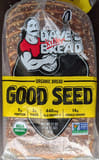 Organic Bread Good Seed Dave's Killer Bread · 27 oz Ultra-processedContains added sugarsCertified organicContains whole grains Score 42 out of 100 Okay
 -
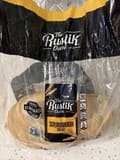 Sourdough Bread The Rustik Oven · 1 lb/454 g Ultra-processedSeed-oil free Score 73 out of 100 Good
 -
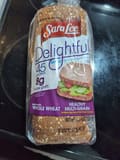 Delightful Bread Sara Lee · 567 g Ultra-processedContains non-nutritive sweetenersContains added sugarsContains emulsifiers studied for gut effects Score 23 out of 100 Poor
 -
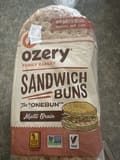 Multi Grain Sandwich Buns Ozery · 21 oz Ultra-processedContains added sugarsContains seed oilsContains whole grains Score 57 out of 100 Okay
 - Organic Multigrain Sprouted Wheat Bread Silver Hills Sprouted Bakery · 24 oz Contains added sugarsCertified organicContains whole grains Score 62 out of 100 Good
-
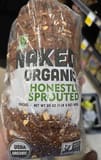 Honestly Sprouted Naked Bread · 567 g Ultra-processedContains added sugarsContains palm oilSeed-oil free Score 35 out of 100 Poor
More from Aldi
Sources
-
Guideline: sugars intake for adults and children
“In both adults and children, WHO recommends reducing the intake of free sugars to less than 10% of total energy intake”
who.int
-
Dietary Guidelines for Americans, 2025–2030
“Limit foods and beverages that include artificial flavors, petroleum-based dyes, artificial preservatives, and low-calorie non-nutritive sweeteners.”
cdn.realfood.gov
-
Added and free sugars should be as low as possible
“Sugar consumption is a known cause of dental caries.”
efsa.europa.eu
-
Questions & Answers About 4-MEI
“Based on current science, the FDA has no reason to believe that there are any immediate or short-term health risks presented by 4-MEI at the levels expected in food.”
fda.gov
-
Agents Classified by the IARC Monographs, Volumes 1–142 (List of Classifications)
monographs.iarc.who.int
-
Proposition 65 List of Chemicals Known to the State to Cause Cancer or Reproductive Toxicity
“The date refers to the initial appearance of the chemical on the list.”
oehha.ca.gov
-
“replacement of saturated fat in the diet with linoleic acid effectively lowers serum cholesterol but does not support the hypothesis that this translates to a lower risk of death from coronary heart disease or all causes.”
doi.org
-
“These data provide support for current recommendations to replace saturated fat with polyunsaturated fat for primary prevention of CHD.”
doi.org
-
11. List of Permitted Preservatives (Lists of Permitted Food Additives)
“B.2 Butylated Hydroxyanisole n/a (a) Active dry yeasts (a) Preservative (a) 1,000 ppm n/a”
canada.ca
-
“By applying a default uncertainty factor of 100, the Panel established a group ADI expressed as 11 mg sorbic acid/kg bw per day for sorbic acid (E 200) and its potassium salt (E 202).”
doi.org
-
21 CFR 182.3640 Potassium sorbate
ecfr.gov
-
“For adults, WHO recommends less than 2000 mg/day of sodium (equivalent to less than 5 g/day salt), or just under a teaspoon.”
who.int
-
“Table 3: Criteria for drinks (per 100ml)”
assets.publishing.service.gov.uk
-
“Greater exposure to ultra-processed food was associated with a higher risk of adverse health outcomes, especially cardiometabolic, common mental disorder, and mortality outcomes.”
doi.org