Wheat breads
Nature's Own Enriched Bread
40 oz/2.5 lb/1.13 kg
Score
- Ultra-processed
- Contains added sugars
- Contains emulsifiers studied for gut effects
- Contains seed oils
- Contains whole grains
Why it scores 30
Nature's Own Enriched Bread scores 30 out of 100 (Poor) under GoodSwap’s published rules. What moved the score most:
- minus 20 points Honey: An added sugar. Strong
- minus 20 points Sugar: An added sugar. Strong
- minus 18 points Ultra-processed (NOVA 4): Classified NOVA 4: made with industrial ingredients and additives. Strong
Every line of the math is on The Receipt below, with its evidence tier and sources.
Better sliced bread
-
 White Enriched Bread Kroger Not ultra-processed · No gut-studied emulsifiers Score 72 out of 100 , 42 points higher
 -
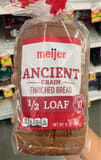 Ancient grain enriched bread Meijer · 12 oz Not ultra-processed · No honey Score 68 out of 100 , 38 points higher
 -
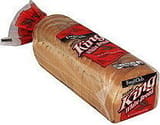 Enriched king white bread Food Club · 20 oz Not ultra-processed · No honey Score 66 out of 100 , 36 points higher
 -
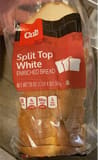 Enriched white bread CUB · 20 oz Not ultra-processed · No honey Score 66 out of 100 , 36 points higher
 -
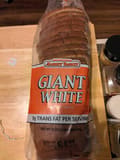 Giant White Enriched Bread Market Basket · 22 oz Not ultra-processed · No honey Score 63 out of 100 , 33 points higher
The same kind of product, at least 10 points higher, sold in the US. Never paid placements.
The Receipt
Enriched Bread
Ingredients
- Honey minus 20 points
- Sugar minus 20 points
- Wheat gluten minus 2.5 points
- Soybean oil minus 1.5 points
- Mono- and diglycerides minus 1.5 points
- Calcium phosphate minus 1.5 points
- Soy lecithin minus 0.5 points
Processing
- Ultra-processed (NOVA 4) minus 18 points
- 2 kinds of ultra-processing markers minus 1.5 points
Nutrition per 100 g
- Sugars 7.7 g / 100 g minus 3 points
- Salt 1.2 g / 100 g minus 3 points
- Energy 269 kcal / 100 g minus 1 points
- Fiber 3.8 g / 100 g plus 2 points
- Protein 11.5 g / 100 g plus 2 points
100 − 70 = 30
Can’t score above 79. Contains honey, an ingredient of high concern. [1][2][3]
Nutrition per 100 g
| Energy | 269 kcal |
|---|---|
| Fat | 3.9 g |
| Saturated fat | 0 g |
| Trans fat | 0 g |
| Carbohydrates | 50 g |
| Sugars | 7.7 g |
| Added sugars | 4.5 g |
| Fiber | 3.8 g |
| Protein | 11.5 g |
| Salt | 1.2 g |
Serving: 0.9 ONZ (26 g)
Ingredients
- UNBLEACHED ENRICHED FLOUR (WHEAT FLOUR, MALTED BARLEY FLOUR, NIACIN, REDUCED IRON, THIAMIN MONONITRATE, RIBOFLAVIN, FOLIC ACID)
- WATER
- HONEY (high concern)
- SUGAR (high concern)
- WHEAT GLUTEN
- WHOLE WHEAT FLOUR
- RYE FLOUR
- WHEAT BRAN
- YEAST
- SOY FLOUR
- SALT
- SOYBEAN OIL
- MONOGLYCERIDES
- ENZYMES
- ASCORBIC ACID
- CULTURED WHEAT FLOUR
- VINEGAR
- CALCIUM SULFATE
- MONOCALCIUM PHOSPHATE
- SOY LECITHIN
- CALCIUM CARBONATE
Label text, as published
UNBLEACHED ENRICHED FLOUR (WHEAT FLOUR, MALTED BARLEY FLOUR, NIACIN, REDUCED IRON, THIAMIN MONONITRATE, RIBOFLAVIN, FOLIC ACID), WATER, HONEY, SUGAR, WHEAT GLUTEN, WHOLE WHEAT FLOUR, RYE FLOUR, WHEAT BRAN, CONTAINS 2% OR LESS OF EACH OF THE FOLLOWING: YEAST, SOY FLOUR, SALT, SOYBEAN OIL, MONOGLYCERIDES, ENZYMES, ASCORBIC ACID, CULTURED WHEAT FLOUR, VINEGAR, CALCIUM SULFATE, MONOCALCIUM PHOSPHATE, SOY LECITHIN, CALCIUM CARBONATE.
Allergens and diets
Contains: Soy, Wheat, Gluten
- Not vegan
- Not gluten-free
- Palm-oil-free
Always check the package: recipes change.
More wheat breads on GoodSwap
-
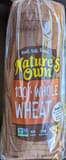 100% Whole Wheat Bread Nature's Own · 20 oz (567 g) Ultra-processedContains added sugarsContains seed oilsContains whole grains Score 59 out of 100 Okay
 -
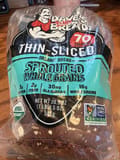 Thin-Sliced Organic Bread Sprouted Whole Grains Killer Bread · 581.0 g Ultra-processedContains added sugarsContains seed oilsCertified organic Score 40 out of 100 Okay
 -
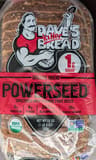 Powerseed Organic Bread Dave's Killer Bread · 25 oz Ultra-processedCertified organicContains whole grains Score 87 out of 100 Excellent
 -
 Sugar Free 100% Whole Wheat Sliced Wide Pan Bread Private Selection · 24 oz Ultra-processedHigh in saltContains non-nutritive sweetenersContains sugar alcohols Score 56 out of 100 Okay
 -
 Sandwich Thins Arnold · 12 oz/340 g Ultra-processedContains added sugarsContains emulsifiers studied for gut effectsSeed-oil free Score 37 out of 100 Poor
 -
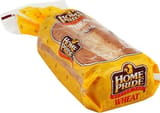 Wheat Enriched Bread Homepride · 20 oz/567 g Ultra-processedContains added sugarsContains emulsifiers studied for gut effectsContains seed oils Score 22 out of 100 Poor
More from Nature's Own
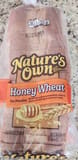
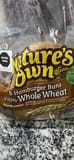
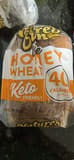
Sources
-
Guideline: sugars intake for adults and children
“In both adults and children, WHO recommends reducing the intake of free sugars to less than 10% of total energy intake”
who.int
-
Dietary Guidelines for Americans, 2025–2030
“Limit foods and beverages that include artificial flavors, petroleum-based dyes, artificial preservatives, and low-calorie non-nutritive sweeteners.”
cdn.realfood.gov
-
Added and free sugars should be as low as possible
“Sugar consumption is a known cause of dental caries.”
efsa.europa.eu
-
“replacement of saturated fat in the diet with linoleic acid effectively lowers serum cholesterol but does not support the hypothesis that this translates to a lower risk of death from coronary heart disease or all causes.”
doi.org
-
“These data provide support for current recommendations to replace saturated fat with polyunsaturated fat for primary prevention of CHD.”
doi.org
-
“This study found positive associations between risk of CVD and intake of five individual and two groups of food additive emulsifiers widely used in industrial foods.”
doi.org
-
Re-evaluation of mono- and di-glycerides of fatty acids (E 471) as food additives
“The available studies did not raise any concern with regard to genotoxicity.”
doi.org
-
EFSA issues new advice on phosphates
“We estimated that dietary exposure to phosphates may exceed the new ADI for infants, toddlers and children with average consumption of phosphates in their diet.”
efsa.europa.eu
-
“For adults, WHO recommends less than 2000 mg/day of sodium (equivalent to less than 5 g/day salt), or just under a teaspoon.”
who.int
-
“Greater exposure to ultra-processed food was associated with a higher risk of adverse health outcomes, especially cardiometabolic, common mental disorder, and mortality outcomes.”
doi.org
-
Dietary emulsifiers impact the mouse gut microbiota promoting colitis and metabolic syndrome
“carboxymethylcellulose and polysorbate-80, induced low-grade inflammation and obesity/metabolic syndrome in wild-type hosts and promoted robust colitis in mice predisposed to this disorder.”
doi.org
-
“Relative to control subjects, CMC consumption modestly increased postprandial abdominal discomfort and perturbed gut microbiota composition in a way that reduced its diversity.”
doi.org