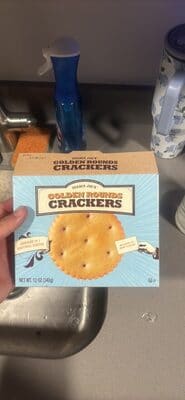
Crackers (Appetizers)
Trader Joe's Golden Rounds Crackers
12 oz
Score
- Ultra-processed
- Contains added sugars
- Contains seed oils
Why it scores 20
Trader Joe's Golden Rounds Crackers scores 20 out of 100 (Poor) under GoodSwap’s published rules. What moved the score most:
- minus 20 points Sugar: An added sugar. Strong
- minus 20 points Invert sugar: An added sugar. Strong
- minus 18 points Ultra-processed (NOVA 4): Classified NOVA 4: made with industrial ingredients and additives. Strong
Every line of the math is on The Receipt below, with its evidence tier and sources.
Better crackers
-
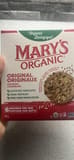 Original Crackers Mary's Organic · 6.5 oz (184 g) Not ultra-processed · No added sugars Score 98 out of 100 , 78 points higher
 -
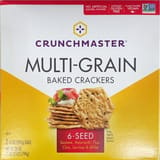 Multi-Grain Crackers 6-Seed Crunchmaster Not ultra-processed · No added sugars Score 93 out of 100 , 73 points higher
 -
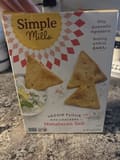 Veggie Flour Pita Crackers Himalayan Salt Simple Mills · 4.25 oz Not ultra-processed · No added sugars Score 79 out of 100 , 59 points higher
 -
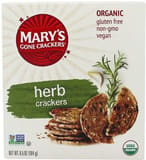 Herb Original Crackers Mary's Organic · 6.5 oz (184 g) Not ultra-processed · No added sugars Score 98 out of 100 , 78 points higher
 -
 Multi-Seed Crisps Crunchmaster · 4.5 oz/128 g No added sugars · No sugar Score 77 out of 100 , 57 points higher
The same kind of product, at least 10 points higher, sold in the US. Never paid placements.
The Receipt
Golden Rounds Crackers
Ingredients
- Sugar minus 20 points
- Invert sugar minus 20 points
- Malt syrup minus 10 points
Processing
- Ultra-processed (NOVA 4) minus 18 points
- 2 kinds of ultra-processing markers minus 1.5 points
Nutrition per 100 g
- Sugars 6.7 g / 100 g minus 3 points
- Saturated fat 1.7 g / 100 g minus 1 points
- Salt 1.3 g / 100 g minus 5 points
- Energy 467 kcal / 100 g minus 2 points
100 − 80.5 = 19.5 → 20
Can’t score above 79. Contains sugar, an ingredient of high concern. [1][2][3]
Can’t score above 79. High in fat (above the front-of-pack "high" level). [7]
Nutrition per 100 g
| Energy | 467 kcal |
|---|---|
| Fat | 23.3 g |
| Saturated fat | 1.7 g |
| Carbohydrates | 60 g |
| Sugars | 6.7 g |
| Added sugars | 6.7 g |
| Fiber | 0 g |
| Protein | 6.7 g |
| Salt | 1.3 g |
Serving: 9 crackers (30 g)
Ingredients
- unbleached enriched flour (wheat flour, niacin, reduced iron, thiamin mononitrate, riboflavin, folic acid)
- sunflower seed oil
- cane sugar (high concern)
- salt
- leavening (ammonium bicarbonate, sodium bicarbonate, monocalcium phosphate) (not recognized)
- invert sugar syrup (high concern)
- barley malt extract (high concern)
- natural flavor
- microbial enzymes
Label text, as published
unbleached enriched flour (wheat flour, niacin, reduced iron, thiamin mononitrate, riboflavin, folic acid), sunflower seed oil, cane sugar, salt, leavening (ammonium bicarbonate, sodium bicarbonate, monocalcium phosphate), invert sugar syrup, barley malt extract, natural flavor, microbial enzymes. contains: wheat.
Allergens and diets
Contains: Wheat, Gluten
- Not gluten-free
- Palm-oil-free
Always check the package: recipes change.
More crackers (appetizers) on GoodSwap
-
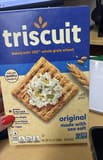 Original Made with Sea Salt Triscuit · 8.5 oz High in saltContains seed oilsNo additivesContains whole grains Score 79 out of 100 Good
 -
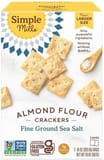 Almond Flour Crackers - Fine Ground Sea Salt Simple Mills · 2 × 10 oz No additives Score 79 out of 100 Good
 -
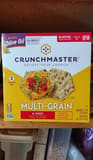 Crunchmaster Multi-Grain 6-Seed Crunchy Baked Rice Crackers Crunchmaster · 794 g Ultra-processedSeed-oil freeContains whole grains Score 76 out of 100 Good
 -
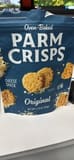 PARM CRISPS Original Cheese Snack Parm Crisps · 50 g High in saltHigh in saturated fat Score 75 out of 100 Good
 -
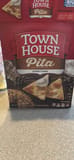 Pita Crackers Everything Town House · 9.5 oz Ultra-processedHigh in saltContains added sugarsContains seed oils Score 26 out of 100 Poor
 -
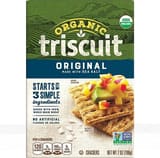 Original Crackers Triscuit · 7 oz Contains seed oilsCertified organicNo additivesContains whole grains Score 97 out of 100 Excellent
More from Trader Joe's
-
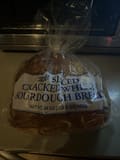 Cracked Wheat Sourdough Bread Trader Joe's · 24 oz Score 86 out of 100 Excellent
 -
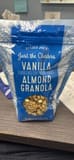 Vanilla Almond Granola Trader Joe's · 16 oz Score 22 out of 100 Poor
 -
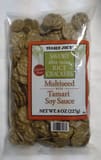 Savory thin mini rice crackers Multiseed with Tamari Soy Sauce Trader Joe's · 8 oz (227 g) Score 87 out of 100 Excellent
 -
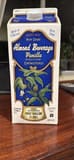 Almond Beverage Vanilla Unsweetened Trader Joe's Score 68 out of 100 Good
Sources
-
Guideline: sugars intake for adults and children
“In both adults and children, WHO recommends reducing the intake of free sugars to less than 10% of total energy intake”
who.int
-
Dietary Guidelines for Americans, 2025–2030
“Limit foods and beverages that include artificial flavors, petroleum-based dyes, artificial preservatives, and low-calorie non-nutritive sweeteners.”
cdn.realfood.gov
-
Added and free sugars should be as low as possible
“Sugar consumption is a known cause of dental caries.”
efsa.europa.eu
-
Saturated fatty acid and trans-fatty acid intake for adults and children: WHO guideline
“WHO recommends that adults and children reduce saturated fatty acid intake to 10% of total energy intake (strong recommendation).”
who.int
-
“For adults, WHO recommends less than 2000 mg/day of sodium (equivalent to less than 5 g/day salt), or just under a teaspoon.”
who.int
-
“Table 3: Criteria for drinks (per 100ml)”
assets.publishing.service.gov.uk
-
“Greater exposure to ultra-processed food was associated with a higher risk of adverse health outcomes, especially cardiometabolic, common mental disorder, and mortality outcomes.”
doi.org
-
“replacement of saturated fat in the diet with linoleic acid effectively lowers serum cholesterol but does not support the hypothesis that this translates to a lower risk of death from coronary heart disease or all causes.”
doi.org
-
“These data provide support for current recommendations to replace saturated fat with polyunsaturated fat for primary prevention of CHD.”
doi.org