Cheeses
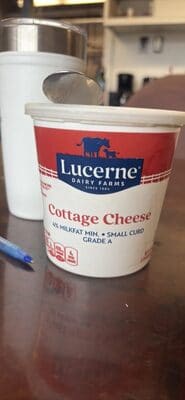
Lucerne Cottage Cheese
113 g
Score
- Ultra-processed
- Contains added sugars
- Contains emulsifiers studied for gut effects
- May contain traces of 1,4-dioxane
Why it scores 37
Lucerne Cottage Cheese scores 37 out of 100 (Poor) under GoodSwap’s published rules. What moved the score most:
- minus 20 points Dextrose: An added sugar. Strong
- minus 18 points Ultra-processed (NOVA 4): Classified NOVA 4: made with industrial ingredients and additives. Strong
- minus 7.5 points Carrageenan: In the NutriNet-Santé cohort, higher carrageenan intake was associated with a higher risk of type 2 diabetes; cause and effect is not established. Strong
Every line of the math is on The Receipt below, with its evidence tier and sources.
Better cottage cheese
-
 Cottage Cheese Daisy · 16 oz Not ultra-processed · No added sugars Score 93 out of 100 , 56 points higher
 -
 Cottage Cheese Good Culture · 16 oz Not ultra-processed · No added sugars Score 90 out of 100 , 53 points higher
 -
 2% Low-Fat Classic Cottage Cheese Good Culture Not ultra-processed · No added sugars Score 93 out of 100 , 56 points higher
 -
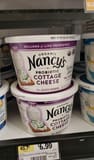 Organic Probiotic Cottage Cheese Whole Milk Nancy's · 454 g Not ultra-processed · No added sugars Score 95 out of 100 , 58 points higher
 -
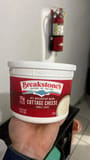 Cottage Cheese Small Curd 4% Milkfat Breakstone's · 24 oz Not ultra-processed · No added sugars Score 100 out of 100 , 63 points higher
The same kind of product, at least 10 points higher, sold in the US. Never paid placements.
The Receipt
Cottage Cheese
Ingredients
- Dextrose minus 20 points
- Carrageenan minus 7.5 points
- Polysorbate 80 minus 7.5 points
- Maltodextrin minus 1.5 points
- Guar gum minus 1.5 points
- Potassium sorbate minus 1.5 points
- Locust bean gum minus 0.5 points
Processing
- Ultra-processed (NOVA 4) minus 18 points
- 3 kinds of ultra-processing markers minus 3 points
Nutrition per 100 g
- Saturated fat 2.7 g / 100 g minus 1.5 points
- Salt 0.9 g / 100 g minus 3 points
- Protein 10.6 g / 100 g plus 2 points
100 − 63.5 = 36.5 → 37
Can’t score above 79. Contains dextrose, an ingredient of high concern. [1][2][3]
Nutrition per 100 g
| Energy | 106 kcal |
|---|---|
| Fat | 4.4 g |
| Saturated fat | 2.7 g |
| Trans fat | 0 g |
| Carbohydrates | 3.5 g |
| Sugars | 3.5 g |
| Added sugars | 0 g |
| Fiber | 0 g |
| Protein | 10.6 g |
| Salt | 0.9 g |
Serving: 112.99999999999999g
Ingredients
- CULTURED PASTEURIZED GRADE A FAT FREE MILK
- PASTEURIZED MILK AND CREAM
- SALT
- CULTURED GRADE A DAIRY SOLIDS (GRADE A WHEY, CITRIC ACID, LACTIC ACID CULTURE)
- DRY GRADE A WHEY
- MALTODEXTRIN
- CITRIC ACID
- GUAR GUM
- POTASSIUM SORBATE (PRESERVATIVE)
- CARRAGEENAN (moderate concern)
- LOCUST BEAN GUM
- POLYSORBATE 80 (moderate concern)
- DEXTROSE (high concern)
- CARBON DIOXIDE (TO HELP MAINTAIN FRESHNESS)
Label text, as published
CULTURED PASTEURIZED GRADE A FAT FREE MILK, PASTEURIZED MILK AND CREAM, SALT, CULTURED GRADE A DAIRY SOLIDS (GRADE A WHEY, CITRIC ACID, AND LACTIC ACID CULTURE), AND DRY GRADE A WHEY, MALTODEXTRIN, CITRIC ACID, GUAR GUM, POTASSIUM SORBATE (PRESERVATIVE), CARRAGEENAN, LOCUST BEAN GUM, POLYSORBATE 80, DEXTROSE, CARBON DIOXIDE (TO HELP MAINTAIN FRESHNESS).
Allergens and diets
Contains: Milk
- Not vegan
- Vegetarian
- Palm-oil-free
Always check the package: recipes change.
More cheeses on GoodSwap
-
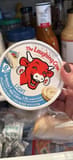 Light Laughing Cow Cheese Wedges The Laughing Cow · 8 × 19 g Ultra-processedHigh in saltHigh in saturated fat Score 66 out of 100 Good
 -
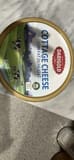 Low Fat Cottage Cheese Darigold · 113 g Ultra-processedContains emulsifiers studied for gut effectsMay contain traces of 1,4-dioxane Score 57 out of 100 Okay
 -
 String Cheese Frigo Cheese Heads · 28 g High in saltHigh in saturated fat Score 79 out of 100 Good
 -
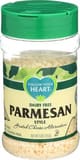 Parmesan Style Dairy-Free Cheese Follow Your Heart · 5 oz Ultra-processedHigh in saturated fatContains emulsifiers studied for gut effectsContains seed oils Score 51 out of 100 Okay
 -
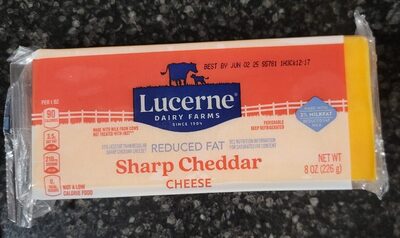 Sharp Cheddar Reduced Fat Cheese Lucerne · 28 g Ultra-processedHigh in saltHigh in saturated fatNo synthetic dyes Score 71 out of 100 Good
 -
 Montchevre, Fresh Goat Cheese Betin Inc. · 8 oz High in saturated fat Score 79 out of 100 Good
More from Lucerne
Sources
-
Guideline: sugars intake for adults and children
“In both adults and children, WHO recommends reducing the intake of free sugars to less than 10% of total energy intake”
who.int
-
Dietary Guidelines for Americans, 2025–2030
“Limit foods and beverages that include artificial flavors, petroleum-based dyes, artificial preservatives, and low-calorie non-nutritive sweeteners.”
cdn.realfood.gov
-
Added and free sugars should be as low as possible
“Sugar consumption is a known cause of dental caries.”
efsa.europa.eu
-
“We found direct associations between the risk of type 2 diabetes and exposures to various food additive emulsifiers widely used in industrial foods, in a large prospective cohort of French adults.”
doi.org
-
Dietary emulsifiers impact the mouse gut microbiota promoting colitis and metabolic syndrome
“carboxymethylcellulose and polysorbate-80, induced low-grade inflammation and obesity/metabolic syndrome in wild-type hosts and promoted robust colitis in mice predisposed to this disorder.”
doi.org
-
Re-evaluation of carrageenan (E 407) and processed Eucheuma seaweed (E 407a) as food additives
“However, the Panel noted uncertainties as regards the chemistry, the exposure assessment and biological and toxicological data.”
doi.org
-
Agents Classified by the IARC Monographs, Volumes 1–142 (List of Classifications)
monographs.iarc.who.int
-
Scientific Opinion on the re-evaluation of polysorbates (E 432–436) as food additives
“There is no concern regarding genotoxicity, carcinogenicity or developmental toxicity.”
doi.org
-
“By applying a default uncertainty factor of 100, the Panel established a group ADI expressed as 11 mg sorbic acid/kg bw per day for sorbic acid (E 200) and its potassium salt (E 202).”
doi.org
-
21 CFR 182.3640 Potassium sorbate
ecfr.gov
-
Saturated fatty acid and trans-fatty acid intake for adults and children: WHO guideline
“WHO recommends that adults and children reduce saturated fatty acid intake to 10% of total energy intake (strong recommendation).”
who.int
-
“For adults, WHO recommends less than 2000 mg/day of sodium (equivalent to less than 5 g/day salt), or just under a teaspoon.”
who.int
-
“Greater exposure to ultra-processed food was associated with a higher risk of adverse health outcomes, especially cardiometabolic, common mental disorder, and mortality outcomes.”
doi.org
-
“Relative to control subjects, CMC consumption modestly increased postprandial abdominal discomfort and perturbed gut microbiota composition in a way that reduced its diversity.”
doi.org
-
“This study found positive associations between risk of CVD and intake of five individual and two groups of food additive emulsifiers widely used in industrial foods.”
doi.org
-
1,4-Dioxane in Cosmetics: A Manufacturing Byproduct
“1,4-dioxane forms as a byproduct during the manufacturing process of certain cosmetic ingredients.”
fda.gov