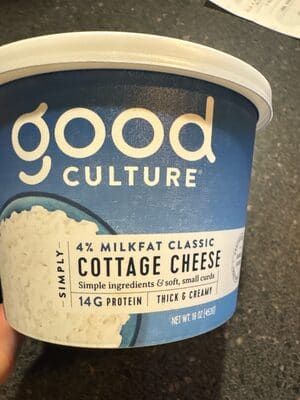
Yogurts
Good Culture Cottage Cheese
16 oz
Score
Why it scores 90
Good Culture Cottage Cheese scores 90 out of 100 (Excellent) under GoodSwap’s published rules. What moved the score most:
- minus 8 points Processed (NOVA 3): Classified NOVA 3: processed with added salt, sugar or oil. Emerging
- minus 3 points Salt 0.9 g / 100 g: High in salt. Strong
- plus 2 points Protein 14 g / 100 g: A good source of protein. Info
Every line of the math is on The Receipt below, with its evidence tier and sources.
Better cottage cheese
-
 Cottage Cheese Small Curd 4% Milkfat Breakstone's · 24 oz Scores +10 Score 100 out of 100 , 10 points higher
 -
 Organic Whole Milk Cottage Cheese Kalona Super Natural · 16 oz/454 g Scores +10 Score 100 out of 100 , 10 points higher
 -
 Organic Lowfat Milk Cottage Cheese Kalona Super Natural · 16 oz Scores +10 Score 100 out of 100 , 10 points higher
 -
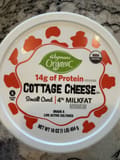 Organic Cottage Cheese Small Curd Wegmans · 16 oz Scores +10 Score 100 out of 100 , 10 points higher
 -
 Cottage Cheese Breakstone's Scores +10 Score 100 out of 100 , 10 points higher
The same kind of product, at least 10 points higher, sold in the US. Never paid placements.
The Receipt
Cottage Cheese
Processing
- Processed (NOVA 3) minus 8 points
Nutrition per 100 g
- Saturated fat 3 g / 100 g minus 1.5 points
- Salt 0.9 g / 100 g minus 3 points
- Protein 14 g / 100 g plus 2 points
100 − 10.5 = 89.5 → 90
Nutrition per 100 g
| Energy | 110 kcal |
|---|---|
| Fat | 5 g |
| Saturated fat | 3 g |
| Trans fat | 0 g |
| Carbohydrates | 4 g |
| Sugars | 2 g |
| Added sugars | 0 g |
| Fiber | 0 g |
| Protein | 14 g |
| Salt | 0.9 g |
Serving: 0.5 Cup (110 g)
Ingredients
Label text, as published
Good Ingredients: Skim Milk, Whole Milk, Cream, Celtic Sea Salt, Live and Active Cultures ( Lactobacillus Paracasei).
Allergens and diets
Contains: Milk
- Not vegan
- Palm-oil-free
Always check the package: recipes change.
More yogurts on GoodSwap
-
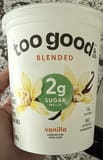 Blended Vanilla Too Good & Co. · 32 oz Ultra-processedContains non-nutritive sweeteners Score 73 out of 100 Good
 -
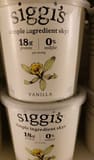 Simple Ingredient Skyr Siggi's · 24 oz Ultra-processedContains added sugars Score 63 out of 100 Good
 -
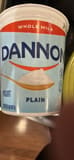 Plain Yogurt Dannon · 32 oz No additives Score 100 out of 100 Excellent
 -
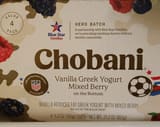 Vanilla Greek Yogurt Mixed Berry on the Bottom Chobani · 5.3 oz (150 g) Ultra-processedContains added sugars Score 50 out of 100 Okay
 -
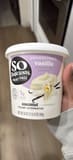 Unsweetened Vanilla Coconut Yogurt Alternative So Delicious · 24 oz Ultra-processed Score 69 out of 100 Good
 -
 Less Sugar Ripe Strawberry Yogurt Chobani · 5.3 oz Ultra-processedContains added sugars Score 54 out of 100 Okay
More from Good Culture
-
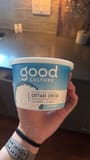 2% Low-Fat Classic Cottage Cheese Good Culture · 16 oz Score 91 out of 100 Excellent
 -
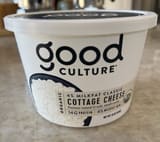 4% Milkfat Classic Cottage Cheese Good Culture · 16 oz Score 95 out of 100 Excellent
 -
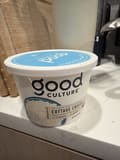 2% Low-Fat Classic Good Culture · 16 oz Score 96 out of 100 Excellent
 -
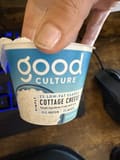 2% Low-Fat Classic Cottage Cheese Good Culture Score 93 out of 100 Excellent
Sources
-
Saturated fatty acid and trans-fatty acid intake for adults and children: WHO guideline
“WHO recommends that adults and children reduce saturated fatty acid intake to 10% of total energy intake (strong recommendation).”
who.int
-
“For adults, WHO recommends less than 2000 mg/day of sodium (equivalent to less than 5 g/day salt), or just under a teaspoon.”
who.int
-
Dietary Guidelines for Americans, 2025–2030
“Limit foods and beverages that include artificial flavors, petroleum-based dyes, artificial preservatives, and low-calorie non-nutritive sweeteners.”
cdn.realfood.gov