Puffed cereals
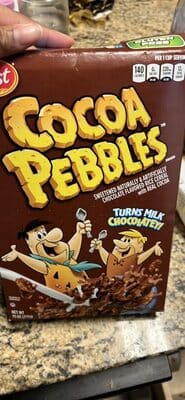
Cocoa Pebbles Sweetened Naturally & Artificially Flavored Rice Cereal with Real Cocoa
311 g
Score
- Ultra-processed
- High in sugar
- Contains added sugars
- Contains seed oils
- Contains artificial flavors
- No synthetic dyes
Why it scores 10
Cocoa Pebbles Sweetened Naturally & Artificially Flavored Rice Cereal with Real Cocoa scores 10 out of 100 (Bad) under GoodSwap’s published rules. What moved the score most:
- minus 20 points Sugar: An added sugar. Strong
- minus 20 points Caramel color: The FDA says classes III and IV, which can contain 4-MEI, are the most commonly used food color additives by volume. Regulatory
- minus 18 points Ultra-processed (NOVA 4): Classified NOVA 4: made with industrial ingredients and additives. Strong
Every line of the math is on The Receipt below, with its evidence tier and sources.
Better breakfast cereals
-
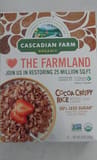 Cocoa Crispy Rice Cereal Cascadian Farm Organic · 12 oz Less sugar · No artificial flavors Score 51 out of 100 , 41 points higher
 -
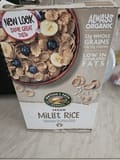 Nature's path, fruit juice sweetened millet rice cereal with oatbran Nature's Path · 375 g Not ultra-processed · Less sugar Score 51 out of 100 , 41 points higher
 -
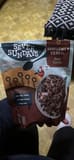 SUNFLOWER CEREAL Real Cocoa Seven Sundays · 8 oz Not ultra-processed · Less sugar Score 64 out of 100 , 54 points higher
 -
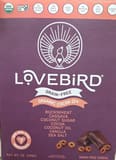 Orangic Cocoa O's Lovebird · 7 g Not ultra-processed · Less sugar Score 67 out of 100 , 57 points higher
 -
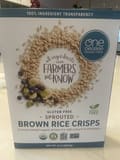 Sprouted Brown Rice Crisps One Degree Organic Foods · 227 g Not ultra-processed · Less sugar Score 74 out of 100 , 64 points higher
The same kind of product, at least 10 points higher, sold in the US. Never paid placements.
The Receipt
Sweetened Naturally & Artificially Flavored Rice Cereal with Real Cocoa
Ingredients
- Sugar minus 20 points
- Caramel color minus 20 points
- Canola oil minus 2.5 points
- Soybean oil minus 1.5 points
- Natural and artificial flavors minus 1.5 points
- BHT (butylated hydroxytoluene) minus 1.5 points
Processing
- Ultra-processed (NOVA 4) minus 18 points
- 2 kinds of ultra-processing markers minus 1.5 points
Nutrition per 100 g
- Sugars 34.5 g / 100 g minus 14 points
- Saturated fat 3.5 g / 100 g minus 3 points
- Salt 1.5 g / 100 g minus 5 points
- Energy 414 kcal / 100 g minus 2 points
100 − 90.5 = 9.5 → 10
Can’t score above 79. Contains sugar, an ingredient of high concern. [1][2][3][4][5][6][7]
Can’t score above 79. High in sugars (above the front-of-pack "high" level). [18]
Nutrition per 100 g
| Energy | 414 kcal |
|---|---|
| Fat | 3.5 g |
| Saturated fat | 3.5 g |
| Trans fat | 0 g |
| Carbohydrates | 86.2 g |
| Sugars | 34.5 g |
| Fiber | 0 g |
| Protein | 3.5 g |
| Salt | 1.5 g |
Serving: 1 Serving (36 g)
Ingredients
- rice
- sugar (high concern)
- canola
- soybean oil
- cocoa (processed with alkali)
- salt
- caramel color (high concern)
- natural and artificial flavor
- bht added to preserve freshness
- vitamins and minerals: niacinamide (vitamin b3)
- reduced iron
- zinc oxide
- vitamin a palmitate
- pyridoxine hydrochloride (vitamin b6)
- thiamin mononitrate (vitamin b1)
- riboflavin (vitamin b2)
- folic acid
- vitamin d3
- vitamin b12
Label text, as published
rice, sugar, canola and/or soybean oil, cocoa (processed with alkali), salt, contains 1% or less of: caramel color, natural and artificial flavor, bht added to preserve freshness, vitamins and minerals: niacinamide (vitamin b3), reduced iron, zinc oxide, vitamin a palmitate, pyridoxine hydrochloride (vitamin b6), thiamin mononitrate (vitamin b1), riboflavin (vitamin b2), folic acid, vitamin d3, vitamin b12,
Allergens and diets
Contains: Soy
- Palm-oil-free
Always check the package: recipes change.
More puffed cereals on GoodSwap
-
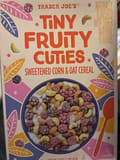 Tiny Fruity Cuties Cereal Trader Joe's · 16 oz Ultra-processedHigh in sugarContains added sugarsContains seed oils Score 37 out of 100 Poor
 -
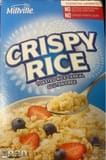 Crispy Rice Toasted Rice Cereal Gluten Free Millville Contains added sugars Score 40 out of 100 Okay
 -
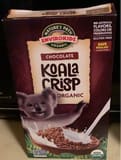 Koala Crisp Organic Nature's Path EnviroKidz · 325 gramos Ultra-processedHigh in sugarContains added sugarsCertified organic Score 25 out of 100 Poor
 -
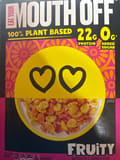 Eat Your Mouth Off Mouth Off · 7.4 oz/209 g Ultra-processedHigh in saltContains non-nutritive sweetenersContains seed oils Score 54 out of 100 Okay
Sources
-
Guideline: sugars intake for adults and children
“In both adults and children, WHO recommends reducing the intake of free sugars to less than 10% of total energy intake”
who.int
-
Dietary Guidelines for Americans, 2025–2030
“Limit foods and beverages that include artificial flavors, petroleum-based dyes, artificial preservatives, and low-calorie non-nutritive sweeteners.”
cdn.realfood.gov
-
Added and free sugars should be as low as possible
“Sugar consumption is a known cause of dental caries.”
efsa.europa.eu
-
Questions & Answers About 4-MEI
“Based on current science, the FDA has no reason to believe that there are any immediate or short-term health risks presented by 4-MEI at the levels expected in food.”
fda.gov
-
Agents Classified by the IARC Monographs, Volumes 1–142 (List of Classifications)
monographs.iarc.who.int
-
Proposition 65 List of Chemicals Known to the State to Cause Cancer or Reproductive Toxicity
“The date refers to the initial appearance of the chemical on the list.”
oehha.ca.gov
-
“replacement of saturated fat in the diet with linoleic acid effectively lowers serum cholesterol but does not support the hypothesis that this translates to a lower risk of death from coronary heart disease or all causes.”
doi.org
-
“These data provide support for current recommendations to replace saturated fat with polyunsaturated fat for primary prevention of CHD.”
doi.org
-
21 CFR 101.22 Foods; labeling of spices, flavorings, colorings and chemical preservatives
“whose significant function in food is flavoring rather than nutritional.”
ecfr.gov
-
List of Select Chemicals in the Food Supply Under FDA Review
“The table below includes select food ingredients (including food and color additives), food contact substances, and contaminants under FDA review as of May 12, 2026 .”
fda.gov
-
Scientific Opinion on the re-evaluation of butylated hydroxytoluene BHT (E 321) as a food additive
“Based on the NOAEL of 25 mg/kg bw/day and an uncertainty factor of 100, the Panel derived an ADI of 0.25 mg/kg bw/day.”
doi.org
-
Saturated fatty acid and trans-fatty acid intake for adults and children: WHO guideline
“WHO recommends that adults and children reduce saturated fatty acid intake to 10% of total energy intake (strong recommendation).”
who.int
-
“For adults, WHO recommends less than 2000 mg/day of sodium (equivalent to less than 5 g/day salt), or just under a teaspoon.”
who.int
-
“Table 3: Criteria for drinks (per 100ml)”
assets.publishing.service.gov.uk
-
“Greater exposure to ultra-processed food was associated with a higher risk of adverse health outcomes, especially cardiometabolic, common mental disorder, and mortality outcomes.”
doi.org