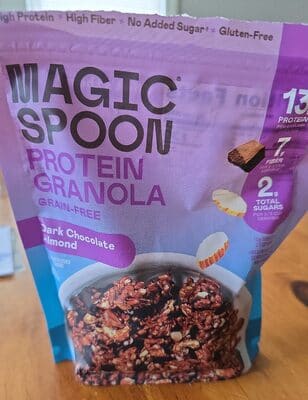
Breakfast cereals
Magic Spoon Dark Chocolate Almond Protein Granola
227 g
Score
- Ultra-processed
- High in saturated fat
- Contains non-nutritive sweeteners
- Seed-oil free
- No synthetic dyes
Why it scores 63
Magic Spoon Dark Chocolate Almond Protein Granola scores 63 out of 100 (Good) under GoodSwap’s published rules. What moved the score most:
- minus 18 points Ultra-processed (NOVA 4): Classified NOVA 4: made with industrial ingredients and additives. Strong
- minus 7 points Saturated fat 8.3 g / 100 g: Very high in saturated fat. Strong
- minus 6 points 5 kinds of ultra-processing markers: Industrial additive classes found: bulking agent, color (added), flavoring, industrial protein and non-nutritive sweetener. Emerging
Every line of the math is on The Receipt below, with its evidence tier and sources.
Better granola and muesli
-
 Swiss Müesli No Added Sugar Familia · 32 oz Not ultra-processed · Less saturated fat Score 100 out of 100 , 37 points higher
 -
 Date & Matcha Muesli O'Plant · 350 g Not ultra-processed · Less saturated fat Score 100 out of 100 , 37 points higher
 -
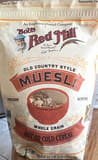 Old Country Style Muesli Bob's Red Mill · 32 g Not ultra-processed · Less saturated fat Score 96 out of 100 , 33 points higher
 -
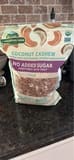 Coconut Cashew Granola Cascadian Farm · 4×100 Not ultra-processed · No non-nutritive sweeteners Score 96 out of 100 , 33 points higher
 -
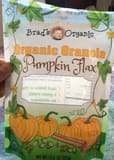 Organic Granola Pumpkin Flax Brad's Organic · 11.5 oz Not ultra-processed · Less saturated fat Score 96 out of 100 , 33 points higher
The same kind of product, at least 10 points higher, sold in the US. Never paid placements.
The Receipt
Dark Chocolate Almond Protein Granola
Ingredients
- Milk protein concentrate / isolate minus 2.5 points
- Allulose minus 2.5 points
- Natural flavors minus 2.5 points
- Monk fruit extract minus 1.5 points
Processing
- Ultra-processed (NOVA 4) minus 18 points
- 5 kinds of ultra-processing markers minus 6 points
Nutrition per 100 g
- Saturated fat 8.3 g / 100 g minus 7 points
- Salt 0.3 g / 100 g minus 1 points
- Energy 450 kcal / 100 g minus 2 points
- Fiber 13.3 g / 100 g plus 4 points
- Protein 21.7 g / 100 g plus 2 points
100 − 37 = 63
Can’t score above 79. High in fat and saturated fat (above the front-of-pack "high" level). [7]
Nutrition per 100 g
| Energy | 450 kcal |
|---|---|
| Fat | 33.3 g |
| Saturated fat | 8.3 g |
| Carbohydrates | 33.3 g |
| Sugars | 3.3 g |
| Added sugars | 0 g |
| Fiber | 13.3 g |
| Protein | 21.7 g |
| Salt | 0.3 g |
Serving: 1 bowl (60 g)
Ingredients
- Almonds
- Sunflower Seeds
- Tapioca Fiber
- Milk Protein Isolate
- Cashews
- Allulose
- Almond Butter
- Coconut Oil
- Natural Flavor
- Cocoa Powder processed with Alkali
- Fruit and Vegetable Juice (for color)
- Salt
- Monk Fruit Extract
Label text, as published
Almonds, Sunflower Seeds, Tapioca Fiber, Milk Protein Isolate, Cashews, Allulose, Almond Butter, Coconut Oil, Natural Flavor, Cocoa Powder processed with Alkali, Fruit and Vegetable Juice (for color), Salt, Monk Fruit Extract
Allergens and diets
Contains: Milk, Tree nuts
- Not vegan
- Palm-oil-free
Always check the package: recipes change.
Packaging
Plastic
Context only: no points in v1.
More breakfast cereals on GoodSwap
-
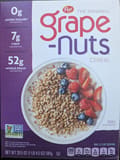 Grape-Nuts Cereal Post · 20.5 oz (1 lb 4.5 oz) 581 g No additivesContains whole grains Score 93 out of 100 Excellent
 -
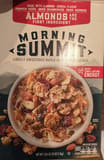 Lightly Sweetened Maple Berry Blend Cereal Morning Summit · 1 box, 2 lb 6 oz High in sugarHigh in saturated fatContains added sugarsNo additives Score 22 out of 100 Poor
 -
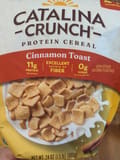 Catalina Crunch Cinnamon Toast Protein Cereal Catalina Crunch · 24 oz Ultra-processedContains non-nutritive sweetenersContains seed oils Score 61 out of 100 Good
 -
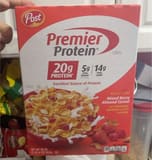 Premier Protein Cereal Post · 30 oz Ultra-processedHigh in saltContains non-nutritive sweetenersContains added sugars Score 20 out of 100 Poor
 -
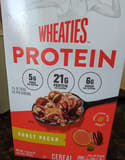 Wheaties Protein Honey Pecan Cereal Wheaties · 64 g Ultra-processedHigh in saturated fatContains added sugarsSeed-oil free Score 21 out of 100 Poor
 -
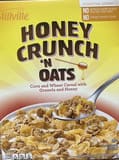 Honey crunch ‘n oats Millville · 510 g Ultra-processedContains added sugarsContains palm oilNo additives Score 28 out of 100 Poor
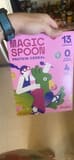
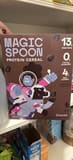
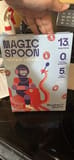
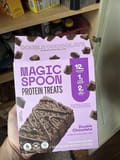
More from Magic Spoon
Sources
-
21 CFR 101.22 Foods; labeling of spices, flavorings, colorings and chemical preservatives
“whose significant function in food is flavoring rather than nutritional.”
ecfr.gov
-
WHO advises not to use non-sugar sweeteners for weight control in newly released guideline
“The recommendation is based on the findings of a systematic review of the available evidence which suggests that use of NSS does not confer any long-term benefit in reducing body fat in adults or children.”
who.int
-
Dietary Guidelines for Americans, 2025–2030
“Limit foods and beverages that include artificial flavors, petroleum-based dyes, artificial preservatives, and low-calorie non-nutritive sweeteners.”
cdn.realfood.gov
-
Saturated fatty acid and trans-fatty acid intake for adults and children: WHO guideline
“WHO recommends that adults and children reduce saturated fatty acid intake to 10% of total energy intake (strong recommendation).”
who.int
-
“For adults, WHO recommends less than 2000 mg/day of sodium (equivalent to less than 5 g/day salt), or just under a teaspoon.”
who.int
-
“Table 3: Criteria for drinks (per 100ml)”
assets.publishing.service.gov.uk
-
“Greater exposure to ultra-processed food was associated with a higher risk of adverse health outcomes, especially cardiometabolic, common mental disorder, and mortality outcomes.”
doi.org