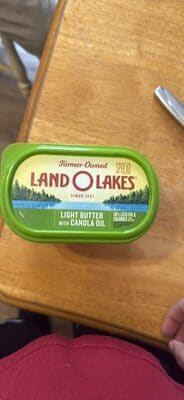
Butters
Land O Lakes Light Butter with Canola Oil
14 g
Score
- Ultra-processed
- Contains emulsifiers studied for gut effects
- Contains seed oils
- No synthetic dyes
Why it scores 62
Land O Lakes Light Butter with Canola Oil scores 62 out of 100 (Good) under GoodSwap’s published rules. What moved the score most:
- minus 18 points Ultra-processed (NOVA 4): Classified NOVA 4: made with industrial ingredients and additives. Strong
- minus 7.5 points 6 kinds of ultra-processing markers: Industrial additive classes found: color (added), emulsifier, flavoring, industrial sugar or starch hydrolysate, modified starch and thickener, stabilizer or gelling agent. Emerging
- minus 2.5 points Canola oil: High in omega-6 linoleic acid. Emerging
Every line of the math is on The Receipt below, with its evidence tier and sources.
Better butter and spreads
-
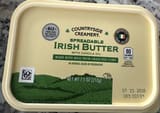 Spreadable Irish Butter with Canola Oil Countryside Creamery · 7.5 oz (212 g) Not ultra-processed · No gut-studied emulsifiers Score 100 out of 100 , 38 points higher
 -
 Butter with Olive Oil & Sea Salt Spread Land O Lakes · 14 g Not ultra-processed · No gut-studied emulsifiers Score 100 out of 100 , 38 points higher
 -
 Butter with Olive Oil & Sea Salt Land O Lakes · 21 oz Not ultra-processed · No gut-studied emulsifiers Score 100 out of 100 , 38 points higher
 -
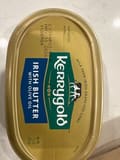 Irish Butter with Olive Oil Kerrygold Not ultra-processed · No gut-studied emulsifiers Score 100 out of 100 , 38 points higher
 -
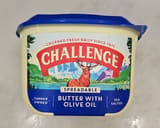 Butter Quth Olive Oil Challenge · 364 g Not ultra-processed · No gut-studied emulsifiers Score 100 out of 100 , 38 points higher
The same kind of product, at least 10 points higher, sold in the US. Never paid placements.
The Receipt
Light Butter with Canola Oil
Ingredients
- Canola oil minus 2.5 points
- Modified starch minus 2.5 points
- Maltodextrin minus 2.5 points
- Mono- and diglycerides minus 1.5 points
- Potassium sorbate minus 1.5 points
- Natural flavors minus 1.5 points
- Xanthan gum minus 0.5 points
Processing
- Ultra-processed (NOVA 4) minus 18 points
- 6 kinds of ultra-processing markers minus 7.5 points
100 − 38 = 62
Nutrition per 100 g
| Energy | 50 kcal |
|---|---|
| Fat | 6 g |
| Saturated fat | 2 g |
| Trans fat | 0 g |
| Carbohydrates | 0 g |
| Sugars | 0 g |
| Added sugars | 0 g |
| Fiber | 0 g |
| Protein | 0 g |
| Salt | 0.2 g |
Serving: 14.000000000000002g
Ingredients
- Water ( Ingredients Not Found in Regular Butter)
- Butter (Cream, Salt)
- Canola Oil ( Ingredients Not Found in Regular Butter) Buttermilk ( Ingredients Not Found in Regular Butter)
- Food Starch- Modified ( Ingredients Not Found in Regular Butter)
- Tapioca Maltodextrin ( Ingredients Not Found in Regular Butter)
- Salt
- Mono and Diglycerides ( Ingredients Not Found in Regular Butter) and PGPR ( Ingredients Not Found in Regular Butter) ( Emulsifiers)
- Lactic Acid ( Ingredients Not Found in Regular Butter)
- Potassium Sorbate and Sodium Benzoate ( Ingredients Not Found in Regular Butter) (to Preserve Freshness)
- Natural Flavor ( Ingredients Not Found in Regular Butter)
- Xanthan Gum ( Ingredients Not Found in Regular Butter)
- Beta- Carotene ( Ingredients Not Found in Regular Butter) ( Color)
Label text, as published
Water ( Ingredients Not Found in Regular Butter), Butter ( Cream, Salt), Canola Oil ( Ingredients Not Found in Regular Butter) Buttermilk ( Ingredients Not Found in Regular Butter), Contains Less than 2% of Food Starch- Modified ( Ingredients Not Found in Regular Butter), Tapioca Maltodextrin ( Ingredients Not Found in Regular Butter), Salt, Mono and Diglycerides ( Ingredients Not Found in Regular Butter) and PGPR ( Ingredients Not Found in Regular Butter) ( Emulsifiers), Lactic Acid ( Ingredients Not Found in Regular Butter), Potassium Sorbate and Sodium Benzoate ( Ingredients Not Found in Regular Butter) (to Preserve Freshness), Natural Flavor ( Ingredients Not Found in Regular Butter), Xanthan Gum ( Ingredients Not Found in Regular Butter), Beta- Carotene ( Ingredients Not Found in Regular Butter) ( Color). Contains: Milk.
Allergens and diets
Contains: Milk
- Not vegan
- Palm-oil-free
Always check the package: recipes change.
More butters on GoodSwap
-
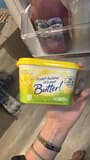 I can't Believe it's not Butter! Creamy Light Nutr-Rich Buttery Spread · 15 oz (425 g) Ultra-processedHigh in saturated fatContains emulsifiers studied for gut effectsContains seed oils Score 70 out of 100 Good
 -
 I can't Believe it's not Butter! Original Nutrilich · 500 g Ultra-processedContains seed oilsContains palm oilNo synthetic dyes Score 70 out of 100 Good
 -
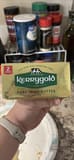 Salted Irish Butter Kerrygold · 8 oz High in saturated fatNo additives Score 100 out of 100 Excellent
 -
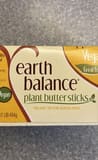 Vegan Butter Earth Balance · 14 g Ultra-processedHigh in saltHigh in saturated fatContains seed oils Score 59 out of 100 Okay
 -
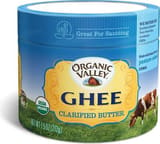 Farms Ghee Organic Valley · 5 g Certified organicSeed-oil free Score 100 out of 100 Excellent
 -
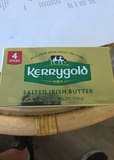 Pure Irish Butter Kerrygold · 4 × 4 oz High in saltHigh in saturated fatNo additives Score 79 out of 100 Good
More from Land O Lakes


Sources
-
“replacement of saturated fat in the diet with linoleic acid effectively lowers serum cholesterol but does not support the hypothesis that this translates to a lower risk of death from coronary heart disease or all causes.”
doi.org
-
“These data provide support for current recommendations to replace saturated fat with polyunsaturated fat for primary prevention of CHD.”
doi.org
-
“This study found positive associations between risk of CVD and intake of five individual and two groups of food additive emulsifiers widely used in industrial foods.”
doi.org
-
Re-evaluation of mono- and di-glycerides of fatty acids (E 471) as food additives
“The available studies did not raise any concern with regard to genotoxicity.”
doi.org
-
“By applying a default uncertainty factor of 100, the Panel established a group ADI expressed as 11 mg sorbic acid/kg bw per day for sorbic acid (E 200) and its potassium salt (E 202).”
doi.org
-
21 CFR 182.3640 Potassium sorbate
ecfr.gov
-
21 CFR 101.22 Foods; labeling of spices, flavorings, colorings and chemical preservatives
“whose significant function in food is flavoring rather than nutritional.”
ecfr.gov
-
“Greater exposure to ultra-processed food was associated with a higher risk of adverse health outcomes, especially cardiometabolic, common mental disorder, and mortality outcomes.”
doi.org
-
Dietary emulsifiers impact the mouse gut microbiota promoting colitis and metabolic syndrome
“carboxymethylcellulose and polysorbate-80, induced low-grade inflammation and obesity/metabolic syndrome in wild-type hosts and promoted robust colitis in mice predisposed to this disorder.”
doi.org
-
“Relative to control subjects, CMC consumption modestly increased postprandial abdominal discomfort and perturbed gut microbiota composition in a way that reduced its diversity.”
doi.org