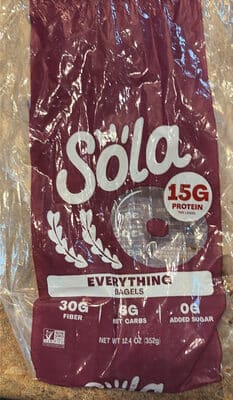
Bagel breads
Sola Everything Bagel
30 g
Score
- Ultra-processed
- Contains sugar alcohols
- Seed-oil free
- Contains whole grains
Why it scores 63
Sola Everything Bagel scores 63 out of 100 (Good) under GoodSwap’s published rules. What moved the score most:
- minus 18 points Ultra-processed (NOVA 4): Classified NOVA 4: made with industrial ingredients and additives. Strong
- minus 7.5 points Erythritol: A 2023 study linked higher blood erythritol to cardiovascular events and found it increased clotting activity; long-term safety studies are warranted. Strong
- minus 6 points 5 kinds of ultra-processing markers: Industrial additive classes found: bulking agent, flavoring, industrial protein, sugar alcohol (polyol) and thickener, stabilizer or gelling agent. Emerging
Every line of the math is on The Receipt below, with its evidence tier and sources.
Better bagels
-
 Everything Bagel Meijer · 20 oz Not ultra-processed · No sugar alcohols Score 92 out of 100 , 29 points higher
 -
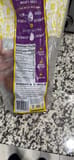 Cinnamon Raisin Organic Bagels One Mighty Mill · 13.0 oz Not ultra-processed · No sugar alcohols Score 100 out of 100 , 37 points higher
 -
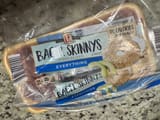 Bagel Skinnys Everything LF · 13 oz Not ultra-processed · No sugar alcohols Score 82 out of 100 , 19 points higher
 -
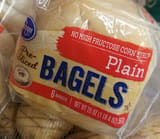 Plain Bagels Kroger · 20 oz Not ultra-processed · No sugar alcohols Score 96 out of 100 , 33 points higher
 -
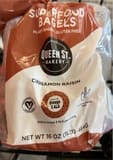 Cinnamon Raisin Bagels Queen St. · 16 oz Not ultra-processed · No sugar alcohols Score 93 out of 100 , 30 points higher
The same kind of product, at least 10 points higher, sold in the US. Never paid placements.
The Receipt
Everything Bagel
Ingredients
- Erythritol minus 7.5 points
- Wheat gluten minus 2.5 points
- Inulin (chicory root fiber) minus 2.5 points
- Natural flavors minus 1.5 points
- Guar gum minus 1.5 points
Processing
- Ultra-processed (NOVA 4) minus 18 points
- 5 kinds of ultra-processing markers minus 6 points
Nutrition per 100 g
- Salt 0.8 g / 100 g minus 3 points
- Energy 165 kcal / 100 g minus 1 points
- Fiber 34.1 g / 100 g plus 4 points
- Protein 17 g / 100 g plus 2 points
100 − 37.5 = 62.5 → 63
Nutrition per 100 g
| Energy | 165 kcal |
|---|---|
| Fat | 5.7 g |
| Saturated fat | 0.6 g |
| Carbohydrates | 39.8 g |
| Sugars | 1.1 g |
| Added sugars | 0 g |
| Fiber | 34.1 g |
| Protein | 17 g |
| Salt | 0.8 g |
Serving: 1 bagel (88 g)
Ingredients
- water
- resistant wheat starch
- wheat gluten
- partially defatted soy flour
- wheat protein isolate
- olive pomace oil
- yeast
- flax seeds
- erythritol (moderate concern)
- inulin
- cultured wheat flour blend
- wheat flour
- cultured wheat starch
- natural flavors
- dehydrated onion
- salt
- oat fiber
- chia seeds
- citrus fiber
- dehydrated garlic
- flax seed fiber
- vegetable fiber blend
- pea fiber
- potato fiber
- potato starch
- psyllium husk fiber
- bamboo fiber
- wheat fiber
- wheat flour
- guar gum
- citric acid
- enzymes
- ascorbic acid
Label text, as published
water, resistant wheat starch, wheat gluten, partially defatted soy flour, wheat protein isolate, olive pomace oil, yeast, flax seeds, erythritol, inulin, cultured wheat flour blend, wheat flour, cultured wheat starch, natural flavors, dehydrated onion, salt, oat fiber, chia seeds, citrus fiber, dehydrated garlic, flax seed fiber, vegetable fiber blend, pea fiber, potato fiber, potato starch, psyllium husk fiber, bamboo fiber, wheat fiber, wheat flour, guar gum, citric acid, enzymes, ascorbic acid
Allergens and diets
Contains: Soy, Wheat, Gluten
- Not gluten-free
- Palm-oil-free
Always check the package: recipes change.
More bagel breads on GoodSwap
-
 Organic Bagels Plain Awesome Dave's Killer Bread · 6.75 oz Ultra-processedContains added sugarsContains seed oilsCertified organic Score 59 out of 100 Okay
 -
 Plain Bagels Thomas' · 567 g Ultra-processedContains added sugarsContains seed oils Score 44 out of 100 Okay
 -
 Zephyrhills Zephyrhills · 500 mL Score 98 out of 100 Excellent
 -
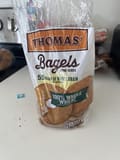 Bagels Thomas' · 567 g Ultra-processedContains added sugarsContains emulsifiers studied for gut effectsContains seed oils Score 40 out of 100 Okay
 -
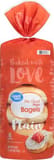 Pre-Sliced Plain Bagels Great Value · 20 oz/567 g Ultra-processedContains added sugarsContains emulsifiers studied for gut effects Score 45 out of 100 Okay
 -
 Bagels Cinnamon Swirl Thomas' · 567 g Ultra-processedContains added sugarsContains emulsifiers studied for gut effectsContains seed oils Score 40 out of 100 Okay
More from Sola
Sources
-
The artificial sweetener erythritol and cardiovascular event risk
“Our findings reveal that erythritol is both associated with incident MACE risk and fosters enhanced thrombosis. Studies assessing the long-term safety of erythritol are warranted.”
doi.org
-
Re-evaluation of erythritol (E 968) as a food additive (plain language summary)
“In all groups of people, both acute and chronic exposure to erythritol is above the newly set ADI.”
efsa.europa.eu
-
21 CFR 101.22 Foods; labeling of spices, flavorings, colorings and chemical preservatives
“whose significant function in food is flavoring rather than nutritional.”
ecfr.gov
-
“For adults, WHO recommends less than 2000 mg/day of sodium (equivalent to less than 5 g/day salt), or just under a teaspoon.”
who.int
-
Dietary Guidelines for Americans, 2025–2030
“Limit foods and beverages that include artificial flavors, petroleum-based dyes, artificial preservatives, and low-calorie non-nutritive sweeteners.”
cdn.realfood.gov
-
“Greater exposure to ultra-processed food was associated with a higher risk of adverse health outcomes, especially cardiometabolic, common mental disorder, and mortality outcomes.”
doi.org
-
Regulation (EU) No 1169/2011, Annex III point 2.4 (foods with more than 10 % added polyols)
“‘excessive consumption may produce laxative effects’.”
eur-lex.europa.eu