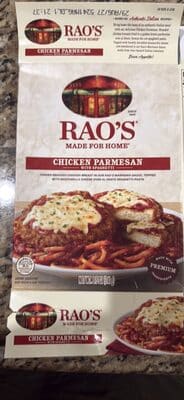
Meals with chicken
Rao's Chicken Parmesan with Spaghetti
8.5 oz (241 g)
Score
- Ultra-processed
- Contains seed oils
Why it scores 71
Rao's Chicken Parmesan with Spaghetti scores 71 out of 100 (Good) under GoodSwap’s published rules. What moved the score most:
- minus 18 points Ultra-processed (NOVA 4): Classified NOVA 4: made with industrial ingredients and additives. Strong
- minus 3 points Salt 0.9 g / 100 g: High in salt. Strong
- minus 2.5 points Soybean oil: High in omega-6 linoleic acid. Emerging
Every line of the math is on The Receipt below, with its evidence tier and sources.
Better frozen meals
-
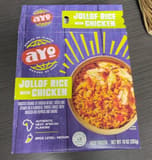 Jollof rice with chicken AYO · 10 oz Not ultra-processed · No modified starch Score 100 out of 100 , 29 points higher
 -
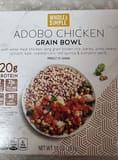 Adodo Chicken Grain Bowl Whole & Simple · 10 oz Not ultra-processed · No seed oils Score 99 out of 100 , 28 points higher
 -
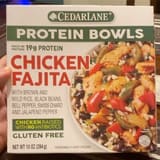 Chicken Fajita Protein Bowl Cedarlane Not ultra-processed · No modified starch Score 97 out of 100 , 26 points higher
 -
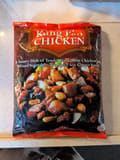 Kung Pao Chicken Trader Ming's · 23 oz (1 lb 7 oz) 652 g Not ultra-processed · No modified starch Score 95 out of 100 , 24 points higher
 -
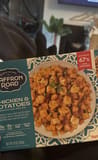 Chicken and potatoes Saffron Road · 10 oz Not ultra-processed · No seed oils Score 96 out of 100 , 25 points higher
The same kind of product, at least 10 points higher, sold in the US. Never paid placements.
The Receipt
Chicken Parmesan with Spaghetti
Ingredients
- Soybean oil minus 2.5 points
- Natural flavors minus 2.5 points
- Modified starch minus 2.5 points
Processing
- Ultra-processed (NOVA 4) minus 18 points
- 2 kinds of ultra-processing markers minus 1.5 points
Nutrition per 100 g
- Saturated fat 1.7 g / 100 g minus 1 points
- Salt 0.9 g / 100 g minus 3 points
- Protein 8.7 g / 100 g plus 2 points
100 − 29 = 71
Nutrition per 100 g
| Energy | 149 kcal |
|---|---|
| Fat | 7.1 g |
| Saturated fat | 1.7 g |
| Trans fat | 0 g |
| Carbohydrates | 12.9 g |
| Sugars | 2.1 g |
| Added sugars | 0 g |
| Fiber | 1.2 g |
| Protein | 8.7 g |
| Salt | 0.9 g |
Serving: 8.5 z (241 g)
Ingredients
- Italian Tomatoes (Italian Tomatoes, Tomato Puree)
- Chicken Breast
- Water
- Pasta (Durum Semolina)
- Soybean Oil
- Cracker Crumbs (Wheat Flour, Garlic Powder, Parmesan and Romano Cheese, Spices, Dehydrated Parsley, Unsalted Butter, Natural Flavor)
- Mozzarella Cheese (Pasteurized Milk, Cheese Culture, Salt, Enzymes)
- Onion
- Egg
- Wheat Flour (Wheat Flour, Malted Barley Flour)
- Salt
- Parmesan Cheese (Pasteurized Part-Skim Cow's Milk, Cheese Cultures, Salt, Enzymes)
- Olive Oil
- Food Starch
- Garlic
- Spices
Label text, as published
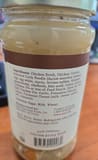
Italian Tomatoes (Italian Tomatoes, Tomato Puree), Chicken Breast, Water, Pasta (Durum Semolina), Soybean Oil, Cracker Crumbs (Wheat Flour, Garlic Powder, Parmesan and Romano Cheese [Cow's Milk, Cultures, Salt, Enzymes]. Salt, Spices, Dehydrated Parsley, Unsalted Butter [Pasteurized Cream, Natural Flavor), Natural Flavor), Mozzarella Cheese (Pasteurized Milk, Cheese Culture, Salt, Enzymes), Onion, Egg, Wheat Flour (Wheat Flour, Malted Barley Flour), Salt, Parmesan Cheese (Pasteurized Part-Skim Cow's Milk, Cheese Cultures, Salt, Enzymes). Olive Oil, Food Starch, Garlic, Spices. CONTAINS: MILK, EGG, WHEAT
Allergens and diets
Contains: Milk, Soy, Wheat, Gluten, Egg
- Not vegan
- Not vegetarian
- Not gluten-free
- Palm-oil-free
Always check the package: recipes change.
More meals with chicken on GoodSwap
-
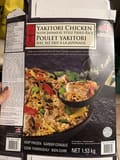 Yakitori Chicken with Japanese-Style Fried Rice Ajinomoto · 1.53 kg, 54 oz Ultra-processedContains added sugarsContains seed oils Score 40 out of 100 Okay
 -
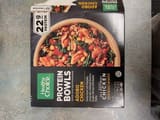 ADoBO CHICKEN Healthy Choice · 9.75 oz/276 g Ultra-processedContains added sugarsNo additivesSeed-oil free Score 44 out of 100 Okay
 -
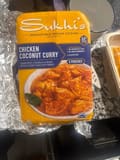 Chicken Coconut Curry Sukhi's · 36 oz Ultra-processedContains added sugarsContains seed oils Score 55 out of 100 Okay
 -
 Chicken Shu Mai Trader Joe's · 11 oz Ultra-processedContains added sugarsSeed-oil freeContains whole grains Score 47 out of 100 Okay
 -
 Southwestern Style Chicken Quinoa Bowl Whole & Simple · 298 g Contains seed oilsContains whole grains Score 86 out of 100 Excellent
 -
 Cilantro Lime Chicken Kevin's Natural Foods · 16 oz Ultra-processedContains non-nutritive sweetenersContains seed oils Score 66 out of 100 Good
More from Rao's
Sources
-
“replacement of saturated fat in the diet with linoleic acid effectively lowers serum cholesterol but does not support the hypothesis that this translates to a lower risk of death from coronary heart disease or all causes.”
doi.org
-
“These data provide support for current recommendations to replace saturated fat with polyunsaturated fat for primary prevention of CHD.”
doi.org
-
21 CFR 101.22 Foods; labeling of spices, flavorings, colorings and chemical preservatives
“whose significant function in food is flavoring rather than nutritional.”
ecfr.gov
-
Saturated fatty acid and trans-fatty acid intake for adults and children: WHO guideline
“WHO recommends that adults and children reduce saturated fatty acid intake to 10% of total energy intake (strong recommendation).”
who.int
-
“For adults, WHO recommends less than 2000 mg/day of sodium (equivalent to less than 5 g/day salt), or just under a teaspoon.”
who.int
-
Dietary Guidelines for Americans, 2025–2030
“Limit foods and beverages that include artificial flavors, petroleum-based dyes, artificial preservatives, and low-calorie non-nutritive sweeteners.”
cdn.realfood.gov
-
“Greater exposure to ultra-processed food was associated with a higher risk of adverse health outcomes, especially cardiometabolic, common mental disorder, and mortality outcomes.”
doi.org