Dietary supplements
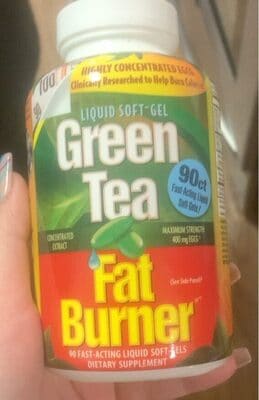
Applied Nutrition Green tea fat burner
Score
- Not permitted in some countries
- Contains seed oils
- Contains caffeine
- No synthetic dyes
Why it scores 15
Applied Nutrition Green tea fat burner scores 15 out of 100 (Bad) under GoodSwap’s published rules. What moved the score most:
- minus 12 points Titanium dioxide: EFSA (2021) could not rule out genotoxicity and could not set a safe daily intake, so the EU removed E171 from the list of permitted food additives in 2022. Regulatory
- minus 1 points Caffeine: The FDA cites 400 mg a day as generally safe for most adults; EFSA advises no more than 200 mg a day in pregnancy. Strong
- minus 1 points Soybean oil: High in omega-6 linoleic acid. Emerging
Capped at 15: Contains titanium dioxide, which is prohibited in EU cosmetics.
Every line of the math is on The Receipt below, with its evidence tier and sources.
The Receipt
Green tea fat burner
Ingredients
- Titanium dioxide minus 12 points
- Caffeine minus 1 points
- Soybean oil minus 1 points
- Glycerin minus 0.5 points
- Soy lecithin minus 0.5 points
- Beeswax minus 0.5 points
- Maltodextrin minus 0.5 points
100 − 16 = 84 → capped at 15
Capped at 15. Contains titanium dioxide, which is prohibited in EU cosmetics. [1]
Nutrition per 100 g
| Energy | 750 kcal |
|---|---|
| Fat | 50 g |
| Saturated fat | 0 g |
| Carbohydrates | 0 g |
| Sugars | 0 g |
| Added sugars | 0 g |
| Fiber | 0 g |
| Protein | 50 g |
| Salt | 0 g |
Ingredients
- Green Tea extract
- Caffeine
- Bilberry powder
- Blueberry extract
- European Elder powder (not recognized)
- Grape Skin extract
- Pomegranate powder
- Eleuthero powder (not recognized)
- Holy Basil extract
- Maté powder
- Schisandra powder (not recognized)
- Soybean oil
- gelatin
- purified water
- glycerin
- soy lecithin
- beeswax
- titanium dioxide (high concern)
- chlorophyllin
- maltodextrin
Label text, as published
Green Tea extract, Caffeine, Bilberry powder, Blueberry extract, European Elder powder, Grape Skin extract, Pomegranate powder, Eleuthero powder, Holy Basil extract, Maté powder, Schisandra powder, Soybean oil, gelatin, purified water, glycerin, soy lecithin, beeswax, titanium dioxide, chlorophyllin, maltodextrin
Allergens and diets
Contains: Soy
- Not vegan
- Not vegetarian
- Palm-oil-free
Always check the package: recipes change.
More dietary supplements on GoodSwap
-
 Organic Supergreens Fruits & Vegetables Zena Greens Contains non-nutritive sweetenersContains caffeineCertified organicContains whole grains Score 95 out of 100 Excellent
 -
 Super Orange Flavored Fizzy Drink Mix Emergen-C · 9.1 g Contains added sugarsNo synthetic dyes Score 86 out of 100 Excellent
 -
 Greens and superfoods Bloom · 10.24 oz Contains non-nutritive sweetenersContains caffeineContains whole grains Score 97 out of 100 Excellent
 -
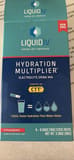 Hydration Multiplier Electrolyte Drink Mix Liquid I.V. · 96 g/3.39 oz Contains non-nutritive sweetenersContains added sugars Score 74 out of 100 Good
 -
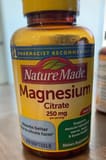 Magnesium citrate Nature Made Seed-oil free Score 98 out of 100 Excellent
 -
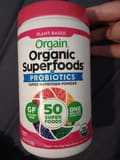 Organic Superfoods + Probiotics Super Nutrition Powder, Berry Orgain · 9.9 oz (280 g) Certified organicContains whole grains Score 97 out of 100 Excellent
Sources
-
“titanium dioxide (E 171) can no longer be considered safe when used as a food additive.”
eur-lex.europa.eu
-
Titanium dioxide: E171 no longer considered safe when used as a food additive
“the Panel concluded that titanium dioxide can no longer be considered safe as a food additive.”
efsa.europa.eu
-
“Considering the very low oral absorption of INS 171, and in the absence of any identifiable hazard associated with INS 171 in the diet, the Committee reaffirmed the ADI “not specified” established at the Thirteenth meeting.”
who.int
-
Titanium dioxide (TiO2) as a food additive: Current science report
“In summary, the Food Directorate's position is that there is no conclusive scientific evidence that the food additive TiO2 is a concern for human health.”
canada.ca
-
Statement on the safety of Titanium Dioxide (E171) as a Food Additive (COT/2024/05)
“The Committee concludes that it is unlikely that there would be a risk to health from exposures of E171 TiO2 from the diet in any of the age groups or scenarios assessed.”
cot.food.gov.uk
-
Titanium Dioxide as a Color Additive in Foods
“Other international regulatory bodies including the United Kingdom’s Food Standards Agency (FSA), Health Canada, and Food Standards Australia New Zealand (FSANZ) have not agreed with EFSA’s assessment.”
fda.gov
-
Agents Classified by the IARC Monographs, Volumes 1–142 (List of Classifications)
monographs.iarc.who.int
-
Spilling the Beans: How Much Caffeine is Too Much?
“For most adults, the FDA has cited 400 milligrams* a day — that's about two to three 12-fluid-ounce cups of coffee — as an amount not generally associated with negative effects.”
fda.gov
-
Caffeine (EFSA topic page; Scientific Opinion on the safety of caffeine, 2015)
“Caffeine intakes from all sources up to 200mg per day consumed throughout the day do not raise safety concerns for the foetus.”
efsa.europa.eu
-
“replacement of saturated fat in the diet with linoleic acid effectively lowers serum cholesterol but does not support the hypothesis that this translates to a lower risk of death from coronary heart disease or all causes.”
doi.org
-
“These data provide support for current recommendations to replace saturated fat with polyunsaturated fat for primary prevention of CHD.”
doi.org
-
Revocation of Authorization for Use of Brominated Vegetable Oil in Food (89 FR 55040)
“This action is being taken because there is no longer a reasonable certainty of no harm from the continued use of BVO in food.”
federalregister.gov
-
“This order is effective January 15, 2027, except for amendatory instruction 4, which is effective January 18, 2028.”
federalregister.gov
-
Regulation (EC) No 1223/2009 of 30 November 2009 on cosmetic products
“cosmetic products shall not contain any of the following: (a) prohibited substances — prohibited substances listed in Annex II”
eur-lex.europa.eu
-
Regulation (EU) No 1169/2011, Annex III point 4.1 (beverages with high caffeine content)
“‘High caffeine content. Not recommended for children or pregnant or breast-feeding women’”
eur-lex.europa.eu