Food additive · Color (white)
Titanium dioxide
- E-number
- E171
- CAS
- 13463-67-7
A white mineral pigment used to make candy coatings, frosting, gum and creamers bright white. Not permitted as a food additive in the EU since 2022; the US, UK and Canada still allow it.
- Food additive
- Color (added)
- Ultra-processing marker
- Expert review pending
Concern level
A regulatory warning or restriction somewhere, or strong evidence of harm at typical intake. The concern level sets how many points titanium dioxide costs on a product’s receipt.
What the evidence says
-
Genotoxicity could not be ruled outRegulatory
EFSA (2021) could not rule out genotoxicity and could not set a safe daily intake, so the EU removed E171 from the list of permitted food additives in 2022. [1][2]
-
Low concernStrong evidence
JECFA (2023) kept its ADI "not specified"; the FDA, Health Canada (2022) and the UK COT (2024) did not agree with EFSA's assessment. [3][4][5][6]
-
IARC Group 2B (possibly carcinogenic)Strong evidence
IARC classifies titanium dioxide as Group 2B, based on inhaled dust; this is not specific to food. [7]
Evidence tiers say how sure the evidence is, separately from how much it matters. About evidence tiers.
Rules around the world
| Where | Status | Details | Date | Source |
|---|---|---|---|---|
| European Union | Banned | Removed from the Union list of food additives; not permitted in food since 7 August 2022 (end of transition). | Feb 7, 2022 | [1] |
| United States | Permitted | Permitted up to 1% by weight of the food (21 CFR 73.575); FDA is reviewing a 2023 petition to revoke it. | — | [8] |
| United Kingdom | Permitted | Still permitted in Great Britain (not permitted in Northern Ireland, which follows EU rules). | — | [9] |
| Canada | Permitted | Permitted; Health Canada (2022) found no conclusive evidence of a health concern. | — | [4] |
“Banned” means explicitly prohibited or withdrawn after review; “not permitted” means never authorized there. We use each regulator’s own words.
Popular products that list titanium dioxide
81 of the 17,000 most-scanned products in the US with a GoodSwap page list titanium dioxide. The 12 most scanned:
-
 Skittles Skittles · 2.17 oz Score 7 out of 100 Bad
 -
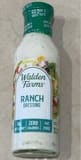 Ranch Dressing Walden Farms · 12 fl oz/355 mL Score 25 out of 100 Poor
 -
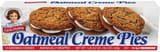 Little Debbie Oatmeal Creme Pies Little Debbie · 450 g Score 0 out of 100 Bad
 -
 Creamy Caesar Dressing Ken's Steak House · 16 fl oz/1 PT/473 mL Score 7 out of 100 Bad
 -
 Ultimate Plant-Based Chick'n Nuggets Gardein · 417 g Score 21 out of 100 Poor
 -
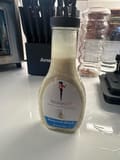 Buttermilk Ranch Skinnygirl · 8 oz Score 25 out of 100 Poor
 -
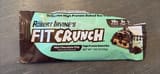 FitCrunch Robert Irvine's · 46 g Score 13 out of 100 Bad
 -
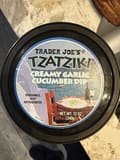 Tzatziki Creamy Garlic Cucumber Dip Trader Joe's · 340 g Score 25 out of 100 Poor
 -
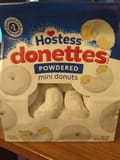 POWDERED mini donuts Hostess donettes · 10 oz Score 8 out of 100 Bad
 -
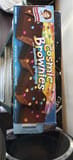 Cosmic Brownies Little Debbie · 62 g Score 0 out of 100 Bad
 -
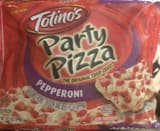 Party Pizza Pepperoni Totino's · 10.2 oz Score 14 out of 100 Bad
 -
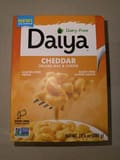 Dairy-Free Cheddar Mac & Cheese Daiya · 10.6 oz Score 19 out of 100 Bad
Diets and allergens
- Vegan
- Yes
- Vegetarian
- Yes
- Gluten-free
- Yes
For the ingredient in general. Always check the package: a product’s own labels win.
Names GoodSwap recognizes on labels (17)
- e171
- tio2
- colour e171
- titandioxid
- titanium dioxide
- dioxyde de titane
- titanium dioxide e171
- color titanium dioxide
- titanium dioxide color
- colors titanium dioxide
- colour titanium dioxide
- colours titanium dioxide
- titanium dioxide for color
- color added titanium dioxide
- colored with titanium dioxide
- titanium dioxide added for color
- titanium dioxide artificial color
Sources
-
“titanium dioxide (E 171) can no longer be considered safe when used as a food additive.”
eur-lex.europa.eu
-
Titanium dioxide: E171 no longer considered safe when used as a food additive
“the Panel concluded that titanium dioxide can no longer be considered safe as a food additive.”
efsa.europa.eu
-
“Considering the very low oral absorption of INS 171, and in the absence of any identifiable hazard associated with INS 171 in the diet, the Committee reaffirmed the ADI “not specified” established at the Thirteenth meeting.”
who.int
-
Titanium dioxide (TiO2) as a food additive: Current science report
“In summary, the Food Directorate's position is that there is no conclusive scientific evidence that the food additive TiO2 is a concern for human health.”
canada.ca
-
Statement on the safety of Titanium Dioxide (E171) as a Food Additive (COT/2024/05)
“The Committee concludes that it is unlikely that there would be a risk to health from exposures of E171 TiO2 from the diet in any of the age groups or scenarios assessed.”
cot.food.gov.uk
-
Titanium Dioxide as a Color Additive in Foods
“Other international regulatory bodies including the United Kingdom’s Food Standards Agency (FSA), Health Canada, and Food Standards Australia New Zealand (FSANZ) have not agreed with EFSA’s assessment.”
fda.gov
-
Agents Classified by the IARC Monographs, Volumes 1–142 (List of Classifications)
monographs.iarc.who.int
-
21 CFR 73.575 Titanium dioxide
“The quantity of titanium dioxide does not exceed 1 percent by weight of the food.”
ecfr.gov
-
Approved additives and E numbers
“E171 Titanium dioxide; not permitted for use in Northern Ireland”
gov.uk