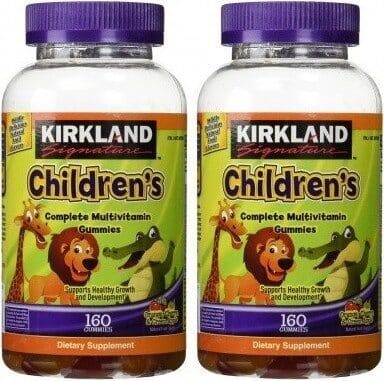
Dietary supplements
Kirkland Signature Children's Complete Multivitamin Gummies
2 x 160 gummies
Score
- Contains added sugars
- Contains seed oils
- No synthetic dyes
Why it scores 85
Kirkland Signature Children's Complete Multivitamin Gummies scores 85 out of 100 (Excellent) under GoodSwap’s published rules. What moved the score most:
- minus 12 points Sugar: An added sugar. Strong
- minus 1 points Natural flavors: "Natural flavor" is a legal category (21 CFR 101.22(a)(3)): flavor substances from spices, fruits, vegetables, meat, dairy or fermentation. Info
- minus 1 points Maltodextrin: An additive class typical of ultra-processed foods (NOVA group 4). Info
Every line of the math is on The Receipt below, with its evidence tier and sources.
The Receipt
Children's Complete Multivitamin Gummies
Ingredients
- Sugar minus 12 points
- Natural flavors minus 1 points
- Maltodextrin minus 1 points
- Pectin minus 0.5 points
- Vegetable oil (unspecified) minus 0.5 points
100 − 15 = 85
Ingredients
- Com Syrup (not recognized)
- Sugar (high concern)
- Water
- Gelatin (Porcine)
- Ascorbic Acid
- dl-Alpha Tocopheryl Acetate
- Citric Acid
- d-Calcium Pantothenate
- Natural Flavors
- Vegetable and Fruit Juice
- Maltodextrin
- Vitamin A Palmitate
- Zinc Citrate
- d-Biotin
- Cholecalciferol
- Pectin
- Spirulina Extract
- Vegetable Oil (Palm) (Contains Carnauba Wax)
- Pyridoxine Hydrochloride
- Cyanocobalamin
- Potassium lodide
- Folic Acid
Label text, as published
Com Syrup, Sugar, Water, Gelatin (Porcine), Ascorbic Acid, dl-Alpha Tocopheryl Acetate, Citric Acid, d-Calcium Pantothenate, Natural Flavors, Vegetable and Fruit Juice, Maltodextrin, Vitamin A Palmitate, Zinc Citrate, d-Biotin, Cholecalciferol, Pectin, Spirulina Extract, Vegetable Oil (Palm) (Contains Carnauba Wax), Pyridoxine Hydrochloride, Cyanocobalamin, Potassium lodide, Folic Acid.
Allergens and diets
- Not vegan
- Not vegetarian
- Not palm-oil-free
Always check the package: recipes change.
More dietary supplements on GoodSwap
-
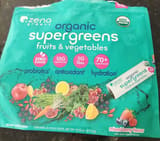 Organic Supergreens Fruits & Vegetables Zena Greens Contains non-nutritive sweetenersContains caffeineCertified organicContains whole grains Score 95 out of 100 Excellent
 -
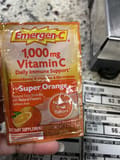 Super Orange Flavored Fizzy Drink Mix Emergen-C · 9.1 g Contains added sugarsNo synthetic dyes Score 86 out of 100 Excellent
 -
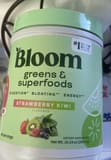 Greens and superfoods Bloom · 10.24 oz Contains non-nutritive sweetenersContains caffeineContains whole grains Score 97 out of 100 Excellent
 -
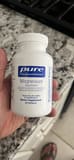 Magnesium (glycinate) Pure Encapsulations Score 98 out of 100 Excellent
 -
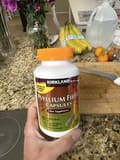 Psyllium Fiber Capsules Kirkland · 360 Capsules Score 100 out of 100 Excellent
 -
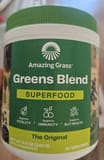 Super Greens the Original Amazing Grass Contains caffeineContains whole grains Score 99 out of 100 Excellent
More from Kirkland Signature
-
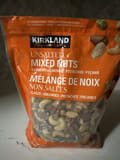 Unsalted Mixed Nuts Kirkland Signature · 1.13 kg Score 100 out of 100 Excellent
 -
 Purified Drinking Water Kirkland Signature · 500 mL Score 100 out of 100 Excellent
 -
 Dried Mangoes Sweetened Kirkland Signature · 35 oz Score 57 out of 100 Okay
 -
 Low Moisture Part Skim Shredded Mozzarella Cheese Kirkland Signature · 2.5 lb Score 69 out of 100 Good
Sources
-
Guideline: sugars intake for adults and children
“In both adults and children, WHO recommends reducing the intake of free sugars to less than 10% of total energy intake”
who.int
-
Dietary Guidelines for Americans, 2025–2030
“Limit foods and beverages that include artificial flavors, petroleum-based dyes, artificial preservatives, and low-calorie non-nutritive sweeteners.”
cdn.realfood.gov
-
Added and free sugars should be as low as possible
“Sugar consumption is a known cause of dental caries.”
efsa.europa.eu
-
21 CFR 101.22 Foods; labeling of spices, flavorings, colorings and chemical preservatives
“whose significant function in food is flavoring rather than nutritional.”
ecfr.gov
-
“replacement of saturated fat in the diet with linoleic acid effectively lowers serum cholesterol but does not support the hypothesis that this translates to a lower risk of death from coronary heart disease or all causes.”
doi.org
-
“These data provide support for current recommendations to replace saturated fat with polyunsaturated fat for primary prevention of CHD.”
doi.org