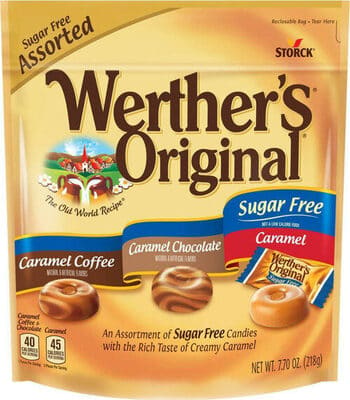
Candies
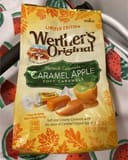
Storck Werther& original sugar free assorted flavors
7.70 oz
Score
- Contains non-nutritive sweeteners
- Contains added sugars
- Contains caffeine
- Contains artificial flavors
- Seed-oil free
- No synthetic dyes
Why it scores 23
Storck Werther& original sugar free assorted flavors scores 23 out of 100 (Poor) under GoodSwap’s published rules. What moved the score most:
- minus 20 points Caramel: An added sugar. Strong
- minus 20 points Caramel color: The FDA says classes III and IV, which can contain 4-MEI, are the most commonly used food color additives by volume. Regulatory
- minus 18 points Ultra-processed (NOVA 4, estimated): No NOVA group on file; estimated from 4 kinds of ultra-processing markers. Strong
Every line of the math is on The Receipt below, with its evidence tier and sources.
The Receipt
Werther& original sugar free assorted flavors
Ingredients
- Caramel minus 20 points
- Caramel color minus 20 points
- Acesulfame potassium (Ace-K) minus 7.5 points
- Sucralose minus 2.5 points
Processing
- Ultra-processed (NOVA 4, estimated) minus 18 points
- 4 kinds of ultra-processing markers minus 4.5 points
Nutrition per 100 g
- Saturated fat 3.1 g / 100 g minus 3 points
- Salt 0.5 g / 100 g minus 1 points
- Energy 250 kcal / 100 g minus 1 points
100 − 77.5 = 22.5 → 23
Can’t score above 79. Contains caramel, an ingredient of high concern. [1][2][3][4][5][6][7]
Nutrition per 100 g
| Energy | 250 kcal |
|---|---|
| Fat | 6.3 g |
| Saturated fat | 3.1 g |
| Trans fat | 0 g |
| Carbohydrates | 93.8 g |
| Sugars | 0 g |
| Added sugars | 0 g |
| Fiber | 0 g |
| Protein | 0 g |
| Salt | 0.5 g |
Serving: 16 g
Ingredients
- CARAMEL COFFEE - ISOMALT (high concern)
- BUTTER
- CREAM
- NATURAL AND ARTIFICIAL FLAVORS
- SALT
- CARAMEL COLOR (high concern)
- COFFEE EXTRACT
- SOY LECITHIN EMULSIFIER
- ACESULFAME K (moderate concern)
- CARAMEL CHOCOLATE - ISOMALT (high concern)
- BUTTER
- CREAM
- COCOA EXTRACT
- SALT
- NATURAL AND ARTIFICIAL FLAVORS
- CARAMEL COLOR (high concern)
- SOY LECITHIN EMULSIFIER
- ACESULFAME K (moderate concern)
- SUCRALOSE (moderate concern)
- CARAMEL - ISOMALT (high concern)
- BUTTER
- CREAM
- SALT
- NATURAL AND ARTIFICIAL FLAVORS
- SOY LECITHIN EMULSIFIER
- ACESULFAME K (moderate concern)
Label text, as published
CARAMEL COFFEE - ISOMALT, BUTTER, CREAM, NATURAL AND ARTIFICIAL FLAVORS, SALT, CARAMEL COLOR, COFFEE EXTRACT, SOY LECITHIN EMULSIFIER, ACESULFAME K,CARAMEL CHOCOLATE - ISOMALT, BUTTER, CREAM, COCOA EXTRACT, SALT, NATURAL AND ARTIFICIAL FLAVORS, CARAMEL COLOR, SOY LECITHIN EMULSIFIER, ACESULFAME K, SUCRALOSE,CARAMEL - ISOMALT, BUTTER, CREAM, SALT, NATURAL AND ARTIFICIAL FLAVORS, SOY LECITHIN EMULSIFIER, ACESULFAME K
Allergens and diets
Contains: Milk
- Not vegan
- Palm-oil-free
Always check the package: recipes change.
More candies on GoodSwap
-
 Dark Chocolate Coconut Bar Unreal · 15 g High in saturated fatContains added sugarsNo additivesSeed-oil free Score 27 out of 100 Poor
 -
 Ice Breakers Cool Mint Hershey · 42 gr Ultra-processedContains sugar alcohols Score 72 out of 100 Good
 -
 Dark Chocolate Peanut Butter Cups Trader Joe's · 16 oz Ultra-processedHigh in sugarHigh in saturated fatContains added sugars Score 2 out of 100 Bad
 -
 Good and plenty Leaf Inc. · 6 oz (170 g) Dye with an EU warning labelContains synthetic dyesUltra-processedHigh in sugar Score 7 out of 100 Bad
 -
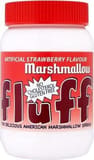 Artificial Strawberry Flavour Marshmallow Durkee · 213 g Ultra-processedHigh in sugarContains added sugarsContains artificial flavors Score 21 out of 100 Poor
 -
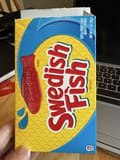 Swedish Fish Swedish Fish · 3.1 oz Dye with an EU warning labelContains synthetic dyesUltra-processedHigh in sugar Score 10 out of 100 Bad
More from Storck

Sources
-
Guideline: sugars intake for adults and children
“In both adults and children, WHO recommends reducing the intake of free sugars to less than 10% of total energy intake”
who.int
-
Dietary Guidelines for Americans, 2025–2030
“Limit foods and beverages that include artificial flavors, petroleum-based dyes, artificial preservatives, and low-calorie non-nutritive sweeteners.”
cdn.realfood.gov
-
Added and free sugars should be as low as possible
“Sugar consumption is a known cause of dental caries.”
efsa.europa.eu
-
Questions & Answers About 4-MEI
“Based on current science, the FDA has no reason to believe that there are any immediate or short-term health risks presented by 4-MEI at the levels expected in food.”
fda.gov
-
Agents Classified by the IARC Monographs, Volumes 1–142 (List of Classifications)
monographs.iarc.who.int
-
Proposition 65 List of Chemicals Known to the State to Cause Cancer or Reproductive Toxicity
“The date refers to the initial appearance of the chemical on the list.”
oehha.ca.gov
-
Artificial sweeteners and cancer risk: Results from the NutriNet-Santé population-based cohort study
“In this large cohort study, artificial sweeteners (especially aspartame and acesulfame-K), which are used in many food and beverage brands worldwide, were associated with increased cancer risk.”
doi.org
-
Re-evaluation of acesulfame K (E 950) as food additive (plain language summary)
“The acceptable daily intake (ADI) considered safe for all population groups was set at 15 mg/kg body weight (bw) per day.”
efsa.europa.eu
-
WHO advises not to use non-sugar sweeteners for weight control in newly released guideline
“The recommendation is based on the findings of a systematic review of the available evidence which suggests that use of NSS does not confer any long-term benefit in reducing body fat in adults or children.”
who.int
-
Personalized microbiome-driven effects of non-nutritive sweeteners on human glucose tolerance
“As groups, each administered NNS distinctly altered stool and oral microbiome and plasma metabolome, whereas saccharin and sucralose significantly impaired glycemic responses.”
doi.org
-
“Sucralose-6-acetate significantly increased the expression of genes associated with inflammation, oxidative stress, and cancer”
doi.org
-
“EFSA’s experts concluded that the sweetener sucralose (E 955) continues to be safe for consumers for its currently authorised uses as a food additive.”
efsa.europa.eu
-
Saturated fatty acid and trans-fatty acid intake for adults and children: WHO guideline
“WHO recommends that adults and children reduce saturated fatty acid intake to 10% of total energy intake (strong recommendation).”
who.int
-
“For adults, WHO recommends less than 2000 mg/day of sodium (equivalent to less than 5 g/day salt), or just under a teaspoon.”
who.int
-
Spilling the Beans: How Much Caffeine is Too Much?
“For most adults, the FDA has cited 400 milligrams* a day — that's about two to three 12-fluid-ounce cups of coffee — as an amount not generally associated with negative effects.”
fda.gov
-
Regulation (EU) No 1169/2011, Annex III point 4.1 (beverages with high caffeine content)
“‘High caffeine content. Not recommended for children or pregnant or breast-feeding women’”
eur-lex.europa.eu