Flavored syrups
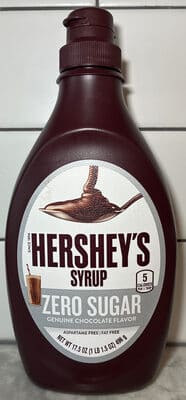
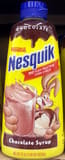
Hershey's Zero Sugar Chocolate Syrup
17.5 oz (1 lb 1.5 oz) 496 g
Score
- Ultra-processed
- Contains non-nutritive sweeteners
- Contains sugar alcohols
- Contains artificial flavors
Why it scores 45
Hershey's Zero Sugar Chocolate Syrup scores 45 out of 100 (Okay) under GoodSwap’s published rules. What moved the score most:
- minus 18 points Ultra-processed (NOVA 4): Classified NOVA 4: made with industrial ingredients and additives. Strong
- minus 7.5 points Erythritol: A 2023 study linked higher blood erythritol to cardiovascular events and found it increased clotting activity; long-term safety studies are warranted. Strong
- minus 7.5 points Sodium benzoate: Benzoates can form small amounts of benzene in drinks that also contain ascorbic acid (vitamin C), especially with heat or light. Strong
Every line of the math is on The Receipt below, with its evidence tier and sources.
Better dessert syrups and toppings
-
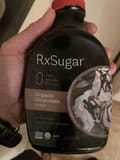 Organic Chocolate Syrup RxSugar · 6 fl oz Not ultra-processed · No non-nutritive sweeteners Score 100 out of 100 , 55 points higher
 -
 Dark Chocolate Flavored Sauce Monin Not ultra-processed · No non-nutritive sweeteners Score 79 out of 100 , 34 points higher
 -
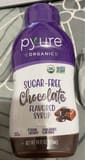 Sugar-Free Chocolate Flavored Syrup Pyure · 14 fl oz No artificial flavors · No sodium benzoate Score 69 out of 100 , 24 points higher
 -
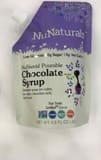 Pourable Chocolate Syrup NuNaturals · 6.6 fl oz, 0.2 L Not ultra-processed · No sugar alcohols Score 98 out of 100 , 53 points higher
 -
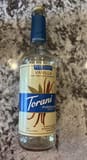 Zero Sugar Vanilla Syrup Torani No artificial flavors · No sodium benzoate Score 62 out of 100 , 17 points higher
The same kind of product, at least 10 points higher, sold in the US. Never paid placements.
The Receipt
Zero Sugar Chocolate Syrup
Ingredients
- Erythritol minus 7.5 points
- Sodium benzoate minus 7.5 points
- Acesulfame potassium (Ace-K) minus 7.5 points
- Sucralose minus 4 points
- Glycerin minus 1.5 points
- Natural and artificial flavors minus 1.5 points
- Xanthan gum minus 0.5 points
- Potassium sorbate minus 0.5 points
Processing
- Ultra-processed (NOVA 4) minus 18 points
- 5 kinds of ultra-processing markers minus 6 points
Nutrition per 100 g
- Salt 0.5 g / 100 g minus 1 points
100 − 55.5 = 44.5 → 45
Nutrition per 100 g
| Energy | 33 kcal |
|---|---|
| Fat | 4.3 g |
| Saturated fat | 0 g |
| Trans fat | 0 g |
| Carbohydrates | 13.3 g |
| Sugars | 0 g |
| Added sugars | 0 g |
| Fiber | 0 g |
| Protein | 0 g |
| Salt | 0.5 g |
Serving: 1 tbsp (15 g)
Ingredients
- WATER
- COCOA PROCESSED WITH ALKALI
- GLYCERIN
- ERYTHRITOL (moderate concern)
- 2% SODIUM ACID SULFATE
- NATURAL & ARTIFICIAL FLAVOR
- XANTHAN GUM
- SALT
- POTASSIUM SORBATE (TO MAINTAIN FRESHNESS)
- SODIUM BENZOATE (TO MAINTAIN FRESHNESS) (moderate concern)
- ACESULFAME POTASSIUM (moderate concern)
- SUCRALOSE (moderate concern)
- ZINC SULFATE
- VITAMIN E ACETATE
- NIACINAMIDE
- BIOTIN
Label text, as published
WATER, COCOA PROCESSED WITH ALKALI, GLYCERIN, ERYTHRITOL, 2% SODIUM ACID SULFATE, NATURAL & ARTIFICIAL FLAVOR, XANTHAN GUM, SALT, POTASSIUM SORBATE (TO MAINTAIN FRESHNESS), SODIUM BENZOATE (TO MAINTAIN FRESHNESS), ACESULFAME POTASSIUM, SUCRALOSE, ZINC SULFATE, VITAMIN E ACETATE, NIACINAMIDE, BIOTIN.
Allergens and diets
- Palm-oil-free
Always check the package: recipes change.
Packaging
Plastic, Hdpe 2 high density polyethylene
Context only: no points in v1.
More flavored syrups on GoodSwap
More from Hershey's
-
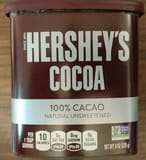 Hershey's Cocoa 100% Cacao Natural Unsweetened Hershey's · 8 oz Score 100 out of 100 Excellent
 -
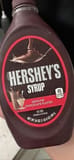 Chocolate Syrup Hershey's · 24 oz (1 lb 8 oz) 680 g Score 35 out of 100 Poor
 -
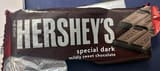 Special Dark Hershey's · 1.44 oz (41 g) Score 33 out of 100 Poor
 -
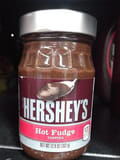 Hot fudge topping Hershey's · 12.8 oz/362 g Score 34 out of 100 Poor
Sources
-
The artificial sweetener erythritol and cardiovascular event risk
“Our findings reveal that erythritol is both associated with incident MACE risk and fosters enhanced thrombosis. Studies assessing the long-term safety of erythritol are warranted.”
doi.org
-
Re-evaluation of erythritol (E 968) as a food additive (plain language summary)
“In all groups of people, both acute and chronic exposure to erythritol is above the newly set ADI.”
efsa.europa.eu
-
“Artificial colours or a sodium benzoate preservative (or both) in the diet result in increased hyperactivity in 3-year-old and 8/9-year-old children in the general population.”
doi.org
-
Re-evaluation of benzyl alcohol (E 1519) as food additive (records the 2016 benzoate re-evaluation)
“derived a group ADI of 5 mg/kg bw per day (expressed as benzoic acid) in accordance with the ADI previously derived by SCF and JECFA”
doi.org
-
Artificial sweeteners and cancer risk: Results from the NutriNet-Santé population-based cohort study
“In this large cohort study, artificial sweeteners (especially aspartame and acesulfame-K), which are used in many food and beverage brands worldwide, were associated with increased cancer risk.”
doi.org
-
Re-evaluation of acesulfame K (E 950) as food additive (plain language summary)
“The acceptable daily intake (ADI) considered safe for all population groups was set at 15 mg/kg body weight (bw) per day.”
efsa.europa.eu
-
WHO advises not to use non-sugar sweeteners for weight control in newly released guideline
“The recommendation is based on the findings of a systematic review of the available evidence which suggests that use of NSS does not confer any long-term benefit in reducing body fat in adults or children.”
who.int
-
Dietary Guidelines for Americans, 2025–2030
“Limit foods and beverages that include artificial flavors, petroleum-based dyes, artificial preservatives, and low-calorie non-nutritive sweeteners.”
cdn.realfood.gov
-
Personalized microbiome-driven effects of non-nutritive sweeteners on human glucose tolerance
“As groups, each administered NNS distinctly altered stool and oral microbiome and plasma metabolome, whereas saccharin and sucralose significantly impaired glycemic responses.”
doi.org
-
“Sucralose-6-acetate significantly increased the expression of genes associated with inflammation, oxidative stress, and cancer”
doi.org
-
“EFSA’s experts concluded that the sweetener sucralose (E 955) continues to be safe for consumers for its currently authorised uses as a food additive.”
efsa.europa.eu
-
21 CFR 101.22 Foods; labeling of spices, flavorings, colorings and chemical preservatives
“whose significant function in food is flavoring rather than nutritional.”
ecfr.gov
-
“By applying a default uncertainty factor of 100, the Panel established a group ADI expressed as 11 mg sorbic acid/kg bw per day for sorbic acid (E 200) and its potassium salt (E 202).”
doi.org
-
21 CFR 182.3640 Potassium sorbate
ecfr.gov
-
“For adults, WHO recommends less than 2000 mg/day of sodium (equivalent to less than 5 g/day salt), or just under a teaspoon.”
who.int
-
“Greater exposure to ultra-processed food was associated with a higher risk of adverse health outcomes, especially cardiometabolic, common mental disorder, and mortality outcomes.”
doi.org
-
Regulation (EU) No 1169/2011, Annex III point 2.4 (foods with more than 10 % added polyols)
“‘excessive consumption may produce laxative effects’.”
eur-lex.europa.eu