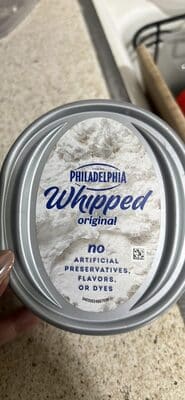
Cream cheeses
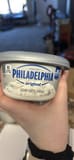
Philadelphia Whipped original Whipped Cream Cheese Spread
8 oz
Score
- Ultra-processed
Why it scores 66
Philadelphia Whipped original Whipped Cream Cheese Spread scores 66 out of 100 (Good) under GoodSwap’s published rules. What moved the score most:
- minus 18 points Ultra-processed (NOVA 4): Classified NOVA 4: made with industrial ingredients and additives. Strong
- minus 3 points 3 kinds of ultra-processing markers: Industrial additive classes found: industrial protein, modified starch and thickener, stabilizer or gelling agent. Emerging
- minus 2.5 points Whey protein concentrate / isolate: An ingredient typical of ultra-processed foods (NOVA group 4). Info
Every line of the math is on The Receipt below, with its evidence tier and sources.
Better cream cheese
-
 Cream Cheese Spread Plain Good Culture · 7 oz Not ultra-processed · No modified starch Score 90 out of 100 , 24 points higher
 -
 Plain Cream Cheese Spread Good & Gather Not ultra-processed · No modified starch Score 89 out of 100 , 23 points higher
 -
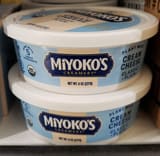 Cream Cheese Miyoko’s · 8 oz Not ultra-processed · No modified starch Score 96 out of 100 , 30 points higher
 -
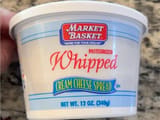 Whipped Cream Cheese Spread Market Basket · 12 oz Not ultra-processed · No modified starch Score 79 out of 100 , 13 points higher
 -
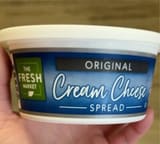 Cream cheese The Fresh Market Not ultra-processed · No modified starch Score 97 out of 100 , 31 points higher
The same kind of product, at least 10 points higher, sold in the US. Never paid placements.
The Receipt
Whipped original Whipped Cream Cheese Spread
Ingredients
- Whey protein concentrate / isolate minus 2.5 points
- Modified starch minus 2.5 points
- Guar gum minus 2.5 points
- Xanthan gum minus 1.5 points
- Locust bean gum minus 1.5 points
- Natamycin minus 1.5 points
Processing
- Ultra-processed (NOVA 4) minus 18 points
- 3 kinds of ultra-processing markers minus 3 points
Nutrition per 100 g
- Saturated fat 2.5 g / 100 g minus 1.5 points
100 − 34.5 = 65.5 → 66
Nutrition per 100 g
| Energy | 50 kcal |
|---|---|
| Fat | 4 g |
| Saturated fat | 2.5 g |
| Trans fat | 0 g |
| Carbohydrates | 2 g |
| Sugars | 0 g |
| Added sugars | 0 g |
| Fiber | 0 g |
| Protein | 1 g |
| Salt | 0.2 g |
Serving: 2 tbsp (22 g)
Ingredients
- PASTEURIZED MILK AND CREAM
- SKIM MILK
- WHEY PROTEIN CONCENTRATE
- MODIFIED FOOD STARCH
- SALT
- GUAR GUM
- XANTHAN GUM
- CAROB BEAN GUM
- LACTIC ACID
- VITAMIN A PALMITATE
- NATAMYCIN (A NATURAL MOLD INHIBITOR)
- CHEESE CULTURE
Label text, as published
PASTEURIZED MILK AND CREAM, SKIM MILK, WHEY PROTEIN CONCENTRATE, MODIFIED FOOD STARCH, SALT, GUAR GUM, XANTHAN GUM, CAROB BEAN GUM, LACTIC ACID, VITAMIN A PALMITATE, NATAMYCIN (A NATURAL MOLD INHIBITOR), CHEESE CULTURE. Contains: Milk.
Allergens and diets
Contains: Milk
- Not vegan
- Palm-oil-free
Always check the package: recipes change.
More cream cheeses on GoodSwap
-
 Cream Cheese Philadelphia · 8 oz Ultra-processedHigh in saturated fat Score 77 out of 100 Good
 -
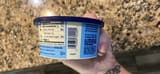 Original Cream Cheese Tillamook · 7 oz/198 g Ultra-processedHigh in saturated fatNo additives Score 71 out of 100 Good
 -
 Original The Laughing Cow · 8 Ultra-processedHigh in saltHigh in saturated fatSeed-oil free Score 63 out of 100 Good
 -
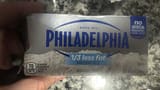 Neurphatel Cheese Philadelphia · 8 oz Ultra-processed Score 73 out of 100 Good
 -
 Cream Cheese Philadelphia · 2 × 8 oz Ultra-processedHigh in saturated fat Score 77 out of 100 Good
 -
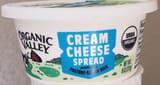 Cream Cheese Spread Organic Valley · 8 oz Ultra-processedHigh in saturated fatCertified organic Score 72 out of 100 Good
More from Philadelphia
Sources
-
11. List of Permitted Preservatives (Lists of Permitted Food Additives)
“B.2 Butylated Hydroxyanisole n/a (a) Active dry yeasts (a) Preservative (a) 1,000 ppm n/a”
canada.ca
-
Saturated fatty acid and trans-fatty acid intake for adults and children: WHO guideline
“WHO recommends that adults and children reduce saturated fatty acid intake to 10% of total energy intake (strong recommendation).”
who.int
-
“Greater exposure to ultra-processed food was associated with a higher risk of adverse health outcomes, especially cardiometabolic, common mental disorder, and mortality outcomes.”
doi.org