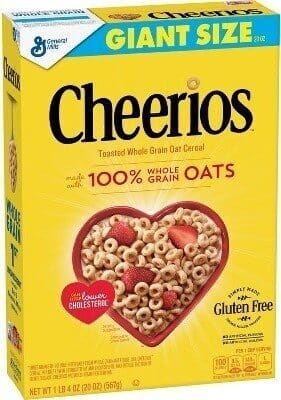
Extruded cereals
General Mills Cheerios
20 oz
Score
- Contains added sugars
- Contains whole grains
Why it scores 65
General Mills Cheerios scores 65 out of 100 (Good) under GoodSwap’s published rules. What moved the score most:
- minus 20 points Sugar: An added sugar. Strong
- minus 8 points Processed (NOVA 3): Classified NOVA 3: processed with added salt, sugar or oil. Emerging
- minus 5 points Salt 1.2 g / 100 g: High in salt. Strong
Every line of the math is on The Receipt below, with its evidence tier and sources.
Better breakfast cereals
-
 Shredded Wheat Original Post · 16.4 oz (465 g) No added sugars · No sugar Score 100 out of 100 , 35 points higher
 -
 Organic Bare Multigrain Cereal With Flax Betteroats · 11.8 oz No added sugars · No sugar Score 100 out of 100 , 35 points higher
 -
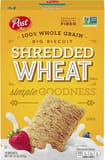 Big Biscuit Shredded Wheat Post · 15 oz No added sugars · No sugar Score 100 out of 100 , 35 points higher
 -
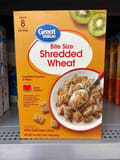 Bite Size Shredded Wheat Great Value · 8 servings Net wt 16.4 oz No added sugars · No sugar Score 100 out of 100 , 35 points higher
 -
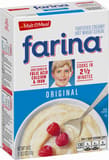 Fortified Creamy Hot Wheat Cereal Malt O Meal · 18 oz (1 lb 2 oz) 510 g No added sugars · No sugar Score 100 out of 100 , 35 points higher
The same kind of product, at least 10 points higher, sold in the US. Never paid placements.
The Receipt
Cheerios
Ingredients
- Sugar minus 20 points
- Potassium phosphate minus 2.5 points
Processing
- Processed (NOVA 3) minus 8 points
Nutrition per 100 g
- Sugars 5.1 g / 100 g minus 3 points
- Saturated fat 1.3 g / 100 g minus 1 points
- Salt 1.2 g / 100 g minus 5 points
- Energy 359 kcal / 100 g minus 2 points
- Fiber 10.3 g / 100 g plus 4 points
- Protein 12.8 g / 100 g plus 2 points
100 − 35.5 = 64.5 → 65
Can’t score above 79. Contains sugar, an ingredient of high concern. [1][2][3]
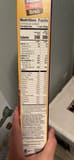
Nutrition per 100 g
| Energy | 359 kcal |
|---|---|
| Fat | 6.4 g |
| Saturated fat | 1.3 g |
| Trans fat | 0 g |
| Carbohydrates | 74.4 g |
| Sugars | 5.1 g |
| Added sugars | 2.6 g |
| Fiber | 10.3 g |
| Protein | 12.8 g |
| Salt | 1.2 g |
Serving: 1.5 Cup (39 g)
Ingredients
- Whole Grain Oats
- Corn Starch
- Sugar (high concern)
- Salt
- Tripotassium Phosphate
- Vitamin E (mixed tocopherols) Added to Preserve Freshness.Vitamins and Minerals: Calcium Carbonate
- Iron and Zinc (mineral nutrients)
- Vitamin C (sodium ascorbate)
- A B Vitamin (niacinamide)
- Vitamin B6 (pyridoxine hydrochloride)
- Vitamin A (palmitate)
- Vitamin B1 (thiamin mononitrate)
- A B Vitamin (folic acid)
- Vitamin B12
- Vitamin D3
Label text, as published
Whole Grain Oats, Corn Starch, Sugar, Salt, Tripotassium Phosphate. Vitamin E (mixed tocopherols) Added to Preserve Freshness.Vitamins and Minerals: Calcium Carbonate, Iron and Zinc (mineral nutrients), Vitamin C (sodium ascorbate), A B Vitamin (niacinamide), Vitamin B6 (pyridoxine hydrochloride), Vitamin A (palmitate), Vitamin B1 (thiamin mononitrate), A B Vitamin (folic acid), Vitamin B12, Vitamin D3.
Allergens and diets
Contains: Gluten
- Not gluten-free
- Palm-oil-free
Always check the package: recipes change.
Packaging
Cardboard
Context only: no points in v1.
More extruded cereals on GoodSwap
-
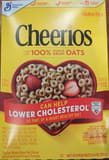 Cheerios General Mills · 8.9 oz Contains added sugarsContains whole grains Score 65 out of 100 Good
 -
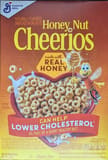 Honey Nut Cheerios General Mills · 10.8 oz Ultra-processedHigh in sugarContains added sugarsContains seed oils Score 17 out of 100 Bad
 -
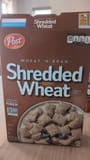 Shredded Wheat Post · 18 oz Contains whole grains Score 100 out of 100 Excellent
 -
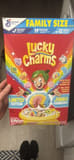 Lucky Charms General Mills · 18.6 oz Not permitted in some countriesDye with an EU warning labelContains synthetic dyesUltra-processed Score 7 out of 100 Bad
 -
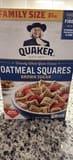 Oatmeal Squares Brown Sugar Quaker · 596 g Ultra-processedContains added sugarsContains whole grains Score 22 out of 100 Poor
 -
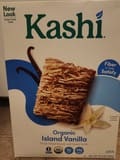 Island Vanilla Kashi · 16.3 oz Ultra-processedContains added sugarsCertified organicNo additives Score 40 out of 100 Okay
More from General Mills
Sources
-
Guideline: sugars intake for adults and children
“In both adults and children, WHO recommends reducing the intake of free sugars to less than 10% of total energy intake”
who.int
-
Dietary Guidelines for Americans, 2025–2030
“Limit foods and beverages that include artificial flavors, petroleum-based dyes, artificial preservatives, and low-calorie non-nutritive sweeteners.”
cdn.realfood.gov
-
Added and free sugars should be as low as possible
“Sugar consumption is a known cause of dental caries.”
efsa.europa.eu
-
EFSA issues new advice on phosphates
“We estimated that dietary exposure to phosphates may exceed the new ADI for infants, toddlers and children with average consumption of phosphates in their diet.”
efsa.europa.eu
-
Saturated fatty acid and trans-fatty acid intake for adults and children: WHO guideline
“WHO recommends that adults and children reduce saturated fatty acid intake to 10% of total energy intake (strong recommendation).”
who.int
-
“For adults, WHO recommends less than 2000 mg/day of sodium (equivalent to less than 5 g/day salt), or just under a teaspoon.”
who.int