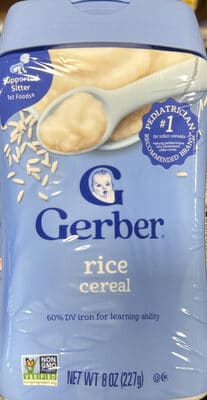
Breakfast cereals
Gerber Rice Single Grain Cereal (Supported Sitter)
1
Score
- Ultra-processed
Why it scores 72
Gerber Rice Single Grain Cereal (Supported Sitter) scores 72 out of 100 (Good) under GoodSwap’s published rules. What moved the score most:
- minus 18 points Ultra-processed (NOVA 4): Classified NOVA 4: made with industrial ingredients and additives. Strong
- minus 3 points Sugars 6.7 g / 100 g: Contains some sugar. Strong
- minus 2.5 points Soy lecithin: An additive class typical of ultra-processed foods (NOVA group 4). Info
Every line of the math is on The Receipt below, with its evidence tier and sources.
The Receipt
Rice Single Grain Cereal (Supported Sitter)
Ingredients
- Soy lecithin minus 2.5 points
- Potassium phosphate minus 2.5 points
Processing
- Ultra-processed (NOVA 4) minus 18 points
Nutrition per 100 g
- Sugars 6.7 g / 100 g minus 3 points
- Energy 400 kcal / 100 g minus 2 points
100 − 28 = 72
Nutrition per 100 g
| Energy | 400 kcal |
|---|---|
| Fat | 3.3 g |
| Saturated fat | 0 g |
| Trans fat | 0 g |
| Carbohydrates | 80 g |
| Sugars | 6.7 g |
| Added sugars | 0 g |
| Fiber | 0 g |
| Protein | 6.7 g |
| Salt | 0.2 g |
Serving: 15g
Ingredients
- rice flour
- soy lecithin
- potassium phosphate
- vitamins and minerals: calcium carbonate
- iron (ferrous fumarate)
- vitamin c (ascorbic acid)
- zinc sulfate
- vitamin e (alpha tocopheryl acetate)
- niacinamide
- vitamin b2 (riboflavin)
- vitamin b1 (thiamin mononitrate)
- vitamin b6 (pyridoxine hydrochloride)
- vitamin b12
- folic acid
Label text, as published
rice flour, soy lecithin, potassium phosphate, vitamins and minerals: calcium carbonate, iron (ferrous fumarate), vitamin c (ascorbic acid), zinc sulfate, vitamin e (alpha tocopheryl acetate), niacinamide, vitamin b2 (riboflavin), vitamin b1 (thiamin mononitrate), vitamin b6 (pyridoxine hydrochloride), vitamin b12, folic acid. contains: soy. gerber products company, fremont, mi 49413, usa
Allergens and diets
Contains: Soy
- Vegan
- Vegetarian
- Gluten-free
- Palm-oil-free
Always check the package: recipes change.
More breakfast cereals on GoodSwap
-
 Grape-Nuts Cereal Post · 20.5 oz (1 lb 4.5 oz) 581 g No additivesContains whole grains Score 93 out of 100 Excellent
 -
 Lightly Sweetened Maple Berry Blend Cereal Morning Summit · 1 box, 2 lb 6 oz High in sugarHigh in saturated fatContains added sugarsNo additives Score 22 out of 100 Poor
 -
 Catalina Crunch Cinnamon Toast Protein Cereal Catalina Crunch · 24 oz Ultra-processedContains non-nutritive sweetenersContains seed oils Score 61 out of 100 Good
 -
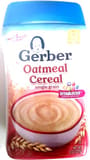 Oatmeal Single Grain Cereal (Supported Sitter) Gerber · 8 oz (227 g) Contains whole grains Score 99 out of 100 Excellent
 -
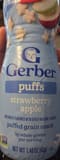 Puffs Strawberry Apple Grain Snack Gerber · 42 g Ultra-processedContains added sugarsContains whole grains Score 60 out of 100 Good
 -
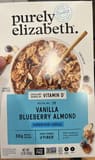 Superfood Cereal Vanilla Blueberry Almond Purely Elizabeth · 11 oz High in saturated fatContains added sugarsContains seed oilsContains whole grains Score 28 out of 100 Poor
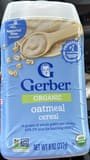
More from Gerber
Sources
-
EFSA issues new advice on phosphates
“We estimated that dietary exposure to phosphates may exceed the new ADI for infants, toddlers and children with average consumption of phosphates in their diet.”
efsa.europa.eu
-
Guideline: sugars intake for adults and children
“In both adults and children, WHO recommends reducing the intake of free sugars to less than 10% of total energy intake”
who.int
-
Dietary Guidelines for Americans, 2025–2030
“Limit foods and beverages that include artificial flavors, petroleum-based dyes, artificial preservatives, and low-calorie non-nutritive sweeteners.”
cdn.realfood.gov
-
“Greater exposure to ultra-processed food was associated with a higher risk of adverse health outcomes, especially cardiometabolic, common mental disorder, and mortality outcomes.”
doi.org