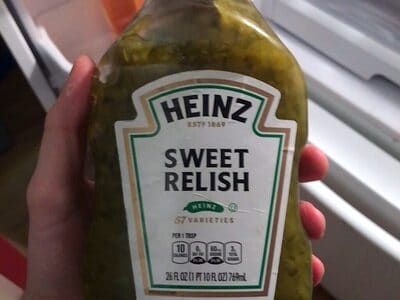
Vegetables based foods
Bell Heinz Relish Sweet
769 mL
Score
- Dye with an EU warning label
- Contains synthetic dyes
- Ultra-processed
- Contains added sugars
- Contains emulsifiers studied for gut effects
- Contains artificial flavors
- May contain traces of 1,4-dioxane
Why it scores 12
Bell Heinz Relish Sweet scores 12 out of 100 (Bad) under GoodSwap’s published rules. What moved the score most:
- minus 20 points High fructose corn syrup: An added sugar. Strong
- minus 20 points Yellow 5: In the EU and UK, foods with this color must state that it "may have an adverse effect on activity and attention in children". Regulatory
- minus 18 points Ultra-processed (NOVA 4): Classified NOVA 4: made with industrial ingredients and additives. Strong
Every line of the math is on The Receipt below, with its evidence tier and sources.
Better relish, peppers and pickled vegetables
-
 Green Giant Cream Style Sweet Corn B&G Foods North America Inc. · 418 g No EU warning-label dyes · No synthetic dyes Score 72 out of 100 , 60 points higher
 -
 Sweet Pickled Beets Paisley Farms No EU warning-label dyes · No synthetic dyes Score 50 out of 100 , 38 points higher
 -
 Sweet Pickled Beets Safie No EU warning-label dyes · No synthetic dyes Score 72 out of 100 , 60 points higher
 -
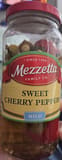 Sweet Cherry Peppers Mezzetta · 30 g No EU warning-label dyes · No synthetic dyes Score 79 out of 100 , 67 points higher
 -
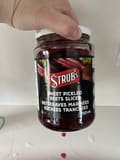 Sweet Pickled Beets Sliced Strub's No EU warning-label dyes · No synthetic dyes Score 79 out of 100 , 67 points higher
The same kind of product, at least 10 points higher, sold in the US. Never paid placements.
The Receipt
Heinz Relish Sweet
Ingredients
- High fructose corn syrup minus 20 points
- Yellow 5 minus 20 points
- Polysorbate 80 minus 7.5 points
- Potassium sorbate minus 1.5 points
- Guar gum minus 1 points
Processing
- Ultra-processed (NOVA 4) minus 18 points
- 5 kinds of ultra-processing markers minus 6 points
Nutrition per 100 g
- Sugars 20 g / 100 g minus 11 points
- Salt 1 g / 100 g minus 3 points
100 − 88 = 12
Can’t score above 79. Contains high fructose corn syrup, an ingredient of high concern. [1][2][3][4][5][6][7][8][9][10]
Nutrition per 100 g
| Energy | 67 kcal |
|---|---|
| Fat | 0 g |
| Saturated fat | 0 g |
| Trans fat | 0 g |
| Carbohydrates | 20 g |
| Sugars | 20 g |
| Added sugars | 20 g |
| Fiber | 0 g |
| Protein | 0 g |
| Salt | 1 g |
Serving: 1 Tbsp (15 ml)
Ingredients
- cucumbers
- high fructose corn syrup (high concern)
- cabbage
- distilled white vinegar
- salt
- potassium sorbate and sodium benzoate (as preservatives)
- guar gum
- aluminum sulfate
- xanthan gum
- dried red bell peppers
- polysorbate 80 (moderate concern)
- natural and artificial flavors (including celery)
- fd&c yellow no. 5 and fd&c blue no. 1 (high concern)
Label text, as published
cucumbers, high fructose corn syrup, cabbage, distilled white vinegar, salt, potassium sorbate and sodium benzoate (as preservatives), guar gum, aluminum sulfate, xanthan gum, dried red bell peppers, polysorbate 80, natural and artificial flavors (including celery), fd&c yellow no. 5 and fd&c blue no. 1.
Allergens and diets
Contains: Celery
- Palm-oil-free
Always check the package: recipes change.
More vegetables based foods on GoodSwap
-
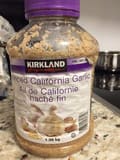 Minced California Garlic Kirkland · 1.36 kg Score 100 out of 100 Excellent
 -
 Cream Cheese Spread Philadelphia · 16 oz Ultra-processedHigh in saturated fat Score 60 out of 100 Good
 -
 Minced Garlic Spice World · 8 oz Score 100 out of 100 Excellent
 -
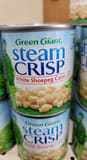 White Shoepeg Corn Steam Crisp - Green Giant Green Giant · 11 oz/311 g Contains added sugarsNo additives Score 79 out of 100 Good
 -
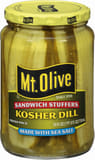 Kosher Dill Sandwich Stuffers Mt. Olive · 24 fl oz/710 mL Ultra-processedHigh in saltContains emulsifiers studied for gut effectsMay contain traces of 1,4-dioxane Score 52 out of 100 Okay
 -
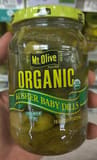 Organic Kosher Baby Dills Mt. Olive · 16 fl oz/1 PT/473 mL Ultra-processedHigh in salt Score 69 out of 100 Good
Sources
-
Guideline: sugars intake for adults and children
“In both adults and children, WHO recommends reducing the intake of free sugars to less than 10% of total energy intake”
who.int
-
Dietary Guidelines for Americans, 2025–2030
“Limit foods and beverages that include artificial flavors, petroleum-based dyes, artificial preservatives, and low-calorie non-nutritive sweeteners.”
cdn.realfood.gov
-
Added and free sugars should be as low as possible
“Sugar consumption is a known cause of dental caries.”
efsa.europa.eu
-
21 CFR 184.1866 High fructose corn syrup
“a sweet, nutritive saccharide mixture containing either approximately 42 or 55 percent fructose”
ecfr.gov
-
Regulation (EC) No 1333/2008 of 16 December 2008 on food additives
“may have an adverse effect on activity and attention in children.”
eur-lex.europa.eu
-
“may have an adverse effect on activity and attention in children.”
legislation.gov.uk
-
“Artificial colours or a sodium benzoate preservative (or both) in the diet result in increased hyperactivity in 3-year-old and 8/9-year-old children in the general population.”
doi.org
-
Tracking Food Industry Pledges to Remove Petroleum Based Food Dyes
“FD&C Green No. 3, FD&C Red No. 40, FD&C Yellow No. 5, FD&C Yellow No. 6, FD&C Blue No. 1, and FD&C Blue No. 2—by the end of 2027.”
fda.gov
-
California AB 2316 (2024), Pupil nutrition: substances: prohibition
“beginning December 31, 2027, would prohibit a school district, county superintendent of schools, or charter school”
leginfo.legislature.ca.gov
-
21 CFR 74.705 FD&C Yellow No. 5
“shall specifically declare the presence of FD&C Yellow No. 5 by listing the color additive as FD&C Yellow No. 5 among the list of ingredients.”
ecfr.gov
-
Dietary emulsifiers impact the mouse gut microbiota promoting colitis and metabolic syndrome
“carboxymethylcellulose and polysorbate-80, induced low-grade inflammation and obesity/metabolic syndrome in wild-type hosts and promoted robust colitis in mice predisposed to this disorder.”
doi.org
-
Scientific Opinion on the re-evaluation of polysorbates (E 432–436) as food additives
“There is no concern regarding genotoxicity, carcinogenicity or developmental toxicity.”
doi.org
-
“By applying a default uncertainty factor of 100, the Panel established a group ADI expressed as 11 mg sorbic acid/kg bw per day for sorbic acid (E 200) and its potassium salt (E 202).”
doi.org
-
21 CFR 182.3640 Potassium sorbate
ecfr.gov
-
“For adults, WHO recommends less than 2000 mg/day of sodium (equivalent to less than 5 g/day salt), or just under a teaspoon.”
who.int
-
HHS, FDA to Phase Out Petroleum-Based Synthetic Dyes in Nation’s Food Supply (press release)
“Initiating the process to revoke authorization for two synthetic food colorings—Citrus Red No. 2 and Orange B—within the coming months.”
fda.gov
-
“Greater exposure to ultra-processed food was associated with a higher risk of adverse health outcomes, especially cardiometabolic, common mental disorder, and mortality outcomes.”
doi.org
-
“Relative to control subjects, CMC consumption modestly increased postprandial abdominal discomfort and perturbed gut microbiota composition in a way that reduced its diversity.”
doi.org
-
“This study found positive associations between risk of CVD and intake of five individual and two groups of food additive emulsifiers widely used in industrial foods.”
doi.org
-
1,4-Dioxane in Cosmetics: A Manufacturing Byproduct
“1,4-dioxane forms as a byproduct during the manufacturing process of certain cosmetic ingredients.”
fda.gov
-
Agents Classified by the IARC Monographs, Volumes 1–142 (List of Classifications)
monographs.iarc.who.int