Protein bars
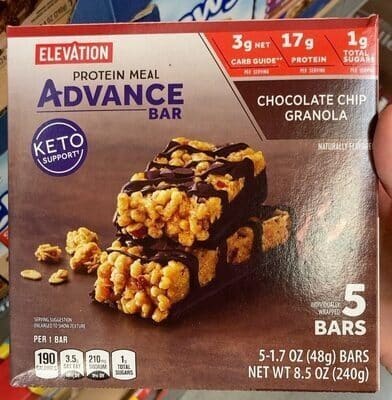
Elevation Chocolate Chip Granola Elevation Protein Meal Advance Bar
Score
- Contains non-nutritive sweeteners
- Contains added sugars
- Contains seed oils
- Contains palm oil
- Contains whole grains
Why it scores 84
Elevation Chocolate Chip Granola Elevation Protein Meal Advance Bar scores 84 out of 100 (Excellent) under GoodSwap’s published rules. What moved the score most:
- minus 5 points Chocolate (sweetened, ingredient): Contains added sugar. Strong
- minus 5 points Sucralose: In a 2022 randomized study, sucralose and saccharin altered the gut microbiome and impaired glucose responses in some people; a 2023 lab study raised questions about its by-product sucralose-6-acetate. Strong
- minus 1 points Protein blend (unspecified): An ingredient typical of ultra-processed foods (NOVA group 4). Info
Every line of the math is on The Receipt below, with its evidence tier and sources.
The Receipt
Chocolate Chip Granola Elevation Protein Meal Advance Bar
Ingredients
- Chocolate (sweetened, ingredient) minus 5 points
- Sucralose minus 5 points
- Protein blend (unspecified) minus 1 points
- Soy protein isolate / concentrate minus 0.5 points
- Whey protein concentrate / isolate minus 0.5 points
- Inulin (chicory root fiber) minus 0.5 points
- Soluble corn fiber (resistant dextrin) minus 0.5 points
- Glycerin minus 0.5 points
- Soybean oil minus 0.5 points
- Palm kernel oil minus 0.5 points
- Natural flavors minus 0.5 points
- Soy lecithin minus 0.5 points
- Gum arabic (acacia) minus 0.5 points
100 − 16 = 84
Nutrition per 100 g
| Energy | 396 kcal |
|---|---|
| Fat | 14.6 g |
| Saturated fat | 6.3 g |
| Carbohydrates | 39.6 g |
| Sugars | 2.1 g |
| Added sugars | 0 g |
| Fiber | 33.3 g |
| Protein | 35.4 g |
| Salt | 1 g |
Serving: 1 bar (48 g)
Ingredients
- protein blend (soy crisps, fiber blend, dark chocolate flavored coating and er 48g)
- glycerin
- soy oil
- gelatin
- palm kernel oil
- rolled oats
- almonds
- natural flavors
- soy lecithin
- gum arabic
- salt
- sucralose (moderate concern)
Label text, as published
protein blend (soy crisps [soy protein isolatej, soy protein isolate, whey protein isolate), fiber blend (inulin, polydextrose, soluble tapioca fiber), dark chocolate flavored coating and er 48g) chips (fructooligosaccharides, palm kernel oil, whey protein concentrate, cocoa powder [processed with alkali], soy lecithin, natural vanilla flavor, stevia leaf extract), glycerin, soy oil, gelatin, palm kernel oil, rolled oats, almonds, natural flavors, soy lecithin, gum arabic, salt, sucralose, contains: milk, soy, almonds, may contain peanuts, wheat, egg, other tree nuts, cts 0 value* 9% 18% 0%
Allergens and diets
Contains: Milk, Tree nuts, Soy, Gluten
May contain: Peanuts, Egg
- Not vegan
- Not vegetarian
- Not gluten-free
- Not palm-oil-free
Always check the package: recipes change.
More protein bars on GoodSwap
-
 Blueberry RXBAR RXBAR · 52 g Ultra-processedHigh in sugarNo additives Score 64 out of 100 Good
 -
 Iq Bar 18 Protein Bar Variety Pack IQ Bar · 816 g Seed-oil free Score 97 out of 100 Excellent
 -
 Protein Bars RXBAR Score 99 out of 100 Excellent
 -
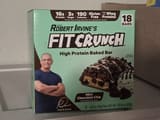 High Protein Baked Bar Mint Chocolate Chip Robert Irvine's Fit Crunch · 828 g , 29.16 oz Not permitted in some countriesContains non-nutritive sweetenersContains added sugarsContains sugar alcohols Score 15 out of 100 Bad
 -
 ONE Cookies 'n Creme Protein Bar Hershey's · 2.12 oz Contains non-nutritive sweetenersContains added sugarsContains sugar alcoholsContains seed oils Score 65 out of 100 Good
 -
 PROTEIN TREATS Double Chocolate Magic Spoon Contains non-nutritive sweetenersContains palm oilSeed-oil freeNo synthetic dyes Score 94 out of 100 Excellent
More from Elevation
-
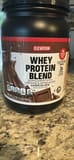 Whey Protein Blend Elevation · 32 oz Score 87 out of 100 Excellent
 -
 High Performance Protein Shake Vanilla Elevation · 11 fl oz (325 mL) Score 79 out of 100 Good
 -
 Protein Energy Bars Cookie Dough Elevation Score 56 out of 100 Okay
 -
 Protein Meal Bars Chocolate Peanut Butter Elevation Score 6 out of 100 Bad
Sources
-
Guideline: sugars intake for adults and children
“In both adults and children, WHO recommends reducing the intake of free sugars to less than 10% of total energy intake”
who.int
-
Personalized microbiome-driven effects of non-nutritive sweeteners on human glucose tolerance
“As groups, each administered NNS distinctly altered stool and oral microbiome and plasma metabolome, whereas saccharin and sucralose significantly impaired glycemic responses.”
doi.org
-
“Sucralose-6-acetate significantly increased the expression of genes associated with inflammation, oxidative stress, and cancer”
doi.org
-
“EFSA’s experts concluded that the sweetener sucralose (E 955) continues to be safe for consumers for its currently authorised uses as a food additive.”
efsa.europa.eu
-
WHO advises not to use non-sugar sweeteners for weight control in newly released guideline
“The recommendation is based on the findings of a systematic review of the available evidence which suggests that use of NSS does not confer any long-term benefit in reducing body fat in adults or children.”
who.int
-
Dietary Guidelines for Americans, 2025–2030
“Limit foods and beverages that include artificial flavors, petroleum-based dyes, artificial preservatives, and low-calorie non-nutritive sweeteners.”
cdn.realfood.gov
-
“replacement of saturated fat in the diet with linoleic acid effectively lowers serum cholesterol but does not support the hypothesis that this translates to a lower risk of death from coronary heart disease or all causes.”
doi.org
-
“These data provide support for current recommendations to replace saturated fat with polyunsaturated fat for primary prevention of CHD.”
doi.org
-
Saturated fatty acid and trans-fatty acid intake for adults and children: WHO guideline
“WHO recommends that adults and children reduce saturated fatty acid intake to 10% of total energy intake (strong recommendation).”
who.int
-
Process contaminants in vegetable oils and foods
“The highest levels of GE, as well as 3-MCPD and 2-MCPD (including esters) were found in palm oils and palm fats, followed by other oils and fats.”
efsa.europa.eu
-
“Glycidyl fatty acid esters, expressed as glycidol”
eur-lex.europa.eu
-
21 CFR 101.22 Foods; labeling of spices, flavorings, colorings and chemical preservatives
“whose significant function in food is flavoring rather than nutritional.”
ecfr.gov