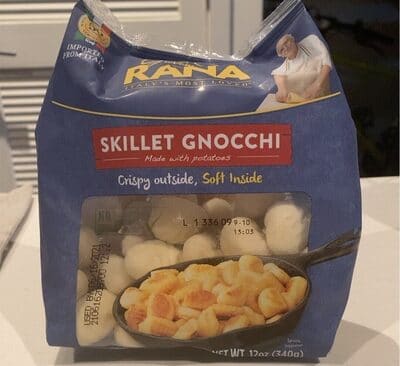
Potato gnocchi
Giovanni Rana Skillet Gnocchi
12 oz
Score
- Ultra-processed
- Contains emulsifiers studied for gut effects
Why it scores 70
Giovanni Rana Skillet Gnocchi scores 70 out of 100 (Good) under GoodSwap’s published rules. What moved the score most:
- minus 18 points Ultra-processed (NOVA 4): Classified NOVA 4: made with industrial ingredients and additives. Strong
- minus 3 points Salt 0.9 g / 100 g: High in salt. Strong
- minus 2.5 points Mono- and diglycerides: In the NutriNet-Santé cohort, higher intakes of mono- and diglycerides of fatty acids (E471 and E472) were associated with higher cardiovascular risk; cause and effect is not established. Strong
Every line of the math is on The Receipt below, with its evidence tier and sources.
Better ravioli and tortellini
-
 Fettuccine Giovanni Rana · 9 oz Not ultra-processed · No gut-studied emulsifiers Score 100 out of 100 , 30 points higher
 -
 Cheese Ravioli Wegmans Organic · 13 oz/369 g Not ultra-processed · No gut-studied emulsifiers Score 100 out of 100 , 30 points higher
 -
 Rana Linguine Rana · 9 oz Not ultra-processed · No gut-studied emulsifiers Score 100 out of 100 , 30 points higher
 -
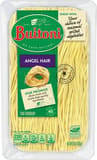 Angel hair Buitoni · 9 oz Not ultra-processed · No gut-studied emulsifiers Score 97 out of 100 , 27 points higher
 -
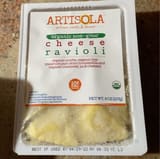 Artisola organic cheese ravioli Artisola · 8 oz Not ultra-processed · No gut-studied emulsifiers Score 95 out of 100 , 25 points higher
The same kind of product, at least 10 points higher, sold in the US. Never paid placements.
The Receipt
Skillet Gnocchi
Ingredients
- Mono- and diglycerides minus 2.5 points
- Modified starch minus 2.5 points
- Sorbic acid minus 2.5 points
Processing
- Ultra-processed (NOVA 4) minus 18 points
- 2 kinds of ultra-processing markers minus 1.5 points
Nutrition per 100 g
- Salt 0.9 g / 100 g minus 3 points
100 − 30 = 70
Nutrition per 100 g
| Energy | 154 kcal |
|---|---|
| Fat | 0.3 g |
| Saturated fat | 0 g |
| Trans fat | 0 g |
| Carbohydrates | 34 g |
| Sugars | 0.6 g |
| Added sugars | 0 g |
| Fiber | 0.6 g |
| Protein | 4.3 g |
| Salt | 0.9 g |
Serving: 1 serving (162 g)
Ingredients
- WATER
- SEMOLINA
- POTATO FLAKES (POTATOES, MONO AND DIGLYCERIDES OF FATTY ACIDS, DIPHOSPHATE, CITRIC ACID, ASCORBYL PALMITATE AND ASCORBIC ACID)
- MODIFIED STARCH
- SALT
- CITRIC ACID
- SORBIC ACID
- RICE FLOUR
Label text, as published
WATER, SEMOLINA, POTATO FLAKES (POTATOES, MONO AND DIGLYCERIDES OF FATTY ACIDS, DIPHOSPHATE, CITRIC ACID, ASCORBYL PALMITATE AND ASCORBIC ACID), MODIFIED STARCH, 2% OR LESS OF SALT, CITRIC ACID, SORBIC ACID, RICE FLOUR
Allergens and diets
Contains: Wheat, Gluten
- Not gluten-free
Always check the package: recipes change.
More potato gnocchi on GoodSwap
-
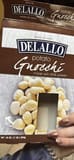 Potato Gnocchi Delallo · 16 oz Ultra-processed Score 73 out of 100 Good
 -
 Potato Gnocchi Stuffed with Tomato Sauce & Mozzarella Trader Joe's · 16 oz Contains seed oils Score 84 out of 100 Excellent
 -
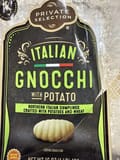 Italian Gnocchi With Potato Private Selection · 120 g Ultra-processedContains emulsifiers studied for gut effects Score 79 out of 100 Good
 -
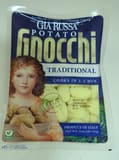 Gnocchi With Potato Gia Russa · 120 g Ultra-processedContains emulsifiers studied for gut effects Score 72 out of 100 Good
More from Giovanni Rana
Sources
-
“This study found positive associations between risk of CVD and intake of five individual and two groups of food additive emulsifiers widely used in industrial foods.”
doi.org
-
Re-evaluation of mono- and di-glycerides of fatty acids (E 471) as food additives
“The available studies did not raise any concern with regard to genotoxicity.”
doi.org
-
“By applying a default uncertainty factor of 100, the Panel established a group ADI expressed as 11 mg sorbic acid/kg bw per day for sorbic acid (E 200) and its potassium salt (E 202).”
doi.org
-
“For adults, WHO recommends less than 2000 mg/day of sodium (equivalent to less than 5 g/day salt), or just under a teaspoon.”
who.int
-
“Greater exposure to ultra-processed food was associated with a higher risk of adverse health outcomes, especially cardiometabolic, common mental disorder, and mortality outcomes.”
doi.org
-
Dietary emulsifiers impact the mouse gut microbiota promoting colitis and metabolic syndrome
“carboxymethylcellulose and polysorbate-80, induced low-grade inflammation and obesity/metabolic syndrome in wild-type hosts and promoted robust colitis in mice predisposed to this disorder.”
doi.org
-
“Relative to control subjects, CMC consumption modestly increased postprandial abdominal discomfort and perturbed gut microbiota composition in a way that reduced its diversity.”
doi.org