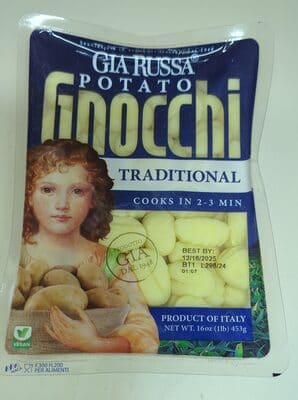
Potato gnocchi
Gia Russa Gnocchi With Potato
120 g
Score
- Ultra-processed
- Contains emulsifiers studied for gut effects
Why it scores 72
Gia Russa Gnocchi With Potato scores 72 out of 100 (Good) under GoodSwap’s published rules. What moved the score most:
- minus 18 points Ultra-processed (NOVA 4): Classified NOVA 4: made with industrial ingredients and additives. Strong
- minus 2.5 points Mono- and diglycerides: In the NutriNet-Santé cohort, higher intakes of mono- and diglycerides of fatty acids (E471 and E472) were associated with higher cardiovascular risk; cause and effect is not established. Strong
- minus 2.5 points Natural flavors: "Natural flavor" is a legal category (21 CFR 101.22(a)(3)): flavor substances from spices, fruits, vegetables, meat, dairy or fermentation. Info
Every line of the math is on The Receipt below, with its evidence tier and sources.
Better pasta
-
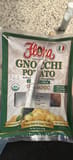 Imported Potato Gnocchi Flora Not ultra-processed · No gut-studied emulsifiers Score 97 out of 100 , 25 points higher
 -
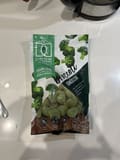 Broccoli Gnocchi, Broccoli Dare To Be Different · 8 oz/226 g Not ultra-processed · No gut-studied emulsifiers Score 100 out of 100 , 28 points higher
 -
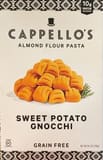 Sweet Potato Gnocchi Cappello's · 10.5 oz/298 g Not ultra-processed · No gut-studied emulsifiers Score 93 out of 100 , 21 points higher
 -
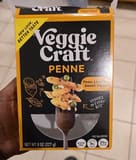 Sweet Potato Penne Veggie Craft · 8 oz Not ultra-processed · No gut-studied emulsifiers Score 100 out of 100 , 28 points higher
 -
 Sweet Potato Vermicelli The Snak Yard Not ultra-processed · No gut-studied emulsifiers Score 100 out of 100 , 28 points higher
The same kind of product, at least 10 points higher, sold in the US. Never paid placements.
The Receipt
Gnocchi With Potato
Ingredients
- Mono- and diglycerides minus 2.5 points
- Natural flavors minus 2.5 points
- Potassium sorbate minus 2.5 points
Processing
- Ultra-processed (NOVA 4) minus 18 points
- 2 kinds of ultra-processing markers minus 1.5 points
Nutrition per 100 g
- Salt 0.5 g / 100 g minus 1 points
100 − 28 = 72
Nutrition per 100 g
| Energy | 150 kcal |
|---|---|
| Fat | 0 g |
| Saturated fat | 0 g |
| Trans fat | 0 g |
| Carbohydrates | 33.3 g |
| Sugars | 0 g |
| Added sugars | 0 g |
| Fiber | 0.8 g |
| Protein | 3.3 g |
| Salt | 0.5 g |
Serving: 1 serving (120 g)
Ingredients
Label text, as published
REHYDRATED POTATOES 70% (WATER, POTATO FLAKES (POTATOES, MONO AND DIGLYCERIDES OF FATTY ACIDS, NATURAL FLAVORS), WHEAT FLOUR, POTATO STARCH, RICE FLOUR, SALT, SPICES, LACTIC ACID (ACIDITY REGULATOR), POTASSIUM SORBATE (AS PRESERVATIVE)
Allergens and diets
Contains: Wheat, Gluten
- Vegan
- Vegetarian
- Not gluten-free
- Palm-oil-free
Always check the package: recipes change.
More potato gnocchi on GoodSwap
-
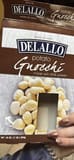 Potato Gnocchi Delallo · 16 oz Ultra-processed Score 73 out of 100 Good
 -
 Potato Gnocchi Stuffed with Tomato Sauce & Mozzarella Trader Joe's · 16 oz Contains seed oils Score 84 out of 100 Excellent
 -
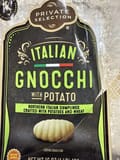 Italian Gnocchi With Potato Private Selection · 120 g Ultra-processedContains emulsifiers studied for gut effects Score 79 out of 100 Good
 -
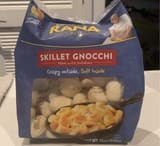 Skillet Gnocchi Giovanni Rana · 12 oz Ultra-processedContains emulsifiers studied for gut effects Score 70 out of 100 Good
Sources
-
“This study found positive associations between risk of CVD and intake of five individual and two groups of food additive emulsifiers widely used in industrial foods.”
doi.org
-
Re-evaluation of mono- and di-glycerides of fatty acids (E 471) as food additives
“The available studies did not raise any concern with regard to genotoxicity.”
doi.org
-
21 CFR 101.22 Foods; labeling of spices, flavorings, colorings and chemical preservatives
“whose significant function in food is flavoring rather than nutritional.”
ecfr.gov
-
“By applying a default uncertainty factor of 100, the Panel established a group ADI expressed as 11 mg sorbic acid/kg bw per day for sorbic acid (E 200) and its potassium salt (E 202).”
doi.org
-
21 CFR 182.3640 Potassium sorbate
ecfr.gov
-
“For adults, WHO recommends less than 2000 mg/day of sodium (equivalent to less than 5 g/day salt), or just under a teaspoon.”
who.int
-
“Greater exposure to ultra-processed food was associated with a higher risk of adverse health outcomes, especially cardiometabolic, common mental disorder, and mortality outcomes.”
doi.org
-
Dietary emulsifiers impact the mouse gut microbiota promoting colitis and metabolic syndrome
“carboxymethylcellulose and polysorbate-80, induced low-grade inflammation and obesity/metabolic syndrome in wild-type hosts and promoted robust colitis in mice predisposed to this disorder.”
doi.org
-
“Relative to control subjects, CMC consumption modestly increased postprandial abdominal discomfort and perturbed gut microbiota composition in a way that reduced its diversity.”
doi.org