Dietary supplements
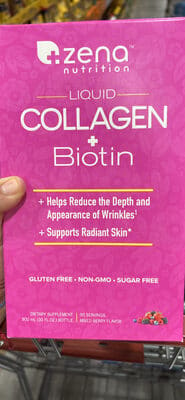
Zena Nutrition Liquid Collagen + Biotin
Score
- Contains non-nutritive sweeteners
Why it scores 92
Zena Nutrition Liquid Collagen + Biotin scores 92 out of 100 (Excellent) under GoodSwap’s published rules. What moved the score most:
- minus 5 points Sodium benzoate: Benzoates can form small amounts of benzene in drinks that also contain ascorbic acid (vitamin C), especially with heat or light. Strong
- minus 1 points Natural flavors: "Natural flavor" is a legal category (21 CFR 101.22(a)(3)): flavor substances from spices, fruits, vegetables, meat, dairy or fermentation. Info
- minus 1 points Monk fruit extract: WHO (2023) recommends against using non-sugar sweeteners to control body weight (conditional recommendation); US dietary guidelines advise limiting them. Emerging
Every line of the math is on The Receipt below, with its evidence tier and sources.
The Receipt
Liquid Collagen + Biotin
Ingredients
- Sodium benzoate minus 5 points
- Natural flavors minus 1 points
- Monk fruit extract minus 1 points
- Potassium sorbate minus 0.5 points
- Stevia (steviol glycosides) minus 0.5 points
100 − 8 = 92
Nutrition per 100 g
| Energy | 100 kcal |
|---|---|
| Fat | 0 g |
| Carbohydrates | 0 g |
| Sugars | 0 g |
| Added sugars | 0 g |
| Protein | 20 g |
| Salt | 0.4 g |
Serving: 10 m (10 ml)
Ingredients
- Purified water
- natural flavor
- malic acid
- citric acid
- monk fruit extract (lou han guo)
- sodium benzoate (moderate concern)
- potassium sorbate
- stevia leaf extract
Label text, as published
Purified water, natural flavor, malic acid, citric acid, monk fruit extract (lou han guo), sodium benzoate, potassium sorbate, stevia leaf extract
Allergens and diets
- Palm-oil-free
Always check the package: recipes change.
More dietary supplements on GoodSwap
-
 Organic Supergreens Fruits & Vegetables Zena Greens Contains non-nutritive sweetenersContains caffeineCertified organicContains whole grains Score 95 out of 100 Excellent
 -
 Super Orange Flavored Fizzy Drink Mix Emergen-C · 9.1 g Contains added sugarsNo synthetic dyes Score 86 out of 100 Excellent
 -
 Greens and superfoods Bloom · 10.24 oz Contains non-nutritive sweetenersContains caffeineContains whole grains Score 97 out of 100 Excellent
 -
 Women's Multi Vitafusion · 220 gummies Contains added sugarsContains palm oilSeed-oil freeNo synthetic dyes Score 74 out of 100 Good
 -
 Collagen Peptides Garden of Life Score 99 out of 100 Excellent
 -
 Super Greens Country Farms · 10.6 oz Contains non-nutritive sweetenersContains seed oilsContains whole grains Score 96 out of 100 Excellent
More from Zena Nutrition
Sources
-
“Artificial colours or a sodium benzoate preservative (or both) in the diet result in increased hyperactivity in 3-year-old and 8/9-year-old children in the general population.”
doi.org
-
Re-evaluation of benzyl alcohol (E 1519) as food additive (records the 2016 benzoate re-evaluation)
“derived a group ADI of 5 mg/kg bw per day (expressed as benzoic acid) in accordance with the ADI previously derived by SCF and JECFA”
doi.org
-
21 CFR 101.22 Foods; labeling of spices, flavorings, colorings and chemical preservatives
“whose significant function in food is flavoring rather than nutritional.”
ecfr.gov
-
WHO advises not to use non-sugar sweeteners for weight control in newly released guideline
“The recommendation is based on the findings of a systematic review of the available evidence which suggests that use of NSS does not confer any long-term benefit in reducing body fat in adults or children.”
who.int
-
Dietary Guidelines for Americans, 2025–2030
“Limit foods and beverages that include artificial flavors, petroleum-based dyes, artificial preservatives, and low-calorie non-nutritive sweeteners.”
cdn.realfood.gov
-
“By applying a default uncertainty factor of 100, the Panel established a group ADI expressed as 11 mg sorbic acid/kg bw per day for sorbic acid (E 200) and its potassium salt (E 202).”
doi.org
-
21 CFR 182.3640 Potassium sorbate
ecfr.gov