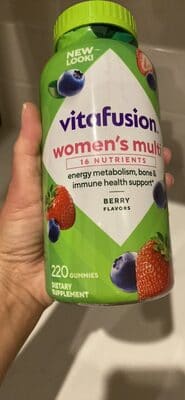
Dietary supplements
Vitafusion Women's Multi
220 gummies
Score
- Contains added sugars
- Contains palm oil
- Seed-oil free
- No synthetic dyes
Why it scores 74
Vitafusion Women's Multi scores 74 out of 100 (Good) under GoodSwap’s published rules. What moved the score most:
- minus 12 points Corn syrup: An added sugar. Strong
- minus 12 points Sugar: An added sugar. Strong
- minus 1 points Palm oil: About half saturated fat; WHO recommends keeping saturated fat to 10% of energy or less. Strong
Every line of the math is on The Receipt below, with its evidence tier and sources.
The Receipt
Women's Multi
Ingredients
- Corn syrup minus 12 points
- Sugar minus 12 points
- Palm oil minus 1 points
- Carnauba wax minus 0.5 points
- Natural flavors minus 0.5 points
- Pectin minus 0.5 points
100 − 26.5 = 73.5 → 74
Ingredients
- Glucose syrup (high concern)
- sugar (high concern)
- water
- gelatin
- blend of oils (coconut, palm) (not recognized)
- carnauba wax
- citric acid
- colors (blueberry and carrot concentrates, lycopene) (not recognized)
- lactic acid
- natural flavors
- pectin
Label text, as published
Glucose syrup, sugar, water, gelatin, less than 2% of: blend of oils (coconut and/or palm) with beeswax and/or carnauba wax, citric acid, colors (blueberry and carrot concentrates, lycopene), lactic acid, natural flavors, pectin.
Allergens and diets
Contains: Tree nuts
May contain: Soy, Egg, Fish
- Not vegan
- Not vegetarian
- Not palm-oil-free
Always check the package: recipes change.
More dietary supplements on GoodSwap
-
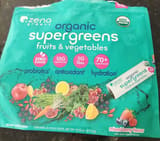 Organic Supergreens Fruits & Vegetables Zena Greens Contains non-nutritive sweetenersContains caffeineCertified organicContains whole grains Score 95 out of 100 Excellent
 -
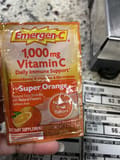 Super Orange Flavored Fizzy Drink Mix Emergen-C · 9.1 g Contains added sugarsNo synthetic dyes Score 86 out of 100 Excellent
 -
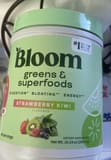 Greens and superfoods Bloom · 10.24 oz Contains non-nutritive sweetenersContains caffeineContains whole grains Score 97 out of 100 Excellent
 -
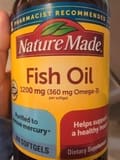 Fish Oil 1200mg Nature Made Seed-oil free Score 99 out of 100 Excellent
 -
 Liquid Collagen + Biotin Zena Nutrition Contains non-nutritive sweeteners Score 92 out of 100 Excellent
 -
 Collagen Peptides Garden of Life Score 99 out of 100 Excellent
More from Vitafusion
-
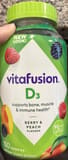 D3 Berry & Peach Flavors Vitafusion Score 73 out of 100 Good
 -
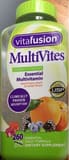 Multivitesgummy Vitamins Vitafusion · 260 gimieses Score 100 out of 100 Excellent
 -
 Fiber Well Fiber Supplement Vitafusion · 90 gummies Score 92 out of 100 Excellent
 -
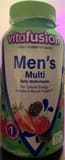 Men's Multivitamin Gummies Vitafusion · 150 gummies Score 75 out of 100 Good
Sources
-
Guideline: sugars intake for adults and children
“In both adults and children, WHO recommends reducing the intake of free sugars to less than 10% of total energy intake”
who.int
-
Dietary Guidelines for Americans, 2025–2030
“Limit foods and beverages that include artificial flavors, petroleum-based dyes, artificial preservatives, and low-calorie non-nutritive sweeteners.”
cdn.realfood.gov
-
Added and free sugars should be as low as possible
“Sugar consumption is a known cause of dental caries.”
efsa.europa.eu
-
Saturated fatty acid and trans-fatty acid intake for adults and children: WHO guideline
“WHO recommends that adults and children reduce saturated fatty acid intake to 10% of total energy intake (strong recommendation).”
who.int
-
Process contaminants in vegetable oils and foods
“The highest levels of GE, as well as 3-MCPD and 2-MCPD (including esters) were found in palm oils and palm fats, followed by other oils and fats.”
efsa.europa.eu
-
“Glycidyl fatty acid esters, expressed as glycidol”
eur-lex.europa.eu
-
21 CFR 101.22 Foods; labeling of spices, flavorings, colorings and chemical preservatives
“whose significant function in food is flavoring rather than nutritional.”
ecfr.gov