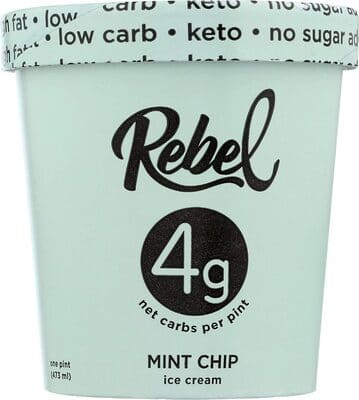
Ice creams
Rebel MINT CHIP ice cream
1 pint
Score
- Ultra-processed
- High in saturated fat
- Contains non-nutritive sweeteners
- Contains sugar alcohols
- Seed-oil free
Why it scores 48
Rebel MINT CHIP ice cream scores 48 out of 100 (Okay) under GoodSwap’s published rules. What moved the score most:
- minus 18 points Ultra-processed (NOVA 4): Classified NOVA 4: made with industrial ingredients and additives. Strong
- minus 9 points Saturated fat 14.4 g / 100 g: Very high in saturated fat. Strong
- minus 8 points 8 kinds of ultra-processing markers: Industrial additive classes found: bulking agent, emulsifier, flavoring, humectant, industrial protein, non-nutritive sweetener, sugar alcohol (polyol) and thickener, stabilizer or gelling agent. Emerging
Every line of the math is on The Receipt below, with its evidence tier and sources.
Better ice cream
-
 S’mores Pint Ice Cream Favorite Day · 473 mL Not ultra-processed · Less saturated fat Score 91 out of 100 , 43 points higher
 -
 Kroger Chocolate Chip Ice Cream Kroger · 1 gal/3.78 L Not ultra-processed · No non-nutritive sweeteners Score 79 out of 100 , 31 points higher
 -
 Sea Salt & Honeycomb Ice Cream Tillamook Not ultra-processed · No non-nutritive sweeteners Score 75 out of 100 , 27 points higher
 -
 Dark chocolate Cosmic Bliss · 14 fl oz Not ultra-processed · No non-nutritive sweeteners Score 79 out of 100 , 31 points higher
 -
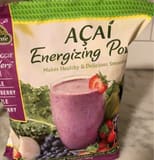 Açaí Energizing Power Tropical Power Blenders · 32 oz Not ultra-processed · Less saturated fat Score 77 out of 100 , 29 points higher
The same kind of product, at least 10 points higher, sold in the US. Never paid placements.
The Receipt
MINT CHIP ice cream
Ingredients
- Erythritol minus 7.5 points
- Sunflower lecithin minus 2.5 points
- Monk fruit extract minus 2.5 points
- Glycerin minus 1.5 points
- Inulin (chicory root fiber) minus 1.5 points
- Milk protein concentrate / isolate minus 1.5 points
- Natural flavors minus 0.5 points
- Locust bean gum minus 0.5 points
- Guar gum minus 0.5 points
Processing
- Ultra-processed (NOVA 4) minus 18 points
- 8 kinds of ultra-processing markers minus 8 points
Nutrition per 100 g
- Saturated fat 14.4 g / 100 g minus 9 points
- Energy 239 kcal / 100 g minus 1 points
- Fiber 3.4 g / 100 g plus 2 points
100 − 52.5 = 47.5 → 48
Can’t score above 79. High in fat and saturated fat (above the front-of-pack "high" level). [8]
Nutrition per 100 g
| Energy | 239 kcal |
|---|---|
| Fat | 21.2 g |
| Saturated fat | 14.4 g |
| Trans fat | 0.6 g |
| Carbohydrates | 18.2 g |
| Sugars | 0 g |
| Added sugars | 0 g |
| Fiber | 3.4 g |
| Protein | 2.7 g |
| Salt | 0.2 g |
Serving: 1 pint (264 g)
Ingredients
- Cream
- Water
- Erythritol (moderate concern)
- Chocolatey Flakes (Coconut Oil, Cocoa, Erythritol, Sunflower Lecithin, Salt, Dutched Cocoa, Vanilla Extract, Monk Fruit) (not recognized)
- Vegetable Glycerin
- Egg Yolks
- Chicory Root Fiber
- Milk Protein Isolate
- Natural Mint Flavor
- Lactase Enzyme
- Peruvian Carob Gum
- Guar Gum
- Salt
- Monk Fruit
Label text, as published
Cream, Water, Erythritol, Chocolatey Flakes (Coconut Oil, Cocoa, Erythritol, Sunflower Lecithin, Salt, Dutched Cocoa, Vanilla Extract, Monk Fruit), Vegetable Glycerin, Egg Yolks, Chicory Root Fiber, Milk Protein Isolate, Natural Mint Flavor, Lactase Enzyme, Peruvian Carob Gum, Guar Gum, Salt, Monk Fruit.
Allergens and diets
Contains: Milk, Egg
- Not vegan
- Palm-oil-free
Always check the package: recipes change.
More ice creams on GoodSwap
-
 Homemade Vanilla Blue Bell Ice Cream · 473 mL Dye with an EU warning labelContains synthetic dyesUltra-processedHigh in sugar Score 7 out of 100 Bad
 -
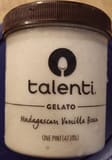 Gelato - Madagascan Vanilla Bean Talenti · 473 mL Ultra-processedHigh in sugarHigh in saturated fatContains added sugars Score 12 out of 100 Bad
 -
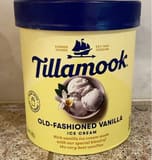 Old-Fashioned Vanilla Ice Cream Tillamook · 1.5 qt Ultra-processedHigh in saturated fatContains added sugars Score 35 out of 100 Poor
 -
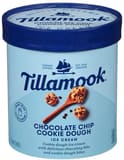 Chocolate chip cookie dough ice cream Tillamook · 1.5 qt/1.42 L Ultra-processedHigh in sugarHigh in saturated fatContains added sugars Score 10 out of 100 Bad
 -
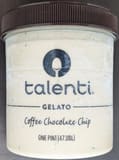 Gelato, Coffee Chocolate Chip Talenti · 473 mL Ultra-processedHigh in sugarHigh in saturated fatContains added sugars Score 12 out of 100 Bad
 -
 Honey Honey Honey Swirl French Ice Cream Ice Cream For Bears High in sugarHigh in saturated fatContains added sugarsNo additives Score 52 out of 100 Okay
More from Rebel

Sources
-
The artificial sweetener erythritol and cardiovascular event risk
“Our findings reveal that erythritol is both associated with incident MACE risk and fosters enhanced thrombosis. Studies assessing the long-term safety of erythritol are warranted.”
doi.org
-
Re-evaluation of erythritol (E 968) as a food additive (plain language summary)
“In all groups of people, both acute and chronic exposure to erythritol is above the newly set ADI.”
efsa.europa.eu
-
WHO advises not to use non-sugar sweeteners for weight control in newly released guideline
“The recommendation is based on the findings of a systematic review of the available evidence which suggests that use of NSS does not confer any long-term benefit in reducing body fat in adults or children.”
who.int
-
Dietary Guidelines for Americans, 2025–2030
“Limit foods and beverages that include artificial flavors, petroleum-based dyes, artificial preservatives, and low-calorie non-nutritive sweeteners.”
cdn.realfood.gov
-
21 CFR 101.22 Foods; labeling of spices, flavorings, colorings and chemical preservatives
“whose significant function in food is flavoring rather than nutritional.”
ecfr.gov
-
Saturated fatty acid and trans-fatty acid intake for adults and children: WHO guideline
“WHO recommends that adults and children reduce saturated fatty acid intake to 10% of total energy intake (strong recommendation).”
who.int
-
“Table 3: Criteria for drinks (per 100ml)”
assets.publishing.service.gov.uk
-
“Greater exposure to ultra-processed food was associated with a higher risk of adverse health outcomes, especially cardiometabolic, common mental disorder, and mortality outcomes.”
doi.org
-
Regulation (EU) No 1169/2011, Annex III point 2.4 (foods with more than 10 % added polyols)
“‘excessive consumption may produce laxative effects’.”
eur-lex.europa.eu