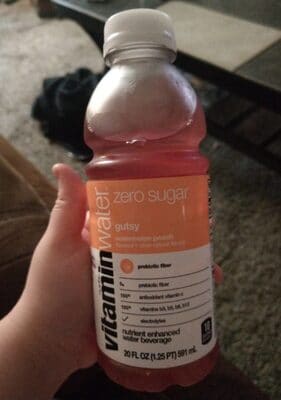
Flavored waters
Vitaminwater Gutsy Zero Sugar
20 fl oz
Score
- Ultra-processed
- Contains non-nutritive sweeteners
Why it scores 69
Vitaminwater Gutsy Zero Sugar scores 69 out of 100 (Good) under GoodSwap’s published rules. What moved the score most:
- minus 18 points Ultra-processed (NOVA 4): Classified NOVA 4: made with industrial ingredients and additives. Strong
- minus 3 points 3 kinds of ultra-processing markers: Industrial additive classes found: bulking agent, flavoring and non-nutritive sweetener. Emerging
- minus 2.5 points Soluble corn fiber (resistant dextrin): An additive class typical of ultra-processed foods (NOVA group 4). Info
Every line of the math is on The Receipt below, with its evidence tier and sources.
Better flavored and vitamin water
-
 Lemon Lime Fitness Water Barcode Not ultra-processed · No soluble corn fiber (resistant dextrin) Score 97 out of 100 , 28 points higher
 -
 Lemon Perfect Peach Lemon Perfect · 15.2 fl oz Not ultra-processed · No soluble corn fiber (resistant dextrin) Score 100 out of 100 , 31 points higher
 -
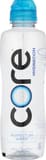 Nutrient enhanced water Core · 23.9 fl oz/707 mL Not ultra-processed · No non-nutritive sweeteners Score 100 out of 100 , 31 points higher
 -
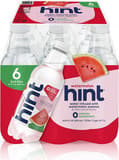 Watermelon infused water Hint · 6 × 16 fl oz Not ultra-processed · No non-nutritive sweeteners Score 100 out of 100 , 31 points higher
 -
 Hint Hint · 1.5 gal/5.7 L/1 PT Not ultra-processed · No non-nutritive sweeteners Score 100 out of 100 , 31 points higher
The same kind of product, at least 10 points higher, sold in the US. Never paid placements.
The Receipt
Gutsy Zero Sugar
Ingredients
- Soluble corn fiber (resistant dextrin) minus 2.5 points
- Natural flavors minus 2.5 points
- Monk fruit extract minus 2.5 points
- Potassium phosphate minus 1.5 points
Processing
- Ultra-processed (NOVA 4) minus 18 points
- 3 kinds of ultra-processing markers minus 3 points
Nutrition per 100 ml
- Energy 2 kcal / 100 ml minus 1 points
100 − 31 = 69
Nutrition per 100 ml
| Energy | 2 kcal |
|---|---|
| Fat | 0 g |
| Carbohydrates | 0.1 g |
| Sugars | 0 g |
| Added sugars | 0 g |
| Fiber | 0.1 g |
| Protein | 0 g |
| Salt | 0 g |
Serving: 591 ml (591 ml)
Ingredients
- reverse osmosis water
- soluble corn fiber
- natural flavors
- vitamins C
- B3
- B5
- B6
- B12
- ascorbic acid
- niacinamide
- calcium pantothenate
- pyridoxine hydrochloride
- cyanocobalamin
- citric acid
- beta-carotene and beta-apo-8-carotenal and fruit and vegetable juices
- monk fruit extract
- electrolytes
- calcium and magnesium lactates and potassium phosphate
Label text, as published
reverse osmosis water, soluble corn fiber, natural flavors, vitamins C, B3, B5, B6, B12, ascorbic acid, niacinamide, calcium pantothenate, pyridoxine hydrochloride, cyanocobalamin, citric acid, beta-carotene and beta-apo-8-carotenal and fruit and vegetable juices, monk fruit extract, electrolytes, calcium and magnesium lactates and potassium phosphate
Allergens and diets
- Palm-oil-free
Always check the package: recipes change.
More flavored waters on GoodSwap
-
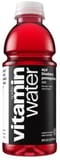 Açai-Blueberry-Pomegranate XXX Nutrient Enhanced Water Glaceau · 20 fl oz Ultra-processedContains added sugarsNo synthetic dyes Score 18 out of 100 Bad
 -
 Kula Watermelon Bai · 18 fl oz Ultra-processedContains non-nutritive sweetenersContains caffeine Score 72 out of 100 Good
 -
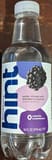 Water Infused with Blackberry Essence Hint · 16 fl oz Ultra-processedNo additives Score 83 out of 100 Excellent
 -
 Hoppy Refresher Lagunitas Ultra-processed Score 80 out of 100 Excellent
 -
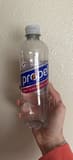 Fitness Water Propel Ultra-processedContains non-nutritive sweeteners Score 56 out of 100 Okay
More from Vitaminwater
-
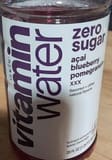 Acai Blueberry Pomegranate Nutrient Enhanced Water Beverage Vitaminwater Score 72 out of 100 Good
 -
 Zero Sugar Lemonade Squeezed Vitaminwater Score 59 out of 100 Okay
 -
 Vitamin Water Zero Sugar Açai Blueberry Pomegranate Vitaminwater · 500 mL Score 72 out of 100 Good
 -
 Vitamin Water Zero Sugar Dragonfruit Power-C Vitaminwater · 591 mL Score 72 out of 100 Good
Sources
-
21 CFR 101.22 Foods; labeling of spices, flavorings, colorings and chemical preservatives
“whose significant function in food is flavoring rather than nutritional.”
ecfr.gov
-
WHO advises not to use non-sugar sweeteners for weight control in newly released guideline
“The recommendation is based on the findings of a systematic review of the available evidence which suggests that use of NSS does not confer any long-term benefit in reducing body fat in adults or children.”
who.int
-
Dietary Guidelines for Americans, 2025–2030
“Limit foods and beverages that include artificial flavors, petroleum-based dyes, artificial preservatives, and low-calorie non-nutritive sweeteners.”
cdn.realfood.gov
-
EFSA issues new advice on phosphates
“We estimated that dietary exposure to phosphates may exceed the new ADI for infants, toddlers and children with average consumption of phosphates in their diet.”
efsa.europa.eu
-
“Greater exposure to ultra-processed food was associated with a higher risk of adverse health outcomes, especially cardiometabolic, common mental disorder, and mortality outcomes.”
doi.org