Noodles
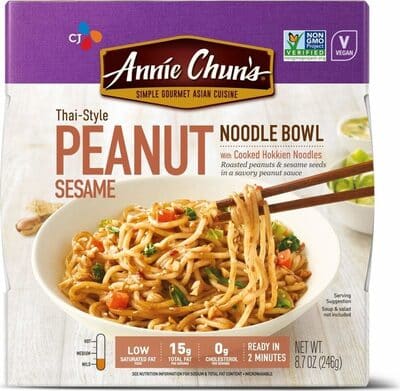
Annie Chun's Thai-Style Peanut Sesame Noodle Bowl
8.7 oz/246 g
Score
- Ultra-processed
- Contains added sugars
- Seed-oil free
Why it scores 41
Annie Chun's Thai-Style Peanut Sesame Noodle Bowl scores 41 out of 100 (Okay) under GoodSwap’s published rules. What moved the score most:
- minus 20 points Invert sugar: An added sugar. Strong
- minus 18 points Ultra-processed (NOVA 4): Classified NOVA 4: made with industrial ingredients and additives. Strong
- minus 6 points 5 kinds of ultra-processing markers: Industrial additive classes found: bulking agent, flavoring, industrial protein, industrial sugar or starch hydrolysate and thickener, stabilizer or gelling agent. Emerging
Every line of the math is on The Receipt below, with its evidence tier and sources.
Better instant noodles and ramen
-
 Top Ramen 2.04 kg Not ultra-processed · No added sugars Score 79 out of 100 , 38 points higher
 -
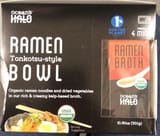 Ramen Tonkotsu-style Bowl Ocean's Halo · 10.75 oz/305 g No added sugars · No invert sugar Score 79 out of 100 , 38 points higher
 -
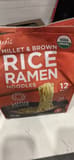 Millet & Brown Rice Ramen Noodles Lotus Foods Not ultra-processed · No added sugars Score 100 out of 100 , 59 points higher
 -
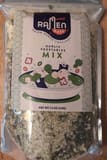 Dried Ramen Toppings Garlic Vegetables Mix Ramen Eats · 213 g Not ultra-processed · No added sugars Score 100 out of 100 , 59 points higher
 -
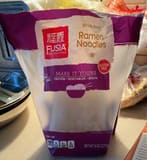 White Rice Ramen Noodles Fusia · 8 oz Not ultra-processed · No added sugars Score 93 out of 100 , 52 points higher
The same kind of product, at least 10 points higher, sold in the US. Never paid placements.
The Receipt
Thai-Style Peanut Sesame Noodle Bowl
Ingredients
- Invert sugar minus 20 points
- Wheat gluten minus 2.5 points
- Alcohol (ethanol) minus 2.5 points
- Wine minus 1.5 points
- Xanthan gum minus 1.5 points
- Inulin (chicory root fiber) minus 1.5 points
- Natural flavors minus 0.5 points
Processing
- Ultra-processed (NOVA 4) minus 18 points
- 5 kinds of ultra-processing markers minus 6 points
Nutrition per 100 g
- Sugars 5.7 g / 100 g minus 3 points
- Salt 0.5 g / 100 g minus 1 points
- Energy 220 kcal / 100 g minus 1 points
100 − 59 = 41
Can’t score above 79. Contains invert sugar, an ingredient of high concern. [1][2][3]
Nutrition per 100 g
| Energy | 220 kcal |
|---|---|
| Fat | 7.7 g |
| Saturated fat | 0.8 g |
| Trans fat | 0 g |
| Carbohydrates | 30.5 g |
| Sugars | 5.7 g |
| Fiber | 1.2 g |
| Protein | 6.5 g |
| Salt | 0.5 g |
Serving: 1 BOWL (246 g)
Ingredients
- NOODLES: WHEAT FLOUR
- WATER
- TAPIOCA STARCH
- SALT
- WHEAT GLUTEN
- LACTIC ACID
- SAUCE: EVAPORATED CANE SYRUP (high concern)
- WATER
- PEANUT BUTTER
- SOY SAUCE (WATER, WHEAT, SOYBEANS, SALT, ALCOHOL, VINEGAR, LACTIC ACID)
- SESAME OIL
- RICE WINE
- RED CHILI GARLIC (RED CHILI PEPPER, DISTILLED VINEGAR, GARLIC, SALT)
- SESAME SEEDS
- LEMON JUICE CONCENTRATE
- GINGER
- VEGETABLE EXTRACT (POTATO)
- XANTHAN GUM
- CULTURED DEXTROSE
- INULIN
- NATURAL FLAVORS
- TOPPINGS: PEANUT
- DEHYDRATED CABBAGE
- DEHYDRATED BOK CHOY
- DEHYDRATED CARROT
- ROASTED SESAME SEEDS
Label text, as published
NOODLES: WHEAT FLOUR, WATER, TAPIOCA STARCH, SALT, WHEAT GLUTEN, LACTIC ACID. SAUCE: EVAPORATED CANE SYRUP, WATER, PEANUT BUTTER, SOY SAUCE (WATER, WHEAT, SOYBEANS, SALT, ALCOHOL, VINEGAR, LACTIC ACID), SESAME OIL, RICE WINE, RED CHILI GARLIC (RED CHILI PEPPER, DISTILLED VINEGAR, GARLIC, SALT), SESAME SEEDS, LEMON JUICE CONCENTRATE, GINGER, VEGETABLE EXTRACT (POTATO), XANTHAN GUM, CULTURED DEXTROSE, INULIN, NATURAL FLAVORS. TOPPINGS: PEANUT, DEHYDRATED CABBAGE, DEHYDRATED BOK CHOY, DEHYDRATED CARROT, ROASTED SESAME SEEDS.
Allergens and diets
Contains: Peanuts, Soy, Wheat, Gluten, Sesame
- Vegan
- Vegetarian
- Not gluten-free
- Palm-oil-free
Always check the package: recipes change.
More noodles on GoodSwap
-
 Fettuccine Barilla · 454 g No additives Score 100 out of 100 Excellent
 -
 Top Ramen Chicken Flavor Nissin · 3.421 oz Ultra-processedHigh in saltHigh in saturated fatContains non-nutritive sweeteners Score 8 out of 100 Bad
 -
 Buldak Carbonara Samyang · 105 g Ultra-processedHigh in saltHigh in saturated fatContains added sugars Score 18 out of 100 Bad
 -
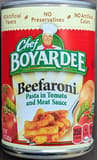 Beefaroni Pasta in Tomato and Meat Sauce Chef Boyardee · 425 g Ultra-processedContains added sugarsContains seed oilsNo synthetic dyes Score 24 out of 100 Poor
 -
 No Chicken Noodle Amy's · 14.1 oz Ultra-processedContains seed oilsCertified organic Score 77 out of 100 Good
More from Annie Chun's
-
 Organic Seaweed Snacks Sea Salt Annie Chun's · 0.35 oz/10 g Score 79 out of 100 Good
 -
 Korean Style Sweet Chili Noodle bowl Annie Chun's · 8.0 oz/226 g Score 27 out of 100 Poor
 -
 Vietnamese style pho soup bowl Annie Chun's · 5.9 oz/168 g Score 21 out of 100 Poor
 -
 Shoyu Ramen Soup Bowl Annie Chun's · 5.4 oz/153 g Score 25 out of 100 Poor
Sources
-
Guideline: sugars intake for adults and children
“In both adults and children, WHO recommends reducing the intake of free sugars to less than 10% of total energy intake”
who.int
-
Dietary Guidelines for Americans, 2025–2030
“Limit foods and beverages that include artificial flavors, petroleum-based dyes, artificial preservatives, and low-calorie non-nutritive sweeteners.”
cdn.realfood.gov
-
Added and free sugars should be as low as possible
“Sugar consumption is a known cause of dental caries.”
efsa.europa.eu
-
Agents Classified by the IARC Monographs, Volumes 1–142 (List of Classifications)
monographs.iarc.who.int
-
About Alcohol Use During Pregnancy
“There is no known safe amount of alcohol use during pregnancy.”
cdc.gov
-
21 CFR 101.22 Foods; labeling of spices, flavorings, colorings and chemical preservatives
“whose significant function in food is flavoring rather than nutritional.”
ecfr.gov
-
“For adults, WHO recommends less than 2000 mg/day of sodium (equivalent to less than 5 g/day salt), or just under a teaspoon.”
who.int
-
“Greater exposure to ultra-processed food was associated with a higher risk of adverse health outcomes, especially cardiometabolic, common mental disorder, and mortality outcomes.”
doi.org