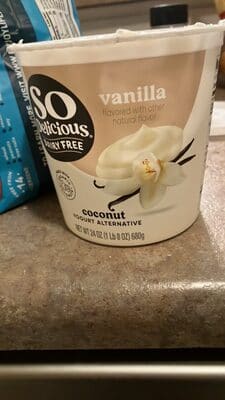
Yogurts
So Delicious Vanilla Coconut Yogurt Alternative
24 oz
Score
- Ultra-processed
- Contains added sugars
- Certified organic
Why it scores 52
So Delicious Vanilla Coconut Yogurt Alternative scores 52 out of 100 (Okay) under GoodSwap’s published rules. What moved the score most:
- minus 20 points Sugar: An added sugar. Strong
- minus 18 points Ultra-processed (NOVA 4): Classified NOVA 4: made with industrial ingredients and additives. Strong
- minus 5 points Added sugars 10 g / 100 g: High in sugar. Strong
Every line of the math is on The Receipt below, with its evidence tier and sources.
Better yogurt
-
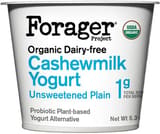 Cashew & Coconut Yogurt Alternative Forager Project · 150 g No added sugars · No sugar Score 85 out of 100 , 33 points higher
 -
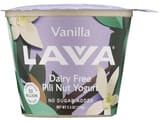 Vanilla Plant Based Yogurt Lavva · 5.3 oz/150 g Not ultra-processed · No added sugars Score 93 out of 100 , 41 points higher
 -
 ALMONDMILK NON-DAIRY YOGURT ALTERNATIVE Plain Nature's Promise · 24 oz Not ultra-processed · No added sugars Score 98 out of 100 , 46 points higher
 -
 Vanilla Almond-Based Yogurt Alternative True Goodness by Meijer · 24 oz Not ultra-processed · No added sugars Score 92 out of 100 , 40 points higher
 -
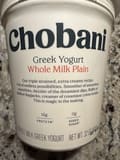 Greek Yogurt Whole Milk Plain Chobani · 907 g (32 oz) Not ultra-processed · No added sugars Score 100 out of 100 , 48 points higher
The same kind of product, at least 10 points higher, sold in the US. Never paid placements.
The Receipt
Vanilla Coconut Yogurt Alternative
Ingredients
- Sugar minus 20 points
- Natural flavors minus 2.5 points
- Pectin minus 2.5 points
- Locust bean gum minus 1.5 points
Processing
- Ultra-processed (NOVA 4) minus 18 points
- 2 kinds of ultra-processing markers minus 1.5 points
Nutrition per 100 g
- Added sugars 10 g / 100 g minus 5 points
- Saturated fat 4 g / 100 g minus 1.5 points
- Energy 190 kcal / 100 g minus 0.5 points
Bonuses
- Certified organic plus 5 points
100 − 48 = 52
Can’t score above 79. Contains sugar, an ingredient of high concern. [1][2][3]
Nutrition per 100 g
| Energy | 190 kcal |
|---|---|
| Fat | 5 g |
| Saturated fat | 4 g |
| Trans fat | 0 g |
| Carbohydrates | 33 g |
| Sugars | 17 g |
| Added sugars | 10 g |
| Fiber | 2 g |
| Protein | 1 g |
| Salt | 0.1 g |
Serving: 0.75 cup (170 g)
Ingredients
- Organic Coconutmilk (not recognized)
- Filtered Water
- Organic Coconut Cream
- Organic Cane Sugar (high concern)
- Rice Starch
- Natural Flavor
- Calcium Citrate
- Pectin
- Locust Bean Gum
- Citric Acid
- Live and Active Cultures
- Vitamin D2
- Vitamin B12
- Live and Active Cultures: S. Thermophilus
- L. Rhamnosus
- L. Acidophilus
- L. Bulgaricus
- Bifidobacterium spp
- L. Casei
- L. Paracasei
- L. Plantarum
Label text, as published
Organic Coconutmilk, ( Filtered Water, Organic Coconut Cream), Organic Cane Sugar, Rice Starch, Contains 2% or Less of Natural Flavor, Calcium Citrate, Pectin, Locust Bean Gum, Citric Acid, Live and Active Cultures, Vitamin D2, Vitamin B12. Live and Active Cultures: S. Thermophilus, L. Rhamnosus, L. Acidophilus, L. Bulgaricus, Bifidobacterium spp., L. Casei, L. Paracasei, L. Plantarum.
Allergens and diets
Contains: Tree nuts
- Palm-oil-free
Always check the package: recipes change.
More yogurts on GoodSwap
-
 Blended Vanilla Too Good & Co. · 32 oz Ultra-processedContains non-nutritive sweeteners Score 73 out of 100 Good
 -
 Simple Ingredient Skyr Siggi's · 24 oz Ultra-processedContains added sugars Score 63 out of 100 Good
 -
 Plain Yogurt Dannon · 32 oz No additives Score 100 out of 100 Excellent
 -
 Peach & Cloudberry Skyr Icelandic Provisions · 150 g Ultra-processedContains added sugars Score 56 out of 100 Okay
 -
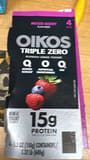 OIKOS Triple Zero Blended Greek Yogurt Oikos · 150 g Ultra-processedContains non-nutritive sweetenersNo synthetic dyes Score 78 out of 100 Good
 -
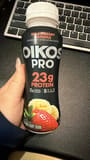 Oikos Pro Strawberry Banana Cultured Dairy Drink Oikos · 7 fl oz Ultra-processedContains non-nutritive sweetenersNo synthetic dyes Score 69 out of 100 Good
More from So Delicious
-
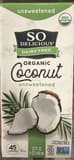 Organic Coconut Unsweetened Coconutmilk So Delicious · 946 mL Score 65 out of 100 Good
 -
 Unsweetened Vanilla Coconut Yogurt Alternative So Delicious · 24 oz Score 69 out of 100 Good
 -
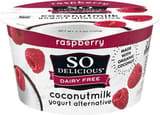 Coconut Yogurt Alternative So Delicious · 5.3 oz Score 48 out of 100 Okay
 -
 Strawberry Banana Coconut Yogurt Alternative So Delicious · 150 g Score 46 out of 100 Okay
Sources
-
Guideline: sugars intake for adults and children
“In both adults and children, WHO recommends reducing the intake of free sugars to less than 10% of total energy intake”
who.int
-
Dietary Guidelines for Americans, 2025–2030
“Limit foods and beverages that include artificial flavors, petroleum-based dyes, artificial preservatives, and low-calorie non-nutritive sweeteners.”
cdn.realfood.gov
-
Added and free sugars should be as low as possible
“Sugar consumption is a known cause of dental caries.”
efsa.europa.eu
-
21 CFR 101.22 Foods; labeling of spices, flavorings, colorings and chemical preservatives
“whose significant function in food is flavoring rather than nutritional.”
ecfr.gov
-
Saturated fatty acid and trans-fatty acid intake for adults and children: WHO guideline
“WHO recommends that adults and children reduce saturated fatty acid intake to 10% of total energy intake (strong recommendation).”
who.int
-
7 CFR 205.102 Use of the term "organic" (National Organic Program)
“Any agricultural product that is sold, labeled, or represented as “100 percent organic,” “organic,” or “made with organic (specified ingredients or food group(s))” must be: (a) Produced in accordance with the requirements specified in § 205.101 or §§ 205.202 through 205.207”
ecfr.gov
-
“Greater exposure to ultra-processed food was associated with a higher risk of adverse health outcomes, especially cardiometabolic, common mental disorder, and mortality outcomes.”
doi.org