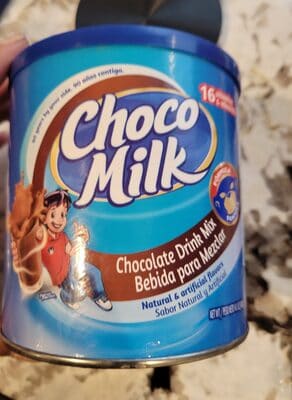
Dehydrated beverages
Choco milk powder drink mix
Score
- Ultra-processed
- Contains added sugars
- Contains artificial flavors
Why it scores 23
Choco milk powder drink mix scores 23 out of 100 (Poor) under GoodSwap’s published rules. What moved the score most:
- minus 20 points Sugar: An added sugar. Strong
- minus 20 points Corn syrup solids: An added sugar. Strong
- minus 18 points Ultra-processed (NOVA 4): Classified NOVA 4: made with industrial ingredients and additives. Strong
Every line of the math is on The Receipt below, with its evidence tier and sources.
The Receipt
Choco milk powder drink mix
Ingredients
- Sugar minus 20 points
- Corn syrup solids minus 20 points
- Sulfur dioxide minus 7.5 points
- Calcium phosphate minus 1.5 points
- Soy lecithin minus 1 points
Processing
- Ultra-processed (NOVA 4) minus 18 points
- 4 kinds of ultra-processing markers minus 4.5 points
Nutrition per 100 g
- Sugars 10 g / 100 g minus 5 points
100 − 77.5 = 22.5 → 23
Can’t score above 79. Contains sugar, an ingredient of high concern. [1][2][3]
Nutrition per 100 g
| Energy | 50 kcal |
|---|---|
| Fat | 0 g |
| Saturated fat | 0 g |
| Trans fat | 0 g |
| Carbohydrates | 12 g |
| Sugars | 10 g |
| Added sugars | 68.5 g |
| Fiber | 1 g |
| Protein | 1 g |
| Salt | 0.1 g |
Serving: 2 Tbsp (25 g)
Ingredients
- Sugar (high concern)
- Corn Syrup Solids (high concern)
- Cocoa Processed with Alkali
- Less than 2%: Calcium Phosphate
- Salt
- Magnesium Oxide
- Ferrous Fumarate
- Zinc Sulfate
- Potassium Iodide
- Soy Lecithin
- Ascorbic Acid
- Niacinamide
- Calcium Pantothenate
- Riboflavin
- Thiamine Mononitrate
- Vitamin B6 Hydrochloride
- Vitamin A (Vitamin A Palmitate, Fish Gelatin)
- Vitamin D3
- Folic Acid
- Biotin
- Vitamin E Acetate
- Vitamin B12
- Natural and Artificial Flavor
- Sulfites (moderate concern)
Label text, as published
Sugar, Corn Syrup Solids, Cocoa Processed with Alkali, and Less than 2%: Calcium Phosphate, Salt, Magnesium Oxide, Ferrous Fumarate, Zinc Sulfate, Potassium Iodide, Soy Lecithin, Ascorbic Acid, Niacinamide, Calcium Pantothenate, Riboflavin, Thiamine Mononitrate, Vitamin B6 Hydrochloride, Vitamin A ( Vitamin A Palmitate, Fish Gelatin { Emulsifier Derived from Cod, Pollock, Haddock, Hake, Cusk, Flatfish and Redfish}), Vitamin D3, Folic Acid, Biotin, Vitamin E Acetate, Vitamin B12, Natural and Artificial Flavor, Sulfites.
Allergens and diets
Contains: Soy, Fish, Sulphites
- Not vegan
- Not vegetarian
- Palm-oil-free
Always check the package: recipes change.
More dehydrated beverages on GoodSwap
-
 Collagen Peptides Vital Proteins · 24 oz No additives Score 100 out of 100 Excellent
 -
 Milk Chocolate Flavor Swiss Miss · 8.28 oz Ultra-processedHigh in sugarHigh in saturated fatContains added sugars Score 7 out of 100 Bad
 -
 Organic Cacao Powder Better Body Foods · 16 oz Certified organicNo additives Score 100 out of 100 Excellent
 -
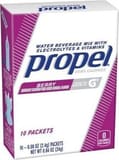 Propel berry beverage mix packets Propel · .84 oz Ultra-processedHigh in saltContains non-nutritive sweeteners Score 45 out of 100 Okay
 -
 Electrolyte Drink Mix LMNT Ultra-processedHigh in saltContains non-nutritive sweeteners Score 67 out of 100 Good
 -
 LMNT Electrolyte drink mix LMNT · 2.55 oz Ultra-processedHigh in saltContains non-nutritive sweeteners Score 66 out of 100 Good
Sources
-
Guideline: sugars intake for adults and children
“In both adults and children, WHO recommends reducing the intake of free sugars to less than 10% of total energy intake”
who.int
-
Dietary Guidelines for Americans, 2025–2030
“Limit foods and beverages that include artificial flavors, petroleum-based dyes, artificial preservatives, and low-calorie non-nutritive sweeteners.”
cdn.realfood.gov
-
Added and free sugars should be as low as possible
“Sugar consumption is a known cause of dental caries.”
efsa.europa.eu
-
Regulation (EU) No 1169/2011 of 25 October 2011 on the provision of food information to consumers
“ANNEX II SUBSTANCES OR PRODUCTS CAUSING ALLERGIES OR INTOLERANCES 1. Cereals containing gluten, namely: wheat, rye, barley, oats, spelt, kamut or their hybridised strains”
eur-lex.europa.eu
-
“1. Cereals containing gluten, namely: wheat (such as spelt and khorasan wheat), rye, barley, oats or their hybridised strains, and products thereof”
legislation.gov.uk
-
EFSA issues new advice on phosphates
“We estimated that dietary exposure to phosphates may exceed the new ADI for infants, toddlers and children with average consumption of phosphates in their diet.”
efsa.europa.eu
-
“Greater exposure to ultra-processed food was associated with a higher risk of adverse health outcomes, especially cardiometabolic, common mental disorder, and mortality outcomes.”
doi.org