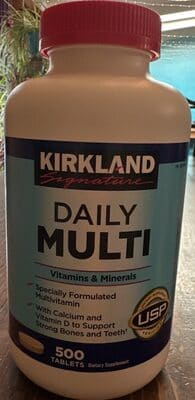
Multivitamin and mineral supplements
Kirkland Daily Multi
500 tablets
Score
- May contain traces of 1,4-dioxane
- No synthetic dyes
Why it scores 95
Kirkland Daily Multi scores 95 out of 100 (Excellent) under GoodSwap’s published rules. What moved the score most:
- minus 1 points Calcium phosphate: EFSA (2019) set a group ADI for phosphates of 40 mg/kg body weight (as phosphorus) and noted that infants, toddlers and children may exceed it. Strong
- minus 1 points Microcrystalline cellulose: An ingredient class typical of ultra-processed foods (NOVA group 4). Info
- minus 1 points Calcium silicate: An additive class typical of ultra-processed foods (NOVA group 4). Info
Every line of the math is on The Receipt below, with its evidence tier and sources.
The Receipt
Daily Multi
Ingredients
- Calcium phosphate minus 1 points
- Microcrystalline cellulose minus 1 points
- Calcium silicate minus 1 points
- Carnauba wax minus 0.5 points
- Hydroxypropyl methylcellulose minus 0.5 points
- Polyethylene glycols (PEG) and ethoxylates minus 0.5 points
- Silicon dioxide minus 0.5 points
- Borax and borates minus 0.5 points
100 − 5.5 = 94.5 → 95
Nutrition per 100 g
| Added sugars | 0 g |
|---|
Serving: 1 tablet
Ingredients
- Dicalcium Phosphate
- Magnesium Oxide
- Potassium Chloride
- Calcium Carbonate
- Microcrystalline Cellulose
- Ascorbic Acid
- Ferrous Furnarate (not recognized)
- Gelatin
- beta-carotene
- biotin
- calcium silicate
- carnauba wax
- cholecalciferol
- chromium picolinate
- croscarmellose sodium
- crospovidone (not recognized)
- cupric sulfate
- cyanocobalamin
- D-calcium pantothenate
- dl-alpha tocopheryl acetate
- folic acid
- hydroxypropyl methylcellulose
- lutein
- lycopene
- magnesium stearate
- manganese sulfate
- niacinamide
- phytonadione
- polyethylene glycol
- potassium iodide
- pyridoxine hydrochloride
- retinyl acetate
- riboflavin
- silica
- sodium borate
- sodium metavanadate
- sodium molybdate
- sodium selenate
- stearic adid (not recognized)
- thiamine mononitrate
- zinc oxide
Label text, as published
Dicalcium Phosphate, Magnesium Oxide, Potassium Chloride, Calcium Carbonate, Microcrystalline Cellulose, Ascorbic Acid, Ferrous Furnarate, Gelatin. Contains 2% or less of beta-carotene, biotin, calcium silicate, carnauba wax, cholecalciferol, chromium picolinate, croscarmellose sodium, crospovidone, cupric sulfate, cyanocobalamin, D-calcium pantothenate, dl-alpha tocopheryl acetate, folic acid, hydroxypropyl methylcellulose, lutein, lycopene, magnesium stearate, manganese sulfate, niacinamide, phytonadione, polyethylene glycol, potassium iodide, pyridoxine hydrochloride, retinyl acetate, riboflavin, silica, sodium borate, sodium metavanadate, sodium molybdate, sodium selenate, stearic adid, thiamine mononitrate, zinc oxide.
Allergens and diets
- Not vegan
- Not vegetarian
- Palm-oil-free
Always check the package: recipes change.
More multivitamin and mineral supplements on GoodSwap
-
 Men’s Complete Multivitamin/multimineral Supplement Bayer · 300 tablets Seed-oil freeNo synthetic dyes Score 95 out of 100 Excellent
 -
 Matcha protein powder Ka'Chava · 32.8 unit Contains whole grains Score 99 out of 100 Excellent
 -
 Calcium Citrate Magnesium and Zinc Kirkland Signature · 500 tablets Score 97 out of 100 Excellent
 -
 AG1 Athletic Greens · 360 g Contains non-nutritive sweetenersContains caffeineContains whole grains Score 97 out of 100 Excellent
 -
 Daily Foundational Nutrition packet AG1 · 16.9 oz Contains caffeineContains whole grains Score 97 out of 100 Excellent
 -
 Organic Multivitamin Kirkland Signature Contains seed oilsCertified organic Score 96 out of 100 Excellent
More from Kirkland
Sources
-
EFSA issues new advice on phosphates
“We estimated that dietary exposure to phosphates may exceed the new ADI for infants, toddlers and children with average consumption of phosphates in their diet.”
efsa.europa.eu
-
1,4-Dioxane in Cosmetics: A Manufacturing Byproduct
“1,4-dioxane forms as a byproduct during the manufacturing process of certain cosmetic ingredients.”
fda.gov
-
Agents Classified by the IARC Monographs, Volumes 1–142 (List of Classifications)
monographs.iarc.who.int
-
Regulation (EC) No 1223/2009 of 30 November 2009 on cosmetic products
“cosmetic products shall not contain any of the following: (a) prohibited substances — prohibited substances listed in Annex II”
eur-lex.europa.eu