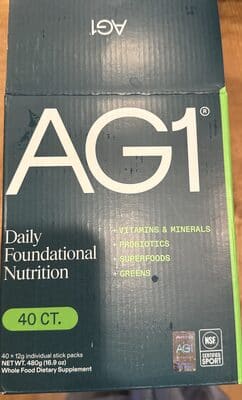
Multivitamin and mineral supplements
AG1 Daily Foundational Nutrition packet
16.9 oz
Score
- Contains caffeine
- Contains whole grains
Why it scores 97
AG1 Daily Foundational Nutrition packet scores 97 out of 100 (Excellent) under GoodSwap’s published rules. What moved the score most:
- minus 1 points Lecithin: An additive class typical of ultra-processed foods (NOVA group 4). Info
- minus 1 points Inulin (chicory root fiber): An ingredient class typical of ultra-processed foods (NOVA group 4). Info
- minus 1 points Pea protein: An ingredient typical of ultra-processed foods (NOVA group 4). Info
Every line of the math is on The Receipt below, with its evidence tier and sources.
The Receipt
Daily Foundational Nutrition packet
Ingredients
- Lecithin minus 1 points
- Inulin (chicory root fiber) minus 1 points
- Pea protein minus 1 points
100 − 3 = 97
Nutrition per 100 g
| Energy | 333 kcal |
|---|---|
| Fat | 8.3 g |
| Saturated fat | 0 g |
| Carbohydrates | 50 g |
| Sugars | 0 g |
| Added sugars | 0 g |
| Fiber | 16.7 g |
| Protein | 16.7 g |
| Salt | 0.9 g |
Serving: 12g
Ingredients
- Organic spirulina
- - Lecithin (>65% phospholipids)
- - Organic apple powder
- - Inulin (FOS prebiotics)
- - Organic chlorella powder
- - Organic wheat grass powder (leaf)
- - Organic alfalfa powder (leaf) (not recognized)
- - Organic barley (Hordeum vulgare) leaf powder
- - Broccoli powder
- - Papaya (Carica papaya) fruit powder
- - Beet root powder
- - Carrot powder
- - Acerola fruit extract (4:1)
- - Ginger rhizome powder
- - Cocoa bean powder
- - Licorice root powder
- - Spinach leaf powder
- - Rose hip (Rosa canina) fruit powder (4:1)
- - Pineapple fruit powder
- - Slippery elm (Ulmus rubra) bark powder (not recognized)
- - Lycium berry fruit extract (4:1)
- - Kelp whole plant powder
- - Green tea (Camellia sinensis) extract (leaf) (10:1)
- - Bilberry fruit extract (100:1)
- - Grape seed extract (120:1) (std. 95% OPC)
- - Alkaline pea protein isolate
- - Citrus bioflavonoids extract (not recognized)
- - R (not recognized)
- S alpha-lipoic acid (not recognized)
- - Artichoke leaf extract (15:1)
- - Coenzyme Q-10 (ubidecarenone) (not recognized)
- - Rhodiola (Rhodiola rosea) root dry extract (15:1) (not recognized)
- - Rosemary leaf extract (4:1)
- - Ashwagandha (Withania somnifera) root extract (5:1)
- - Beta glucans
- - Dandelion whole plant dry concentrate (4:1) (not recognized)
- - Eleuthero (Eleutherococcus senticosus) root extract (10:1)
- - Policosanol (not recognized)
- - Hawthorne berry extract (10:1) (not recognized)
- - Milk thistle seed extract (70:1)
- - Vitamin K2 (as menaquinone-7)
- - Bromelain (dietary enzyme)
- - Reishi mushroom powder
- - Shiitake mushroom powder
- - Astragalus (Astragalus membranaceus) root powder extract (4:1) (not recognized)
- - Burdock root powder (4:1)
- - Lactobacillus acidophilus - UALa-01
- - Bifidobacterium bifidum - UABb-10
Label text, as published
Organic spirulina - Lecithin (>65% phospholipids) - Organic apple powder - Inulin (FOS prebiotics) - Organic chlorella powder - Organic wheat grass powder (leaf) - Organic alfalfa powder (leaf) - Organic barley (Hordeum vulgare) leaf powder - Broccoli powder - Papaya (Carica papaya) fruit powder - Beet root powder - Carrot powder - Acerola fruit extract (4:1) - Ginger rhizome powder - Cocoa bean powder - Licorice root powder - Spinach leaf powder - Rose hip (Rosa canina) fruit powder (4:1) - Pineapple fruit powder - Slippery elm (Ulmus rubra) bark powder - Lycium berry fruit extract (4:1) - Kelp whole plant powder - Green tea (Camellia sinensis) extract (leaf) (10:1) - Bilberry fruit extract (100:1) - Grape seed extract (120:1) (std. 95% OPC) - Alkaline pea protein isolate - Citrus bioflavonoids extract - R,S alpha-lipoic acid - Artichoke leaf extract (15:1) - Coenzyme Q-10 (ubidecarenone) - Rhodiola (Rhodiola rosea) root dry extract (15:1) - Rosemary leaf extract (4:1) - Ashwagandha (Withania somnifera) root extract (5:1) - Beta glucans - Dandelion whole plant dry concentrate (4:1) - Eleuthero (Eleutherococcus senticosus) root extract (10:1) - Policosanol - Hawthorne berry extract (10:1) - Milk thistle seed extract (70:1) - Vitamin K2 (as menaquinone-7) - Bromelain (dietary enzyme) - Reishi mushroom powder - Shiitake mushroom powder - Astragalus (Astragalus membranaceus) root powder extract (4:1) - Burdock root powder (4:1) - Lactobacillus acidophilus - UALa-01 - Bifidobacterium bifidum - UABb-10
Allergens and diets
Contains: Wheat, Gluten
- Not gluten-free
- Palm-oil-free
Always check the package: recipes change.
More multivitamin and mineral supplements on GoodSwap
-
 Daily Multi Kirkland · 500 tablets May contain traces of 1,4-dioxaneNo synthetic dyes Score 95 out of 100 Excellent
 -
 Men’s Complete Multivitamin/multimineral Supplement Bayer · 300 tablets Seed-oil freeNo synthetic dyes Score 95 out of 100 Excellent
 -
 Matcha protein powder Ka'Chava · 32.8 unit Contains whole grains Score 99 out of 100 Excellent
 -
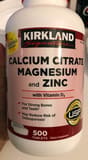 Calcium Citrate Magnesium and Zinc Kirkland Signature · 500 tablets Score 97 out of 100 Excellent
 -
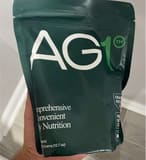 AG1 Athletic Greens · 360 g Contains non-nutritive sweetenersContains caffeineContains whole grains Score 97 out of 100 Excellent
 -
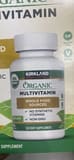 Organic Multivitamin Kirkland Signature Contains seed oilsCertified organic Score 96 out of 100 Excellent
Sources
-
Spilling the Beans: How Much Caffeine is Too Much?
“For most adults, the FDA has cited 400 milligrams* a day — that's about two to three 12-fluid-ounce cups of coffee — as an amount not generally associated with negative effects.”
fda.gov
-
Regulation (EU) No 1169/2011, Annex III point 4.1 (beverages with high caffeine content)
“‘High caffeine content. Not recommended for children or pregnant or breast-feeding women’”
eur-lex.europa.eu
-
Dietary Guidelines for Americans, 2025–2030
“Limit foods and beverages that include artificial flavors, petroleum-based dyes, artificial preservatives, and low-calorie non-nutritive sweeteners.”
cdn.realfood.gov