Wheat flours
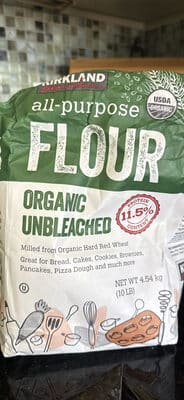
Kirkland Signature all-purpose FLOUR
4.54 kg
Score
- Certified organic
- No additives
Why it scores 100
Kirkland Signature all-purpose FLOUR scores 100 out of 100 (Excellent) under GoodSwap’s published rules. What moved the score most:
- plus 5 points Certified organic: Carries a certified-organic label. Info
- plus 5 points Simple whole food: A few low-concern ingredients, minimally processed. Info
- minus 2 points Energy 367 kcal / 100 g: Energy-dense for its weight. Info
Every line of the math is on The Receipt below, with its evidence tier and sources.
The Receipt
all-purpose FLOUR
Nutrition per 100 g
- Energy 367 kcal / 100 g minus 2 points
- Protein 12 g / 100 g plus 2 points
Bonuses
- Certified organic plus 5 points
- Simple whole food plus 5 points
100 + 10 = 100
Nutrition per 100 g
| Energy | 367 kcal |
|---|---|
| Fat | 1 g |
| Saturated fat | 0 g |
| Trans fat | 0 g |
| Carbohydrates | 72 g |
| Sugars | 1 g |
| Added sugars | 0 g |
| Fiber | 2 g |
| Protein | 12 g |
| Salt | 0 g |
Serving: 100g
Ingredients
Label text, as published
Organic Hard Red Wheat Flour, Organic Malted Barley Flour.
Allergens and diets
Contains: Wheat, Gluten
- Vegan
- Vegetarian
- Not gluten-free
- Palm-oil-free
Always check the package: recipes change.
More wheat flours on GoodSwap
-
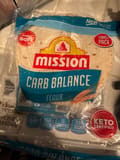 Carb Balance Flour Tortilla Wraps Mission · 24 oz Ultra-processedContains non-nutritive sweetenersContains emulsifiers studied for gut effectsContains seed oils Score 43 out of 100 Okay
 -
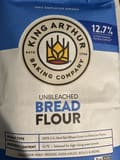 Bread Flour King Arthur Baking · 5 lb Score 100 out of 100 Excellent
 -
 Unbleached white all-purpose organic flour Bob's Red Mill · 5 lb Certified organicNo additives Score 100 out of 100 Excellent
 -
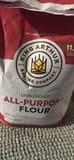 Unbleached All-Purpose Flour King Arthur Baking Company · 12 lb Score 100 out of 100 Excellent
 -
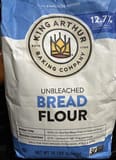 Unbleached Bread Flour King Arthur Baking Company · 10 lb Score 100 out of 100 Excellent
 -
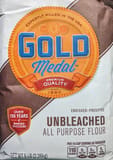 Gold Medal Unbleached All Purpose Flour imp Gold Medal · 5 lb Score 100 out of 100 Excellent
More from Kirkland Signature
-
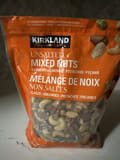 Unsalted Mixed Nuts Kirkland Signature · 1.13 kg Score 100 out of 100 Excellent
 -
 Purified Drinking Water Kirkland Signature · 500 mL Score 100 out of 100 Excellent
 -
 Unsalted Sweet Cream Butter Kirkland Signature · 4 × 16 oz Score 83 out of 100 Excellent
 -
 Super Premium Vanilla Ice Cream Kirkland Signature · 1.89 L Score 41 out of 100 Okay
Sources
-
Dietary Guidelines for Americans, 2025–2030
“Limit foods and beverages that include artificial flavors, petroleum-based dyes, artificial preservatives, and low-calorie non-nutritive sweeteners.”
cdn.realfood.gov
-
7 CFR 205.102 Use of the term "organic" (National Organic Program)
“Any agricultural product that is sold, labeled, or represented as “100 percent organic,” “organic,” or “made with organic (specified ingredients or food group(s))” must be: (a) Produced in accordance with the requirements specified in § 205.101 or §§ 205.202 through 205.207”
ecfr.gov