
Greek-style yogurts
The Greek Gods Plain Traditional Greek Yogurt
Score
- Ultra-processed
Why it scores 77
The Greek Gods Plain Traditional Greek Yogurt scores 77 out of 100 (Good) under GoodSwap’s published rules. What moved the score most:
- minus 18 points Ultra-processed (NOVA 4): Classified NOVA 4: made with industrial ingredients and additives. Strong
- minus 2.5 points Pectin: An ingredient class typical of ultra-processed foods (NOVA group 4). Info
- minus 2.5 points Saturated fat 5 g / 100 g: Contains some saturated fat. Counted at half for this whole-food category. Strong
Every line of the math is on The Receipt below, with its evidence tier and sources.
Better yogurt
-
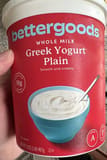 Greek Yogurt Plain Bettergoods Not ultra-processed · No pectin Score 100 out of 100 , 23 points higher
 -
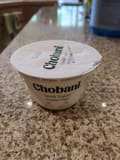 Greek Yogurt Nonfat Plain Chobani · 5.3 oz Not ultra-processed · No pectin Score 100 out of 100 , 23 points higher
 -
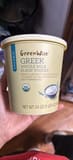 Greek Whole Milk Plain Yogurt Greenwise · 24 oz Not ultra-processed · No pectin Score 100 out of 100 , 23 points higher
 -
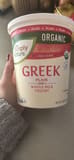 Greek Plain Grade A Whole Milk Yogurt Simply Nature Not ultra-processed · No pectin Score 100 out of 100 , 23 points higher
 -
 Greek Yogurt Plain Unsweetened Maple Hill · 16 oz/453 g Not ultra-processed · No pectin Score 100 out of 100 , 23 points higher
The same kind of product, at least 10 points higher, sold in the US. Never paid placements.
The Receipt
Plain Traditional Greek Yogurt
Ingredients
- Pectin minus 2.5 points
Processing
- Ultra-processed (NOVA 4) minus 18 points
Nutrition per 100 g
- Saturated fat 5 g / 100 g minus 2.5 points
100 − 23 = 77
Nutrition per 100 g
| Energy | 82 kcal |
|---|---|
| Fat | 9 g |
| Saturated fat | 5 g |
| Trans fat | 0 g |
| Carbohydrates | 11 g |
| Sugars | 9 g |
| Added sugars | 0 g |
| Fiber | 0 g |
| Protein | 7 g |
| Salt | 0.3 g |
Serving: 1 cup (227 g)
Ingredients
Label text, as published
Cultured Pasteurized Grade A Milk, Cream, Pectin. Contains 7 Live and Active Cultures (S. Thermophilus, B. Lactis, L. Acidophilus, L. Casei, L. Rhamnosus, Lactobacillus Lactis, L. Bulgaricus).
Allergens and diets
Contains: Milk
- Not vegan
- Vegetarian
- Gluten-free
- Palm-oil-free
Always check the package: recipes change.
More Greek-style yogurts on GoodSwap
-
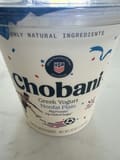 Greek Yogurt Nonfat Plain Chobani · 32 oz Score 100 out of 100 Excellent
 -
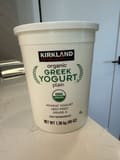 organic GREEK YOGURT plain Kirkland Signature · 1.36 kg (48 oz) Certified organic Score 100 out of 100 Excellent
 -
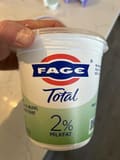 Total 2% Milkfat Fage · 32 oz Score 100 out of 100 Excellent
 -
 Too Good & Co. Blended Too Good & Co. · 5.3 oz (150 g) Ultra-processedContains non-nutritive sweeteners Score 74 out of 100 Good
 -
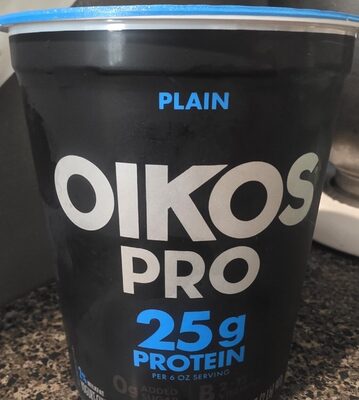 Oikos Pro Plain Oikos · 907 g Ultra-processedContains non-nutritive sweeteners Score 72 out of 100 Good
 -
 Light & Fit Flavored Greek Yogurt Light & Fit · 907 g Ultra-processedContains non-nutritive sweetenersContains added sugarsContains artificial flavors Score 40 out of 100 Okay
More from The Greek Gods


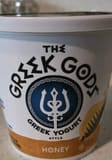
Sources
-
Saturated fatty acid and trans-fatty acid intake for adults and children: WHO guideline
“WHO recommends that adults and children reduce saturated fatty acid intake to 10% of total energy intake (strong recommendation).”
who.int
-
“Greater exposure to ultra-processed food was associated with a higher risk of adverse health outcomes, especially cardiometabolic, common mental disorder, and mortality outcomes.”
doi.org