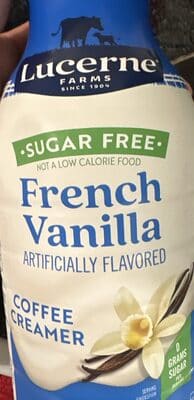
Creamer
Lucerne Sugar free French Vanilla Coffee Creamer
946 mL
Score
- Ultra-processed
- Contains non-nutritive sweeteners
- Contains added sugars
- Contains emulsifiers studied for gut effects
- Contains seed oils
- Contains artificial flavors
- May contain traces of 1,4-dioxane
Why it scores 25
Lucerne Sugar free French Vanilla Coffee Creamer scores 25 out of 100 (Poor) under GoodSwap’s published rules. What moved the score most:
- minus 20 points Corn syrup: An added sugar. Strong
- minus 20 points Sugar: An added sugar. Strong
- minus 18 points Ultra-processed (NOVA 4): Classified NOVA 4: made with industrial ingredients and additives. Strong
Every line of the math is on The Receipt below, with its evidence tier and sources.
Better coffee creamers and half and half
-
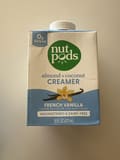 almond + coconut CREAMER FRENCH VANILLA Nut Pods No non-nutritive sweeteners · No added sugars Score 69 out of 100 , 44 points higher
 -
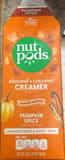 Sugar free pumpkin spice creamer Nut Pods · 750 mL No non-nutritive sweeteners · No added sugars Score 69 out of 100 , 44 points higher
 -
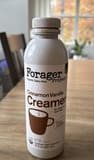 Cinnamon Vanilla Creamer Forager Project · 20 oz Not ultra-processed · No non-nutritive sweeteners Score 68 out of 100 , 43 points higher
 -
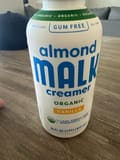 Organic Almond Malk Creamer (Vanilla) Malk Not ultra-processed · No non-nutritive sweeteners Score 69 out of 100 , 44 points higher
 -
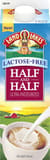 Lactose free half and half Land O Lakes · 1 qt Not ultra-processed · No non-nutritive sweeteners Score 79 out of 100 , 54 points higher
The same kind of product, at least 10 points higher, sold in the US. Never paid placements.
The Receipt
Sugar free French Vanilla Coffee Creamer
Ingredients
- Corn syrup minus 20 points
- Sugar minus 20 points
- Lactose minus 10 points
Processing
- Ultra-processed (NOVA 4) minus 18 points
- 6 kinds of ultra-processing markers minus 7.5 points
100 − 75.5 = 24.5 → 25
Can’t score above 79. Contains corn syrup, an ingredient of high concern. [1][2][3]
Nutrition per 100 g
| Energy | 100 kcal |
|---|---|
| Fat | 10 g |
| Saturated fat | 0.1 g |
| Trans fat | 0 g |
| Carbohydrates | 6.9 g |
| Sugars | 0.5 g |
| Fiber | 0.5 g |
| Protein | 0 g |
| Salt | 0 g |
Serving: 1 portion (15 g)
Ingredients
- WATER
- CORN SYRUP (high concern)
- VEGETABLE OIL (HIGH OLEIC SOYBEAN, HIGH OLEIC SUNFLOWER)
- MALTODEXTRIN
- SODIUM CASEINATE (FROM MILK)
- DIPOTASSIUM PHOSPHATE
- NATURAL AND ARTIFICIAL FLAVOR
- DATEM
- POLYSORBATE 60
- CARRAGEENAN (moderate concern)
- SUCRALOSE (moderate concern)
- ACESULFAME POTASSIUM (moderate concern)
- Adds a trivial amount of sugars (high concern)
- Not a source of lactose (high concern)
Label text, as published
WATER, CORN SYRUP*, VEGETABLE OIL (HIGH OLEIC SOYBEAN AND/OR HIGH OLEIC SUNFLOWER), MALTODEXTRIN, SODIUM CASEINATE (FROM MILK)**, DIPOTASSIUM PHOSPHATE, NATURAL AND ARTIFICIAL FLAVOR, DATEM, POLYSORBATE 60, CARRAGEENAN, SUCRALOSE, ACESULFAME POTASSIUM. * Adds a trivial amount of sugars ** Not a source of lactose CONTAINS: MILK
Allergens and diets
Contains: Milk
- Not vegan
- Palm-oil-free
Always check the package: recipes change.
Packaging
Recyclable metals, Plastic, Pet 1 polyethylene terephthalate
Context only: no points in v1.
More creamer on GoodSwap
-
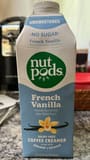 French Vanilla Coffee Creamer Nut Pods · 750 g Ultra-processed Score 69 out of 100 Good
 -
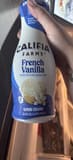 French Vanilla Almond Creamer Califia Farms Ultra-processedContains added sugarsContains seed oils Score 52 out of 100 Okay
 -
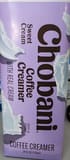 Coffee Creamer Chobani Ultra-processedHigh in saturated fatContains added sugarsNo additives Score 50 out of 100 Okay
 -
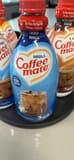 Coffee mate French Vanilla Nestlé · 50.7 fl oz/1.58 Quart/1.5 Ultra-processedHigh in sugarHigh in saturated fatContains non-nutritive sweeteners Score 13 out of 100 Bad
 -
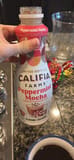 Peppermint Mocha Almond Creamer Califia Farms Ultra-processedContains added sugarsContains seed oils Score 50 out of 100 Okay
 -
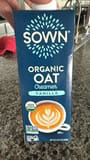 Organic Oat Creamer Vanilla Sown · 32 fl oz Ultra-processedHigh in sugarContains added sugarsContains seed oils Score 42 out of 100 Okay
More from Lucerne
Sources
-
Guideline: sugars intake for adults and children
“In both adults and children, WHO recommends reducing the intake of free sugars to less than 10% of total energy intake”
who.int
-
Dietary Guidelines for Americans, 2025–2030
“Limit foods and beverages that include artificial flavors, petroleum-based dyes, artificial preservatives, and low-calorie non-nutritive sweeteners.”
cdn.realfood.gov
-
Added and free sugars should be as low as possible
“Sugar consumption is a known cause of dental caries.”
efsa.europa.eu
-
“Greater exposure to ultra-processed food was associated with a higher risk of adverse health outcomes, especially cardiometabolic, common mental disorder, and mortality outcomes.”
doi.org
-
WHO advises not to use non-sugar sweeteners for weight control in newly released guideline
“The recommendation is based on the findings of a systematic review of the available evidence which suggests that use of NSS does not confer any long-term benefit in reducing body fat in adults or children.”
who.int
-
Dietary emulsifiers impact the mouse gut microbiota promoting colitis and metabolic syndrome
“carboxymethylcellulose and polysorbate-80, induced low-grade inflammation and obesity/metabolic syndrome in wild-type hosts and promoted robust colitis in mice predisposed to this disorder.”
doi.org
-
“Relative to control subjects, CMC consumption modestly increased postprandial abdominal discomfort and perturbed gut microbiota composition in a way that reduced its diversity.”
doi.org
-
“This study found positive associations between risk of CVD and intake of five individual and two groups of food additive emulsifiers widely used in industrial foods.”
doi.org
-
“replacement of saturated fat in the diet with linoleic acid effectively lowers serum cholesterol but does not support the hypothesis that this translates to a lower risk of death from coronary heart disease or all causes.”
doi.org
-
“These data provide support for current recommendations to replace saturated fat with polyunsaturated fat for primary prevention of CHD.”
doi.org
-
1,4-Dioxane in Cosmetics: A Manufacturing Byproduct
“1,4-dioxane forms as a byproduct during the manufacturing process of certain cosmetic ingredients.”
fda.gov
-
Agents Classified by the IARC Monographs, Volumes 1–142 (List of Classifications)
monographs.iarc.who.int