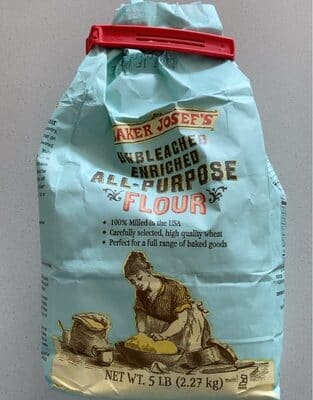
Wheat flours
Trader Joe's Unbleached Enriched All-Purpose Flour
2.27 kg
Score
- Contains added sugars
- No additives
Why it scores 79
Trader Joe's Unbleached Enriched All-Purpose Flour scores 79 out of 100 (Good) under GoodSwap’s published rules. What moved the score most:
- minus 20 points Malt syrup: An added sugar. Strong
- minus 2 points Energy 367 kcal / 100 g: Energy-dense for its weight. Info
- plus 2 points Protein 10 g / 100 g: A good source of protein. Info
Capped at 79: Contains malt syrup, an ingredient of high concern.
Every line of the math is on The Receipt below, with its evidence tier and sources.
Better flour
-
 Unbleached All Purpose Enriched Flour Kroger · 30 g No added sugars · No malt syrup Score 100 out of 100 , 21 points higher
 -
 Unbleached All-Purpose Flour King Arthur Baking Company · 2.27 kg No added sugars · No malt syrup Score 100 out of 100 , 21 points higher
 -
 Gold Medal Unbleached All Purpose Flour imp Gold Medal · 5 lb No added sugars · No malt syrup Score 100 out of 100 , 21 points higher
 -
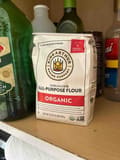 Unbleached All-purpose Flour Organic King Arthur Baking Company · 2 lb/32 oz/907 g No added sugars · No malt syrup Score 100 out of 100 , 21 points higher
 -
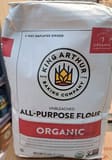 100% Organic Unbleached All-Purpose Flour King Arthur · 5 lb No added sugars · No malt syrup Score 100 out of 100 , 21 points higher
The same kind of product, at least 10 points higher, sold in the US. Never paid placements.
The Receipt
Unbleached Enriched All-Purpose Flour
Ingredients
- Malt syrup minus 20 points
Nutrition per 100 g
- Energy 367 kcal / 100 g minus 2 points
- Protein 10 g / 100 g plus 2 points
100 − 20 = 80 → capped at 79
Capped at 79. Contains malt syrup, an ingredient of high concern. [1][2][3]
Nutrition per 100 g
| Energy | 367 kcal |
|---|---|
| Fat | 0 g |
| Saturated fat | 0 g |
| Trans fat | 0 g |
| Carbohydrates | 73 g |
| Sugars | 0 g |
| Added sugars | 0 g |
| Fiber | 2.5 g |
| Protein | 10 g |
| Salt | 0 g |
Serving: 30 g
Ingredients
- UNBLEACHED WHEAT FLOUR
- MALTED BARLEY (high concern)
- FLOUR
- NIACIN
- REDUCED IRON
- THIAMINE MONONITRATE
- RIBOFLAVIN
- FOLIC ACID
- OLD CVOLUOVC v DV (not recognized)
Label text, as published
UNBLEACHED WHEAT FLOUR, MALTED BARLEY FLOUR, NIACIN, REDUCED IRON, THIAMINE MONONITRATE, RIBOFLAVIN, FOLIC ACID OLD CVOLUOVC v DV.
Allergens and diets
Contains: Wheat, Gluten
- Not gluten-free
- Palm-oil-free
Always check the package: recipes change.
More wheat flours on GoodSwap
-
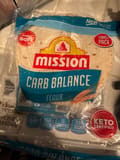 Carb Balance Flour Tortilla Wraps Mission · 24 oz Ultra-processedContains non-nutritive sweetenersContains emulsifiers studied for gut effectsContains seed oils Score 43 out of 100 Okay
 -
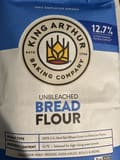 Bread Flour King Arthur Baking · 5 lb Score 100 out of 100 Excellent
 -
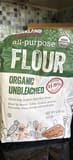 all-purpose FLOUR Kirkland Signature · 4.54 kg Certified organicNo additives Score 100 out of 100 Excellent
 -
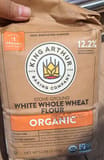 Stone Ground White Whole Wheat Flour King Arthur · 5 lb Certified organicNo additives Score 100 out of 100 Excellent
 -
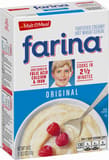 Fortified Creamy Hot Wheat Cereal Malt O Meal · 18 oz (1 lb 2 oz) 510 g Score 100 out of 100 Excellent
More from Trader Joe's
-
 Cracked Wheat Sourdough Bread Trader Joe's · 24 oz Score 86 out of 100 Excellent
 -
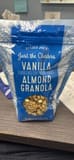 Vanilla Almond Granola Trader Joe's · 16 oz Score 22 out of 100 Poor
 -
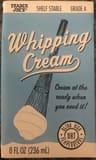 Whipping cream Trader Joe's · 236 mL Score 65 out of 100 Good
 -
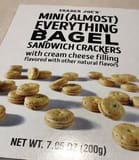 Mini (Almost) Everything Bagel Sandwich Crackers Trader Joe's · 7.05 oz (200 g) Score 7 out of 100 Bad
Sources
-
Guideline: sugars intake for adults and children
“In both adults and children, WHO recommends reducing the intake of free sugars to less than 10% of total energy intake”
who.int
-
Dietary Guidelines for Americans, 2025–2030
“Limit foods and beverages that include artificial flavors, petroleum-based dyes, artificial preservatives, and low-calorie non-nutritive sweeteners.”
cdn.realfood.gov
-
Added and free sugars should be as low as possible
“Sugar consumption is a known cause of dental caries.”
efsa.europa.eu