Dried meals
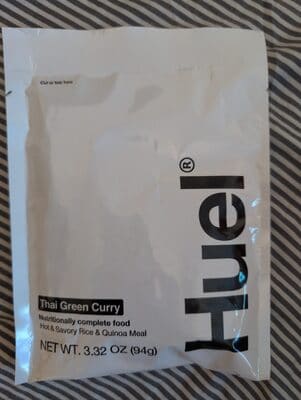
Huel Thai Green Curry
Score
- Ultra-processed
- Contains added sugars
- Contains seed oils
- No synthetic dyes
- Contains whole grains
Why it scores 41
Huel Thai Green Curry scores 41 out of 100 (Okay) under GoodSwap’s published rules. What moved the score most:
- minus 20 points Coconut sugar: An added sugar. Strong
- minus 18 points Ultra-processed (NOVA 4): Classified NOVA 4: made with industrial ingredients and additives. Strong
- minus 7.5 points Retinyl acetate: A vitamin A derivative. Regulatory
Every line of the math is on The Receipt below, with its evidence tier and sources.
Better protein shakes
-
 Organic Green Berry meal shake Urban Remedy No added sugars · No seed oils Score 77 out of 100 , 36 points higher
 -
 Eden Shake Sesame & Sea Vegetable Seasoning Eden Not ultra-processed · No added sugars Score 79 out of 100 , 38 points higher
 -
 Gundry MD Proplant Complete Shake No added sugars · No seed oils Score 74 out of 100 , 33 points higher
 -
 The MealBetix Lifestyle MealBetix · 15 oz Not ultra-processed · No added sugars Score 79 out of 100 , 38 points higher
 -
 Organic Cocoa Cashew Coconut Dairy-free Shake Forager Project No added sugars · No seed oils Score 79 out of 100 , 38 points higher
The same kind of product, at least 10 points higher, sold in the US. Never paid placements.
The Receipt
Thai Green Curry
Ingredients
- Coconut sugar minus 20 points
- Retinyl acetate minus 7.5 points
- Pea protein minus 2.5 points
- Natural flavors minus 1.5 points
- Sunflower oil minus 1.5 points
Processing
- Ultra-processed (NOVA 4) minus 18 points
- 3 kinds of ultra-processing markers minus 3 points
Nutrition per 100 g
- Sugars 6.5 g / 100 g minus 3 points
- Saturated fat 2.8 g / 100 g minus 3 points
- Salt 1.1 g / 100 g minus 3 points
- Energy 374 kcal / 100 g minus 2 points
- Fiber 7.5 g / 100 g plus 4 points
- Protein 22.4 g / 100 g plus 2 points
100 − 59 = 41
Can’t score above 79. Contains coconut sugar, an ingredient of high concern. [1][2][3]
Nutrition per 100 g
| Energy | 374 kcal |
|---|---|
| Fat | 8.4 g |
| Saturated fat | 2.8 g |
| Trans fat | 0 g |
| Carbohydrates | 57 g |
| Sugars | 6.5 g |
| Added sugars | 3.7 g |
| Fiber | 7.5 g |
| Protein | 22.4 g |
| Salt | 1.1 g |
Serving: 1 pouch (107 g)
Ingredients
- Dried Grain Blend (Brown Rice, Quinoa) (not recognized)
- Pea Protein
- Flaxseed
- Coconut Milk Powder
- Dried Vegetables (Bell Pepper, Sweetcorn, cts Spring Onion)
- Thai Green Curry Style Flavor (Natural Flavor, Ground Spices (94g) 00 Value* 17% 18%, Salt, Sunflower Oil, Coconut Oil, Citric Acid)
- Corn Starch
- Micronutrient Blend (not recognized)
- Medium-Chain Triglyceride Powder (from Coconut) (not recognized)
- Spinach Powder
- Coconut Sugar (high concern)
- Sunflower Oil Powder
- Micronutrient Blend: Potassium Citrate
- Potassium Chloride
- Calciu Carbonate (not recognized)
- Ascorbic Acid
- Menaquinone-7
- Lutein
- D-alpha Tocopherol Acetate
- Retinol Acetate (moderate concern)
- Potassium Iodide
- Nicotinamide
- Cyanocobalamin
- Calcium D-Pantothenate
- Ergocalciferol
- Cholecalciferol
- Zinc Oxide
- Pyridoxine Hydrochloride
- Riboflavin
- Thiamine Mononitrate
- Calcium L-Methylfolate
Label text, as published
Dried Grain Blend (Brown Rice, Quinoa), Pea Protein, Flaxseed, Coconut Milk Powder, Dried Vegetables (Bell Pepper, Sweetcorn, cts Spring Onion), Thai Green Curry Style Flavor (Natural Flavor, Ground Spices (94g) 00 Value* 17% 18% (Garlic, Cilantro, Chili, Ginger, Cumin, Black Pepper), Salt, Sunflower Oil, Coconut Oil, Citric Acid), Corn Starch, Micronutrient Blend*, Medium-Chain Triglyceride Powder (from Coconut), Spinach Powder, Coconut Sugar, Sunflower Oil Powder. *Micronutrient Blend: Potassium Citrate, Potassium Chloride, Calciu Carbonate, Ascorbic Acid, Menaquinone-7, Lutein, D-alpha Tocopherol Acetate, Retinol Acetate, Potassium Iodide, Nicotinamide, Cyanocobalamin, Calcium D-Pantothenate, Ergocalciferol, Cholecalciferol, Zinc Oxide, Pyridoxine Hydrochloride, Riboflavin, Thiamine Mononitrate, Calcium L-Methylfolate. CONTAINS: TREE NUTS (COCONUT)
Allergens and diets
Contains: Tree nuts
Always check the package: recipes change.
More dried meals on GoodSwap
More from Huel
Sources
-
Guideline: sugars intake for adults and children
“In both adults and children, WHO recommends reducing the intake of free sugars to less than 10% of total energy intake”
who.int
-
Dietary Guidelines for Americans, 2025–2030
“Limit foods and beverages that include artificial flavors, petroleum-based dyes, artificial preservatives, and low-calorie non-nutritive sweeteners.”
cdn.realfood.gov
-
Added and free sugars should be as low as possible
“Sugar consumption is a known cause of dental caries.”
efsa.europa.eu
-
Vitamin A and Carotenoids - Health Professional Fact Sheet
“Experts advise women who are or might be pregnant and those who are lactating not to take high doses (more than 3,000 mcg RAE [10,000 IU] daily) of vitamin A supplements [1].”
ods.od.nih.gov
-
Pregnancy vitamins and supplements
“Do not take cod liver oil or supplements containing vitamin A (sometimes called retinol) when you're pregnant.”
nhs.uk
-
“vitamin A is safe in cosmetic products up to concentrations of 0,05 % Retinol Equivalent (RE) in body lotion and 0,3 % RE in other leave-on and rinse-off products.”
eur-lex.europa.eu
-
Cosmetic Ingredient Hotlist: prohibited and restricted ingredients
“The following ingredients are only permitted in cosmetic products under the conditions of use specified below:”
canada.ca
-
21 CFR 101.22 Foods; labeling of spices, flavorings, colorings and chemical preservatives
“whose significant function in food is flavoring rather than nutritional.”
ecfr.gov
-
“replacement of saturated fat in the diet with linoleic acid effectively lowers serum cholesterol but does not support the hypothesis that this translates to a lower risk of death from coronary heart disease or all causes.”
doi.org
-
“These data provide support for current recommendations to replace saturated fat with polyunsaturated fat for primary prevention of CHD.”
doi.org
-
Saturated fatty acid and trans-fatty acid intake for adults and children: WHO guideline
“WHO recommends that adults and children reduce saturated fatty acid intake to 10% of total energy intake (strong recommendation).”
who.int
-
“For adults, WHO recommends less than 2000 mg/day of sodium (equivalent to less than 5 g/day salt), or just under a teaspoon.”
who.int
-
“Greater exposure to ultra-processed food was associated with a higher risk of adverse health outcomes, especially cardiometabolic, common mental disorder, and mortality outcomes.”
doi.org