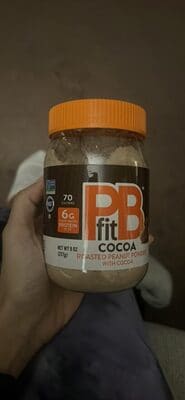
Peanut butters
PBfit Roasted Peanut Powder with Cocoa
8 oz
Score
- High in salt
- Contains added sugars
- No additives
Why it scores 67
PBfit Roasted Peanut Powder with Cocoa scores 67 out of 100 (Good) under GoodSwap’s published rules. What moved the score most:
- minus 20 points Sugar: An added sugar. Strong
- minus 9 points Salt 2.5 g / 100 g: Very high in salt. Strong
- minus 8 points Sugars 16.7 g / 100 g: High in sugar. Strong
Every line of the math is on The Receipt below, with its evidence tier and sources.
Better powdered peanut butter
-
 Simply Peanut Roasted Peanut Powder PBfit · 24 oz Less salt · No added sugars Score 100 out of 100 , 33 points higher
 -
 Pure Peanut Powder Crazy Richard's · 6.5 oz/184 g Less salt · No added sugars Score 100 out of 100 , 33 points higher
 -
 Pure Peanut Powder PB2 · 32 oz Less salt · No added sugars Score 100 out of 100 , 33 points higher
 -
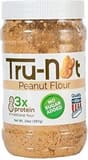 Peanut flour great for baking good source of plant protein Less salt · No added sugars Score 100 out of 100 , 33 points higher
 -
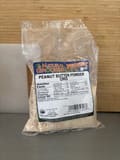 Organic Peanut Butter Powder Natural Grocers Less salt · No added sugars Score 100 out of 100 , 33 points higher
The same kind of product, at least 10 points higher, sold in the US. Never paid placements.
The Receipt
Roasted Peanut Powder with Cocoa
Ingredients
- Sugar minus 20 points
Nutrition per 100 g
- Sugars 16.7 g / 100 g minus 8 points
- Salt 2.5 g / 100 g minus 9 points
- Fiber 33.3 g / 100 g plus 4 points
100 − 33 = 67
Can’t score above 79. Contains sugar, an ingredient of high concern. [1][2][3]
Can’t score above 79. High in salt (above the front-of-pack "high" level). [5]
Nutrition per 100 g
| Energy | 417 kcal |
|---|---|
| Fat | 12.5 g |
| Saturated fat | 1.7 g |
| Trans fat | 0 g |
| Carbohydrates | 50 g |
| Sugars | 16.7 g |
| Added sugars | 25 g |
| Fiber | 33.3 g |
| Protein | 33.3 g |
| Salt | 2.5 g |
Serving: 1 serving (16 g)
Ingredients
Label text, as published
PEANUTS, COCOA, SUGAR AND, SALT
Allergens and diets
Contains: Peanuts
- Vegan
- Vegetarian
- Gluten-free
- Palm-oil-free
Always check the package: recipes change.
More peanut butters on GoodSwap
-
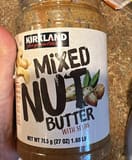 Mixed Nut Butter with Seeds Kirkland · 765 g High in saturated fatNo additives Score 100 out of 100 Excellent
 -
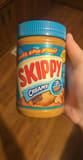 Creamy Peanut Butter Skippy · 16.3 oz Ultra-processedHigh in saturated fatContains added sugarsContains seed oils Score 57 out of 100 Okay
 -
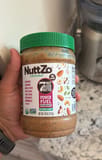 NuttZo Organic 7 Nut & Seed Butter POWER FUEL Crunchy Nuttzo · 737 g High in saturated fatCertified organicNo additives Score 100 out of 100 Excellent
 -
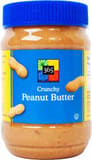 Crunchy Peanut Butter Spread 365 Whole Foods Market · 16 oz High in saturated fatContains added sugarsContains palm oilCertified organic Score 79 out of 100 Good
 -
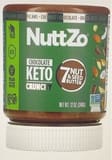 Chocolate Keto Natural Nuttzo · 12 oz Ultra-processedHigh in saturated fatContains non-nutritive sweetenersContains sugar alcohols Score 77 out of 100 Good
 -
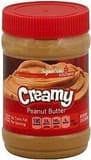 Creamy Peanut Butter Signature Select · 28 oz/794 g Ultra-processedHigh in saturated fatContains added sugarsContains seed oils Score 36 out of 100 Poor
More from PBfit

Sources
-
Guideline: sugars intake for adults and children
“In both adults and children, WHO recommends reducing the intake of free sugars to less than 10% of total energy intake”
who.int
-
Dietary Guidelines for Americans, 2025–2030
“Limit foods and beverages that include artificial flavors, petroleum-based dyes, artificial preservatives, and low-calorie non-nutritive sweeteners.”
cdn.realfood.gov
-
Added and free sugars should be as low as possible
“Sugar consumption is a known cause of dental caries.”
efsa.europa.eu
-
“For adults, WHO recommends less than 2000 mg/day of sodium (equivalent to less than 5 g/day salt), or just under a teaspoon.”
who.int
-
“Table 3: Criteria for drinks (per 100ml)”
assets.publishing.service.gov.uk