Dietary supplements
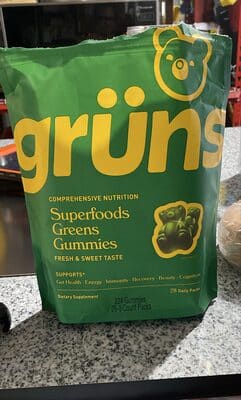
Grüns Superfoods Greens Gummies
20 unit
Score
- Contains added sugars
Why it scores 88
Grüns Superfoods Greens Gummies scores 88 out of 100 (Excellent) under GoodSwap’s published rules. What moved the score most:
- minus 12 points Sugar: An added sugar. Strong
Every line of the math is on The Receipt below, with its evidence tier and sources.
The Receipt
Superfoods Greens Gummies
Ingredients
- Sugar minus 12 points
100 − 12 = 88
Nutrition per 100 g
| Energy | 250 kcal |
|---|---|
| Fat | 0 g |
| Saturated fat | 0 g |
| Trans fat | 0 g |
| Carbohydrates | 15 g |
| Sugars | 8 g |
| Fiber | 6 g |
| Protein | 0 g |
| Salt | 0 g |
Serving: 20g
Ingredients
- ohydrate (not recognized)
- Dietary Fiber
- Total Sugars (high concern)
- Added Sugars (high concern)
- Vitamin A (as retinyl palmitate)
- Vitamin C (as ascorbic acid)
- Vitamin D (D3) (as VegaD3Light™ Cholecalciferol)
- Vitamin E (as d-alpha-tocopherol)
- Thiamin (as thiamin hydrochloride)
- Riboflavin (Vitamin B2)
- Niacin (as niacinamide)
- Vitamin B6 (as pyridoxal-5-phosphate)
- Folate (as L-5-methyltetrahydrofolate)
- Vitamin B12 (as methylcobalamin)
- Biotin
- Pantothenic Acid (as calcium d-pantothenate)
- Iron (as ferrous fumarate)
- Iodine (as potassium iodide)
- Zinc (as zinc citrate)
- Selenium (as sodium selenite)
- Copper (as copper citrate)
- Manganese (as manganese gluconate)
- Chromium (as chromium chloride)
- Molybdenum (as sodium molybdate)
- Vitamin K2
- Core Nutrients Blend
Label text, as published
Calories, Total Carbohydrate, Dietary Fiber, Total Sugars, Added Sugars, Vitamin A (as retinyl palmitate), Vitamin C (as ascorbic acid), Vitamin D (D3) (as VegaD3Light™ Cholecalciferol), Vitamin E (as d-alpha-tocopherol), Thiamin (as thiamin hydrochloride), Riboflavin (Vitamin B2), Niacin (as niacinamide), Vitamin B6 (as pyridoxal-5-phosphate), Folate (as L-5-methyltetrahydrofolate), Vitamin B12 (as methylcobalamin), Biotin, Pantothenic Acid (as calcium d-pantothenate), Iron (as ferrous fumarate), Iodine (as potassium iodide), Zinc (as zinc citrate), Selenium (as sodium selenite), Copper (as copper citrate), Manganese (as manganese gluconate), Chromium (as chromium chloride), Molybdenum (as sodium molybdate), Vitamin K2, Core Nutrients Blend.
Allergens and diets
- Vegan
- Vegetarian
- Palm-oil-free
Always check the package: recipes change.
More dietary supplements on GoodSwap
-
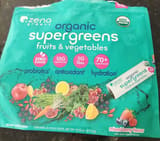 Organic Supergreens Fruits & Vegetables Zena Greens Contains non-nutritive sweetenersContains caffeineCertified organicContains whole grains Score 95 out of 100 Excellent
 -
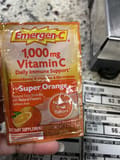 Super Orange Flavored Fizzy Drink Mix Emergen-C · 9.1 g Contains added sugarsNo synthetic dyes Score 86 out of 100 Excellent
 -
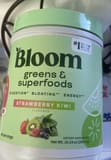 Greens and superfoods Bloom · 10.24 oz Contains non-nutritive sweetenersContains caffeineContains whole grains Score 97 out of 100 Excellent
 -
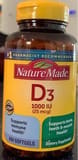 D3 Vitamin Nature Made Contains seed oils Score 98 out of 100 Excellent
 -
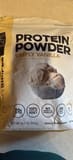 Protein Powder Simply Vanilla Clean Simple Eats Contains non-nutritive sweetenersContains sugar alcoholsSeed-oil free Score 96 out of 100 Excellent
 -
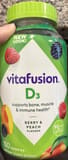 D3 Berry & Peach Flavors Vitafusion Contains added sugarsContains palm oilSeed-oil freeNo synthetic dyes Score 73 out of 100 Good
Sources
-
Guideline: sugars intake for adults and children
“In both adults and children, WHO recommends reducing the intake of free sugars to less than 10% of total energy intake”
who.int
-
Dietary Guidelines for Americans, 2025–2030
“Limit foods and beverages that include artificial flavors, petroleum-based dyes, artificial preservatives, and low-calorie non-nutritive sweeteners.”
cdn.realfood.gov
-
Added and free sugars should be as low as possible
“Sugar consumption is a known cause of dental caries.”
efsa.europa.eu