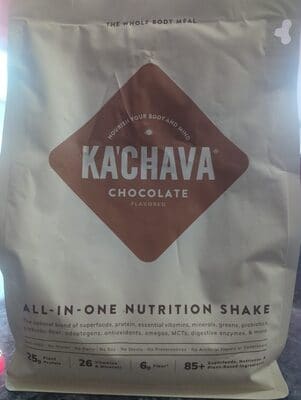
Protein shakes
Ka'Chava All-In-One Nutrition Shake
62 g
Score
- Seed-oil free
Why it scores 91
Ka'Chava All-In-One Nutrition Shake scores 91 out of 100 (Excellent) under GoodSwap’s published rules. What moved the score most:
- minus 5 points Sugars 11.3 g / 100 g: High in sugar. Strong
- minus 5 points Salt 1.2 g / 100 g: High in salt. Strong
- plus 4 points Fiber 9.7 g / 100 g: A good source of fiber. Strong
Every line of the math is on The Receipt below, with its evidence tier and sources.
The Receipt
All-In-One Nutrition Shake
Nutrition per 100 g
- Sugars 11.3 g / 100 g minus 5 points
- Saturated fat 4 g / 100 g minus 3 points
- Salt 1.2 g / 100 g minus 5 points
- Energy 462 kcal / 100 g minus 2 points
- Fiber 9.7 g / 100 g plus 4 points
- Protein 40.3 g / 100 g plus 2 points
100 − 9 = 91
Nutrition per 100 g
| Energy | 462 kcal |
|---|---|
| Fat | 9.7 g |
| Saturated fat | 4 g |
| Carbohydrates | 32.3 g |
| Sugars | 11.3 g |
| Added sugars | 6.5 g |
| Fiber | 9.7 g |
| Protein | 40.3 g |
| Salt | 1.2 g |
Serving: 1 serving (62 g)
Ingredients
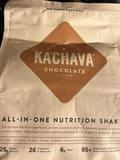
- Kachava Chocolate All-in-One Nutrition: Superfoods
- protein (not recognized)
- essential vitamins
- minerals
- greens (not recognized)
- probiotic fiber
- adaptogens (not recognized)
- antioxidants (not recognized)
- omegas (not recognized)
- MCTs
- digestive enzymes
Label text, as published
Kachava Chocolate All-in-One Nutrition: Superfoods, protein, essential vitamins, minerals, greens, probiotic fiber, adaptogens, antioxidants, omegas, MCTs, digestive enzymes.
More protein shakes on GoodSwap
-
 High Quality Protein Fairlife · 11.5 fl oz (340 mL) Contains non-nutritive sweetenersContains emulsifiers studied for gut effects Score 84 out of 100 Excellent
 -
 Core Power High Protein Milk Shake Chocolate Fairlife · 14 oz Ultra-processedContains non-nutritive sweetenersContains emulsifiers studied for gut effects Score 46 out of 100 Okay
 -
 CORE POWER High Protein Milk Shake Chocolate Rlife · 414 mL Ultra-processedContains non-nutritive sweetenersContains emulsifiers studied for gut effects Score 51 out of 100 Okay
 -
 koia ELITE Chocolate Koia · 12 fl oz Contains non-nutritive sweetenersContains added sugarsSeed-oil free Score 83 out of 100 Excellent
 -
 Protein Shake Six Star · 1 shake Contains non-nutritive sweetenersContains emulsifiers studied for gut effectsContains seed oilsContains artificial flavors Score 81 out of 100 Excellent
 -
 Protein Whey Smooth Vanilla Equate · 22 oz Contains non-nutritive sweetenersContains emulsifiers studied for gut effects Score 83 out of 100 Excellent
More from Ka'Chava
Sources
-
Guideline: sugars intake for adults and children
“In both adults and children, WHO recommends reducing the intake of free sugars to less than 10% of total energy intake”
who.int
-
Saturated fatty acid and trans-fatty acid intake for adults and children: WHO guideline
“WHO recommends that adults and children reduce saturated fatty acid intake to 10% of total energy intake (strong recommendation).”
who.int
-
“For adults, WHO recommends less than 2000 mg/day of sodium (equivalent to less than 5 g/day salt), or just under a teaspoon.”
who.int
-
Dietary Guidelines for Americans, 2025–2030
“Limit foods and beverages that include artificial flavors, petroleum-based dyes, artificial preservatives, and low-calorie non-nutritive sweeteners.”
cdn.realfood.gov