Protein bars
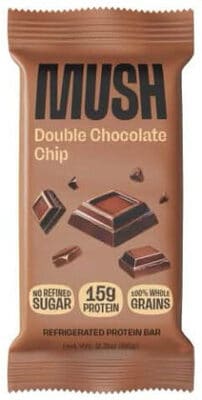
Mush Double Chocolate Chip Refrigerated Protein Bar
2.3 oz
Score
- Contains added sugars
- Seed-oil free
- Contains whole grains
Why it scores 71
Mush Double Chocolate Chip Refrigerated Protein Bar scores 71 out of 100 (Good) under GoodSwap’s published rules. What moved the score most:
- minus 12 points Honey: An added sugar. Strong
- minus 12 points Coconut sugar: An added sugar. Strong
- minus 5 points Chocolate (sweetened, ingredient): Contains added sugar. Strong
Every line of the math is on The Receipt below, with its evidence tier and sources.
The Receipt
Double Chocolate Chip Refrigerated Protein Bar
Ingredients
- Honey minus 12 points
- Coconut sugar minus 12 points
- Chocolate (sweetened, ingredient) minus 5 points
- Milk protein concentrate / isolate minus 0.5 points
100 − 29.5 = 70.5 → 71
Nutrition per 100 g
| Energy | 400 kcal |
|---|---|
| Fat | 18.5 g |
| Saturated fat | 7.7 g |
| Trans fat | 0 g |
| Carbohydrates | 36.9 g |
| Sugars | 20 g |
| Added sugars | 13.8 g |
| Fiber | 6.2 g |
| Protein | 23.1 g |
| Salt | 0.5 g |
Serving: 1 bar (65 g)
Ingredients
- Organic rolled oats
- honey (high concern)
- milk protein concentrate
- almonds
- dates
- coconut oil
- cocoa powder
- chocolate chips (chocolate liquor, coconut sugar, cocoa butter) (moderate concern)
- vanilla extract
- salt
Label text, as published
Organic rolled oats, honey, milk protein concentrate, almonds, dates, coconut oil, cocoa powder, chocolate chips (chocolate liquor, coconut sugar, cocoa butter), vanilla extract, salt.
Allergens and diets
Contains: Milk, Tree nuts, Gluten
- Not vegan
- Vegetarian
- Not gluten-free
- Palm-oil-free
Always check the package: recipes change.
Packaging
Plastic
Context only: no points in v1.
More protein bars on GoodSwap
-
 Blueberry RXBAR RXBAR · 52 g Ultra-processedHigh in sugarNo additives Score 64 out of 100 Good
 -
 Iq Bar 18 Protein Bar Variety Pack IQ Bar · 816 g Seed-oil free Score 97 out of 100 Excellent
 -
 Protein Bars RXBAR Score 99 out of 100 Excellent
 -
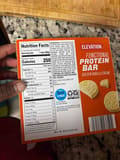 Functional Protein Bar Golden Vanilla Cream Elevation Contains non-nutritive sweetenersContains added sugarsContains sugar alcoholsContains palm oil Score 81 out of 100 Excellent
 -
 Caramel peanut vegan protein bar Barbells · 55 g Contains non-nutritive sweetenersContains sugar alcoholsContains seed oilsContains artificial flavors Score 88 out of 100 Excellent
 -
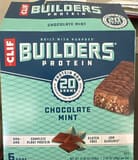 Clif builder's protein chocolate mint protein bars Clif · 14.40 oz/408 g Ultra-processedHigh in sugarHigh in saturated fatContains added sugars Score 4 out of 100 Bad
More from Mush
Sources
-
Guideline: sugars intake for adults and children
“In both adults and children, WHO recommends reducing the intake of free sugars to less than 10% of total energy intake”
who.int
-
Dietary Guidelines for Americans, 2025–2030
“Limit foods and beverages that include artificial flavors, petroleum-based dyes, artificial preservatives, and low-calorie non-nutritive sweeteners.”
cdn.realfood.gov
-
Added and free sugars should be as low as possible
“Sugar consumption is a known cause of dental caries.”
efsa.europa.eu