Yogurts
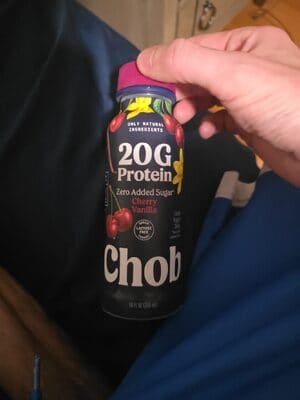
Chobani Cherry Vanilla Protein Drink
Score
- Ultra-processed
- Contains non-nutritive sweeteners
- No synthetic dyes
Why it scores 66
Chobani Cherry Vanilla Protein Drink scores 66 out of 100 (Good) under GoodSwap’s published rules. What moved the score most:
- minus 18 points Ultra-processed (NOVA 4): Classified NOVA 4: made with industrial ingredients and additives. Strong
- minus 6 points 5 kinds of ultra-processing markers: Industrial additive classes found: bulking agent, color (added), flavoring, non-nutritive sweetener and thickener, stabilizer or gelling agent. Emerging
- minus 2.5 points Inulin (chicory root fiber): An ingredient class typical of ultra-processed foods (NOVA group 4). Info
Every line of the math is on The Receipt below, with its evidence tier and sources.
Better protein shakes
-
 Protein Shake Chocolate Oak Farms · half gallon/1.89 L Not ultra-processed · No non-nutritive sweeteners Score 100 out of 100 , 34 points higher
 -
 Marine Collagen Wild-caught Orgain Not ultra-processed · No non-nutritive sweeteners Score 100 out of 100 , 34 points higher
 -
 Ensure Max Protein nutrition shake French Vanilla Ensure No non-nutritive sweeteners · No pectin Score 78 out of 100 , 12 points higher
 -
 Organic Cocoa Cashew Coconut Dairy-free Shake Forager Project No non-nutritive sweeteners · No pectin Score 79 out of 100 , 13 points higher
 -
 Eden Shake Sesame & Sea Vegetable Seasoning Eden Not ultra-processed · No non-nutritive sweeteners Score 79 out of 100 , 13 points higher
The same kind of product, at least 10 points higher, sold in the US. Never paid placements.
The Receipt
Cherry Vanilla Protein Drink
Ingredients
- Inulin (chicory root fiber) minus 2.5 points
- Natural flavors minus 2.5 points
- Pectin minus 2.5 points
- Stevia (steviol glycosides) minus 1.5 points
- Locust bean gum minus 1.5 points
Processing
- Ultra-processed (NOVA 4) minus 18 points
- 5 kinds of ultra-processing markers minus 6 points
100 − 34.5 = 65.5 → 66
Nutrition per 100 g
| Energy | 57 kcal |
|---|---|
| Fat | 1 g |
| Saturated fat | 0.7 g |
| Trans fat | 0 g |
| Carbohydrates | 4.7 g |
| Sugars | 4.1 g |
| Added sugars | 0 g |
| Fiber | 0.3 g |
| Protein | 6.8 g |
| Salt | 0.1 g |
Serving: 1 bottle (296 g)
Ingredients
- Cultured lowfat milk
- cherry puree
- chicory root fiber
- vanilla extract
- water
- natural flavors
- fruit and vegetable juice (for color)
- fruit pectin
- stevia leaf extract (reb m)
- fruit extract
- locust bean gum
- lemon juice concentrate
- lactase
Label text, as published
Cultured lowfat milk, cherry puree, chicory root fiber, vanilla extract, water, natural flavors, fruit and vegetable juice (for color), fruit pectin, stevia leaf extract (reb m), fruit extract, locust bean gum, lemon juice concentrate, lactase
Allergens and diets
Contains: Milk
- Not vegan
- Palm-oil-free
Always check the package: recipes change.
More yogurts on GoodSwap
-
 Blended Vanilla Too Good & Co. · 32 oz Ultra-processedContains non-nutritive sweeteners Score 73 out of 100 Good
 -
 Simple Ingredient Skyr Siggi's · 24 oz Ultra-processedContains added sugars Score 63 out of 100 Good
 -
 Plain Yogurt Dannon · 32 oz No additives Score 100 out of 100 Excellent
 -
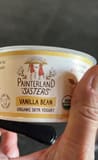 Vanilla Bean Organic Skyr Yogurt Painterland Sisters · 5.3 oz Ultra-processedContains added sugarsCertified organic Score 65 out of 100 Good
 -
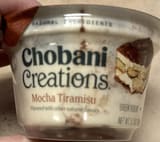 Mocha Tiramisu Chobani Creations · 5.3 oz Ultra-processedContains added sugarsContains caffeineSeed-oil free Score 28 out of 100 Poor
 -
 Greek Yogurt Cultured Dairy Blend Plain Kroger · 32 oz Score 100 out of 100 Excellent
More from Chobani
-
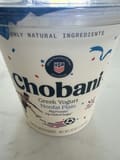 Greek Yogurt Nonfat Plain Chobani · 32 oz Score 100 out of 100 Excellent
 -
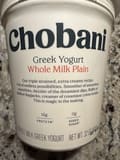 Greek Yogurt Whole Milk Plain Chobani · 907 g (32 oz) Score 100 out of 100 Excellent
 -
 Greek Yogurt Black Cherry Flavored Chobani · 5.3 oz/150 g Score 63 out of 100 Good
 -
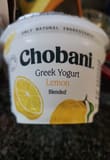 Greek Yogurt Lemon Blended Chobani · 5.3 oz Score 50 out of 100 Okay
Sources
-
21 CFR 101.22 Foods; labeling of spices, flavorings, colorings and chemical preservatives
“whose significant function in food is flavoring rather than nutritional.”
ecfr.gov
-
WHO advises not to use non-sugar sweeteners for weight control in newly released guideline
“The recommendation is based on the findings of a systematic review of the available evidence which suggests that use of NSS does not confer any long-term benefit in reducing body fat in adults or children.”
who.int
-
Dietary Guidelines for Americans, 2025–2030
“Limit foods and beverages that include artificial flavors, petroleum-based dyes, artificial preservatives, and low-calorie non-nutritive sweeteners.”
cdn.realfood.gov
-
“Greater exposure to ultra-processed food was associated with a higher risk of adverse health outcomes, especially cardiometabolic, common mental disorder, and mortality outcomes.”
doi.org