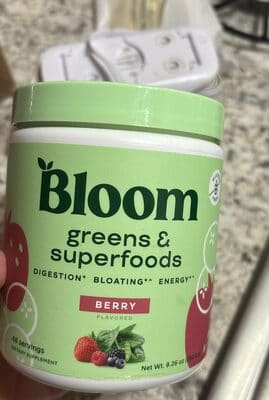
Dietary supplements
Bloom Greens & Superfoods
Score
- Contains non-nutritive sweeteners
- Contains caffeine
- Contains whole grains
Why it scores 97
Bloom Greens & Superfoods scores 97 out of 100 (Excellent) under GoodSwap’s published rules. What moved the score most:
- minus 1 points Inulin (chicory root fiber): An ingredient class typical of ultra-processed foods (NOVA group 4). Info
- minus 1 points Stevia (steviol glycosides): WHO (2023) recommends against using non-sugar sweeteners to control body weight (conditional recommendation); US dietary guidelines advise limiting them. Emerging
- minus 1 points Natural flavors: "Natural flavor" is a legal category (21 CFR 101.22(a)(3)): flavor substances from spices, fruits, vegetables, meat, dairy or fermentation. Info
Every line of the math is on The Receipt below, with its evidence tier and sources.
The Receipt
Greens & Superfoods
Ingredients
- Inulin (chicory root fiber) minus 1 points
- Stevia (steviol glycosides) minus 1 points
- Natural flavors minus 1 points
100 − 3 = 97
Nutrition per 100 g
| Energy | 274 kcal |
|---|---|
| Fat | 0 g |
| Carbohydrates | 73.1 g |
| Added sugars | 0 g |
| Fiber | 36.6 g |
| Protein | 0 g |
| Salt | 0.5 g |
Serving: 5.47 g
Ingredients
- Chicory root fructo-oligosaccharides
- organic flaxseed
- apple fruit powder
- Organic barley grass powder
- organic spirulina powder
- organic wheat grass powder
- organic alfalfa leaf powder (not recognized)
- organic chlorella powder
- Blue agave inulin
- Bacillus coagulans
- Bifidobacterium bifidum
- Lactobacillus rhamnosus
- Lactobacillus acidophilus
- Organic carrot powder
- beet root powder
- kale powder
- blueberry powder
- spinach powder
- broccoli powder
- ginger root 5:1 extract
- Cranberry fruit powder
- strawberry fruit powder
- raspberry fruit powder
- Tart cherry fruit powder
- elderberry fruit extract
- acai fruit extract (Euterpe oleracea)
- goji berry (Lycium chinense)
- horseradish tree leaf (Moringa oleifera)
- grape seed extract
- matcha green tea leaf
- Licorice root extract
- rhodiola root powder (not recognized)
- American ginseng root extract
- ashwagandha root powder (not recognized)
- astragalus root powder (not recognized)
- eleuthero root powder (not recognized)
- Stevia leaf extract
- Amylase
- amyloglucosidase (not recognized)
- protease
- acid protease
- cellulase
- lipase
- Natural Berry Flavor
Label text, as published
Chicory root fructo-oligosaccharides, organic flaxseed, apple fruit powder, Organic barley grass powder, organic spirulina powder, organic wheat grass powder, organic alfalfa leaf powder, organic chlorella powder, Blue agave inulin, Bacillus coagulans, Bifidobacterium bifidum, Lactobacillus rhamnosus, Lactobacillus acidophilus, Organic carrot powder, beet root powder, kale powder, blueberry powder, spinach powder, broccoli powder, ginger root 5:1 extract, Cranberry fruit powder, strawberry fruit powder, raspberry fruit powder, Tart cherry fruit powder, elderberry fruit extract, acai fruit extract (Euterpe oleracea), goji berry (Lycium chinense), horseradish tree leaf (Moringa oleifera), grape seed extract, matcha green tea leaf, Licorice root extract, rhodiola root powder, American ginseng root extract, ashwagandha root powder, astragalus root powder, eleuthero root powder, Stevia leaf extract, Amylase, amyloglucosidase, protease, acid protease, cellulase, lipase, Natural Berry Flavor.
Allergens and diets
Contains: Wheat, Gluten
- Not gluten-free
Always check the package: recipes change.
More dietary supplements on GoodSwap
-
 Organic Supergreens Fruits & Vegetables Zena Greens Contains non-nutritive sweetenersContains caffeineCertified organicContains whole grains Score 95 out of 100 Excellent
 -
 Super Orange Flavored Fizzy Drink Mix Emergen-C · 9.1 g Contains added sugarsNo synthetic dyes Score 86 out of 100 Excellent
 -
 Greens and superfoods Bloom · 10.24 oz Contains non-nutritive sweetenersContains caffeineContains whole grains Score 97 out of 100 Excellent
 -
 Ensure Original nutrition shake Ensure · 8 fl oz/237 mL Contains non-nutritive sweetenersContains added sugarsContains emulsifiers studied for gut effectsContains seed oils Score 68 out of 100 Good
 -
 Vitamin C Emergen-C Contains added sugars Score 75 out of 100 Good
 -
 Fiber Well Fiber Supplement Vitafusion · 90 gummies Contains non-nutritive sweetenersContains sugar alcoholsContains palm oilSeed-oil free Score 92 out of 100 Excellent
More from Bloom
Sources
-
WHO advises not to use non-sugar sweeteners for weight control in newly released guideline
“The recommendation is based on the findings of a systematic review of the available evidence which suggests that use of NSS does not confer any long-term benefit in reducing body fat in adults or children.”
who.int
-
Dietary Guidelines for Americans, 2025–2030
“Limit foods and beverages that include artificial flavors, petroleum-based dyes, artificial preservatives, and low-calorie non-nutritive sweeteners.”
cdn.realfood.gov
-
21 CFR 101.22 Foods; labeling of spices, flavorings, colorings and chemical preservatives
“whose significant function in food is flavoring rather than nutritional.”
ecfr.gov
-
Spilling the Beans: How Much Caffeine is Too Much?
“For most adults, the FDA has cited 400 milligrams* a day — that's about two to three 12-fluid-ounce cups of coffee — as an amount not generally associated with negative effects.”
fda.gov
-
Regulation (EU) No 1169/2011, Annex III point 4.1 (beverages with high caffeine content)
“‘High caffeine content. Not recommended for children or pregnant or breast-feeding women’”
eur-lex.europa.eu