Seafood
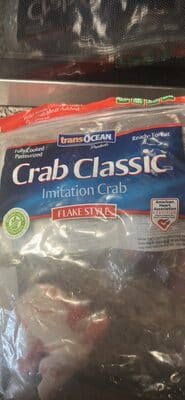
Trans-Ocean Crab Classic Imitation Crab
2 lb/907 g
Score
- Ultra-processed
- Contains added sugars
- Contains sugar alcohols
- Contains emulsifiers studied for gut effects
- Contains artificial flavors
- Seed-oil free
- No synthetic dyes
Why it scores 31
Trans-Ocean Crab Classic Imitation Crab scores 31 out of 100 (Poor) under GoodSwap’s published rules. What moved the score most:
- minus 20 points Sugar: An added sugar. Strong
- minus 18 points Ultra-processed (NOVA 4): Classified NOVA 4: made with industrial ingredients and additives. Strong
- minus 8 points 7 kinds of ultra-processing markers: Industrial additive classes found: color (added), emulsifier, flavor enhancer, flavoring, modified starch, sugar alcohol (polyol) and thickener, stabilizer or gelling agent. Emerging
Every line of the math is on The Receipt below, with its evidence tier and sources.
Better fish sticks and frozen fish
-
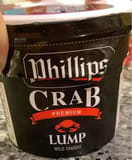 Crab Lump Phillips No added sugars · No sugar alcohols Score 81 out of 100 , 50 points higher
 -
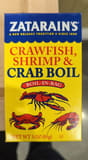 Crawfish, shrimp and crab boil Zararans · 3 oz Not ultra-processed · No added sugars Score 100 out of 100 , 69 points higher
 -
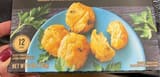 Mini crab cakes Private Selection · 6 oz Not ultra-processed · No sugar alcohols Score 71 out of 100 , 40 points higher
 -
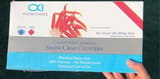 Cooked wild Canadian snow crab clusters Ocean Choice · 2 lb/907 g/32 oz Not ultra-processed · No added sugars Score 100 out of 100 , 69 points higher
 -
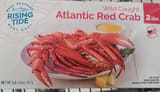 Atlantic Red Crab Rising Tide · 2 lb/32 oz/907 g Not ultra-processed · No added sugars Score 100 out of 100 , 69 points higher
The same kind of product, at least 10 points higher, sold in the US. Never paid placements.
The Receipt
Crab Classic Imitation Crab
Ingredients
- Sugar minus 20 points
- Carrageenan minus 7.5 points
- Sorbitol minus 2.5 points
- Natural and artificial flavors minus 1.5 points
- Wine minus 1.5 points
- Modified starch minus 1.5 points
- Disodium inosinate minus 0.5 points
- Sodium acid pyrophosphate minus 0.5 points
- Soy lecithin minus 0.5 points
- Carmine minus 0.5 points
- Color added (not named) minus 0.5 points
Processing
- Ultra-processed (NOVA 4) minus 18 points
- 7 kinds of ultra-processing markers minus 8 points
Nutrition per 100 g
- Sugars 4.7 g / 100 g minus 3 points
- Salt 1.2 g / 100 g minus 3 points
100 − 69 = 31
Can’t score above 79. Contains sugar, an ingredient of high concern. [1][2][3]
Nutrition per 100 g
| Energy | 94 kcal |
|---|---|
| Fat | 0 g |
| Saturated fat | 0 g |
| Trans fat | 0 g |
| Carbohydrates | 15.3 g |
| Sugars | 4.7 g |
| Added sugars | 4.7 g |
| Fiber | 0 g |
| Protein | 7.1 g |
| Salt | 1.2 g |
Serving: 0.5 cup (85 g)
Ingredients
- Alaska pollock (msc certified)
- water
- egg whites
- corn starch
- sugar (high concern)
- sorbitol
- king crab meat
- natural and artificial flavor (extracts of blue crab, snow crab, lobster, alaska pollock)
- refined fish oil (anchovy, sardine)
- rice wine (water, rice, koji)
- modified tapioca starch
- sea salt
- carrageenan (moderate concern)
- yam flour
- potassium chloride
- disodium inosinate
- sodium pyrophosphate
- soy lecithin
- carmine
- paprika
- color added
Label text, as published
Alaska pollock (msc certified), water, egg whites, corn starch, sugar, sorbitol, contains 2% or less of: king crab meat, natural and artificial flavor (extracts of blue crab, snow crab, lobster, and alaska pollock), refined fish oil* (anchovy, sardine), rice wine (water, rice, koji), modified tapioca starch, sea salt, carrageenan, yam flour, potassium chloride, disodium inosinate, sodium pyrophosphate, soy lecithin, carmine, paprika, color added.
Allergens and diets
Contains: Soy, Wheat, Egg, Fish, Crustaceans
- Not vegan
- Not vegetarian
- Not gluten-free
- Palm-oil-free
Always check the package: recipes change.
More seafood on GoodSwap
-
 Chunk Light Tuna Chicken Of The Sea · 56 g Contains seed oilsNo additives Score 94 out of 100 Excellent
 -
 Lightly Smoked Mussels Trader Joe's No additivesSeed-oil free Score 92 out of 100 Excellent
 -
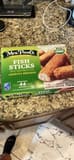 Fish Sticks Mrs. Paul's · 95 g Ultra-processedContains added sugarsContains seed oils Score 30 out of 100 Poor
 -
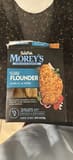 Wild Flounder Garlic & Herb SeaPak Morey's · 10 oz High in saltContains seed oils Score 60 out of 100 Good
 -
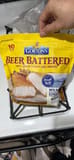 Battered Fish Fillets Gorton's · 103 g Ultra-processedContains added sugarsContains seed oils Score 21 out of 100 Poor
 - Lemon and Herbes de Provence Infused Olive Oil Yellowfin Tuna Genova · 5 g/oz No additivesSeed-oil free Score 100 out of 100 Excellent
Sources
-
Guideline: sugars intake for adults and children
“In both adults and children, WHO recommends reducing the intake of free sugars to less than 10% of total energy intake”
who.int
-
Dietary Guidelines for Americans, 2025–2030
“Limit foods and beverages that include artificial flavors, petroleum-based dyes, artificial preservatives, and low-calorie non-nutritive sweeteners.”
cdn.realfood.gov
-
Added and free sugars should be as low as possible
“Sugar consumption is a known cause of dental caries.”
efsa.europa.eu
-
“We found direct associations between the risk of type 2 diabetes and exposures to various food additive emulsifiers widely used in industrial foods, in a large prospective cohort of French adults.”
doi.org
-
Dietary emulsifiers impact the mouse gut microbiota promoting colitis and metabolic syndrome
“carboxymethylcellulose and polysorbate-80, induced low-grade inflammation and obesity/metabolic syndrome in wild-type hosts and promoted robust colitis in mice predisposed to this disorder.”
doi.org
-
Re-evaluation of carrageenan (E 407) and processed Eucheuma seaweed (E 407a) as food additives
“However, the Panel noted uncertainties as regards the chemistry, the exposure assessment and biological and toxicological data.”
doi.org
-
Agents Classified by the IARC Monographs, Volumes 1–142 (List of Classifications)
monographs.iarc.who.int
-
Regulation (EU) No 1169/2011, Annex III point 2.4 (foods with more than 10 % added polyols)
“‘excessive consumption may produce laxative effects’.”
eur-lex.europa.eu
-
21 CFR 101.22 Foods; labeling of spices, flavorings, colorings and chemical preservatives
“whose significant function in food is flavoring rather than nutritional.”
ecfr.gov
-
About Alcohol Use During Pregnancy
“There is no known safe amount of alcohol use during pregnancy.”
cdc.gov
-
EFSA issues new advice on phosphates
“We estimated that dietary exposure to phosphates may exceed the new ADI for infants, toddlers and children with average consumption of phosphates in their diet.”
efsa.europa.eu
-
21 CFR 73.100 Cochineal extract; carmine
“shall specifically declare the presence of the color additive by listing its respective common or usual name, “cochineal extract” or “carmine,””
ecfr.gov
-
21 CFR 101.22(k) Declaring color additives in the ingredient list
“Color additives not subject to certification and not otherwise required by applicable regulations in part 73 of this chapter to be declared by their respective common or usual names may be declared as “Artificial Color,” “Artificial Color Added,” or “Color Added””
ecfr.gov
-
“For adults, WHO recommends less than 2000 mg/day of sodium (equivalent to less than 5 g/day salt), or just under a teaspoon.”
who.int
-
“Greater exposure to ultra-processed food was associated with a higher risk of adverse health outcomes, especially cardiometabolic, common mental disorder, and mortality outcomes.”
doi.org
-
“Relative to control subjects, CMC consumption modestly increased postprandial abdominal discomfort and perturbed gut microbiota composition in a way that reduced its diversity.”
doi.org
-
“This study found positive associations between risk of CVD and intake of five individual and two groups of food additive emulsifiers widely used in industrial foods.”
doi.org