Beverages
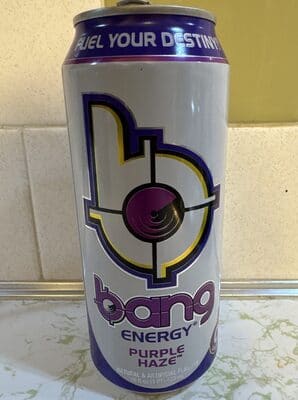
Bang Purple Haze Energy
16 fl oz
Score
- Ultra-processed
- Contains non-nutritive sweeteners
- Contains caffeine
- Contains artificial flavors
Why it scores 49
Bang Purple Haze Energy scores 49 out of 100 (Okay) under GoodSwap’s published rules. What moved the score most:
- minus 18 points Ultra-processed (NOVA 4): Classified NOVA 4: made with industrial ingredients and additives. Strong
- minus 7.5 points Sodium benzoate: Benzoates can form small amounts of benzene in drinks that also contain ascorbic acid (vitamin C), especially with heat or light. Strong
- minus 7.5 points Sucralose: In a 2022 randomized study, sucralose and saccharin altered the gut microbiome and impaired glucose responses in some people; a 2023 lab study raised questions about its by-product sucralose-6-acetate. Strong
Every line of the math is on The Receipt below, with its evidence tier and sources.
The Receipt
Purple Haze Energy
Ingredients
- Sodium benzoate minus 7.5 points
- Sucralose minus 7.5 points
- Acesulfame potassium (Ace-K) minus 7.5 points
- Natural and artificial flavors minus 1.5 points
- Caffeine minus 1.5 points
- Potassium phosphate minus 1.5 points
- Potassium sorbate minus 0.5 points
- Calcium chloride minus 0.5 points
- Calcium disodium EDTA minus 0.5 points
Processing
- Ultra-processed (NOVA 4) minus 18 points
- 4 kinds of ultra-processing markers minus 4.5 points
100 − 51 = 49
Nutrition per 100 ml
| Energy | 0 kcal |
|---|---|
| Fat | 0 g |
| Saturated fat | 0 g |
| Trans fat | 0 g |
| Carbohydrates | 0 g |
| Sugars | 0 g |
| Added sugars | 0 g |
| Fiber | 0 g |
| Protein | 0 g |
| Salt | 0 g |
Serving: 1 can (473 ml)
Ingredients
- CARBONATED WATER
- CITRIC ACID ANHYDROUS
- NATURAL AND ARTIFICIAL FLAVORS
- CAFFEINE
- SODIUM BENZOATE (PRESERVES FRESHNESS) (moderate concern)
- POTASSIUM CITRATE MONOHYDRATE
- SUCRALOSE (moderate concern)
- TARTARIC ACID
- L-LEUCINE
- POTASSIUM PHOSPHATE DIBASIC
- VITAMIN C (ASCORBIC ACID)
- ACESULFAME POTASSIUM (moderate concern)
- POTASSIUM SORBATE (PRESERVES FRESHNESS)
- MAGNESIUM CHLORIDE
- SUPER CREATINE (CREATYL-L-LEUCINE [CREATINE BONDED TO L-LEUCINE])
- L-ISOLEUCINE
- L-VALINE
- CALCIUM CHLORIDE
- CALCIUM DISODIUM EDTA
- VITAMIN B3 (NIACINAMIDE)
- COQ10 (COENZYME Q10) (not recognized)
- VITAMIN B6 (PYRIDOXINE HYDROCHLORIDE)
- VITAMIN B12 (METHYLCOBALAMIN)
Label text, as published
CARBONATED WATER, CITRIC ACID ANHYDROUS, NATURAL AND ARTIFICIAL FLAVORS, CAFFEINE, SODIUM BENZOATE (PRESERVES FRESHNESS), POTASSIUM CITRATE MONOHYDRATE, SUCRALOSE, TARTARIC ACID, L-LEUCINE, POTASSIUM PHOSPHATE DIBASIC, VITAMIN C (ASCORBIC ACID), ACESULFAME POTASSIUM, POTASSIUM SORBATE (PRESERVES FRESHNESS), MAGNESIUM CHLORIDE, SUPER CREATINE (CREATYL-L-LEUCINE [CREATINE BONDED TO L-LEUCINE]), L-ISOLEUCINE, L-VALINE, CALCIUM CHLORIDE, CALCIUM DISODIUM EDTA, VITAMIN B3 (NIACINAMIDE), COQ10 (COENZYME Q10), VITAMIN B6 (PYRIDOXINE HYDROCHLORIDE), VITAMIN B12 (METHYLCOBALAMIN)
Allergens and diets
- Palm-oil-free
Always check the package: recipes change.
More beverages on GoodSwap
-
 OWYN Pro Elite Dairy-Free Protein Chocolate Flavored OWYN · 330 mL Ultra-processedContains non-nutritive sweetenersContains seed oils Score 63 out of 100 Good
 -
 Organic Protein Delicious Protein Shake Garden of Life · 18.0 oz Ultra-processedHigh in saltContains non-nutritive sweetenersContains sugar alcohols Score 54 out of 100 Okay
 -
 Puna Coconut Pineapple Bai Ultra-processedContains non-nutritive sweetenersContains caffeine Score 69 out of 100 Good
 -
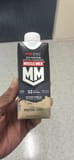 PRO Advanced Nutrition Protein Shake Muscle Milk · 11 fl oz/330 mL Ultra-processedContains non-nutritive sweetenersContains emulsifiers studied for gut effectsContains seed oils Score 37 out of 100 Poor
 -
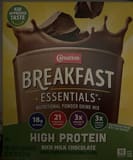 Breakfast Essentials High Protein Rich Milk Chocolate Nutritional Powder Drink Mix Carnation · 1.31 oz High in sugarHigh in saltContains added sugarsContains emulsifiers studied for gut effects Score 5 out of 100 Bad
 -
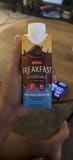 Nutritional Drink Carnation Breakfast Essentials · 8 fl oz/237 mL Ultra-processedContains non-nutritive sweetenersContains added sugarsContains emulsifiers studied for gut effects Score 8 out of 100 Bad
Sources
-
“Artificial colours or a sodium benzoate preservative (or both) in the diet result in increased hyperactivity in 3-year-old and 8/9-year-old children in the general population.”
doi.org
-
Re-evaluation of benzyl alcohol (E 1519) as food additive (records the 2016 benzoate re-evaluation)
“derived a group ADI of 5 mg/kg bw per day (expressed as benzoic acid) in accordance with the ADI previously derived by SCF and JECFA”
doi.org
-
Personalized microbiome-driven effects of non-nutritive sweeteners on human glucose tolerance
“As groups, each administered NNS distinctly altered stool and oral microbiome and plasma metabolome, whereas saccharin and sucralose significantly impaired glycemic responses.”
doi.org
-
“Sucralose-6-acetate significantly increased the expression of genes associated with inflammation, oxidative stress, and cancer”
doi.org
-
“EFSA’s experts concluded that the sweetener sucralose (E 955) continues to be safe for consumers for its currently authorised uses as a food additive.”
efsa.europa.eu
-
WHO advises not to use non-sugar sweeteners for weight control in newly released guideline
“The recommendation is based on the findings of a systematic review of the available evidence which suggests that use of NSS does not confer any long-term benefit in reducing body fat in adults or children.”
who.int
-
Dietary Guidelines for Americans, 2025–2030
“Limit foods and beverages that include artificial flavors, petroleum-based dyes, artificial preservatives, and low-calorie non-nutritive sweeteners.”
cdn.realfood.gov
-
Artificial sweeteners and cancer risk: Results from the NutriNet-Santé population-based cohort study
“In this large cohort study, artificial sweeteners (especially aspartame and acesulfame-K), which are used in many food and beverage brands worldwide, were associated with increased cancer risk.”
doi.org
-
Re-evaluation of acesulfame K (E 950) as food additive (plain language summary)
“The acceptable daily intake (ADI) considered safe for all population groups was set at 15 mg/kg body weight (bw) per day.”
efsa.europa.eu
-
21 CFR 101.22 Foods; labeling of spices, flavorings, colorings and chemical preservatives
“whose significant function in food is flavoring rather than nutritional.”
ecfr.gov
-
Spilling the Beans: How Much Caffeine is Too Much?
“For most adults, the FDA has cited 400 milligrams* a day — that's about two to three 12-fluid-ounce cups of coffee — as an amount not generally associated with negative effects.”
fda.gov
-
Caffeine (EFSA topic page; Scientific Opinion on the safety of caffeine, 2015)
“Caffeine intakes from all sources up to 200mg per day consumed throughout the day do not raise safety concerns for the foetus.”
efsa.europa.eu
-
EFSA issues new advice on phosphates
“We estimated that dietary exposure to phosphates may exceed the new ADI for infants, toddlers and children with average consumption of phosphates in their diet.”
efsa.europa.eu
-
“By applying a default uncertainty factor of 100, the Panel established a group ADI expressed as 11 mg sorbic acid/kg bw per day for sorbic acid (E 200) and its potassium salt (E 202).”
doi.org
-
21 CFR 182.3640 Potassium sorbate
ecfr.gov
-
“Greater exposure to ultra-processed food was associated with a higher risk of adverse health outcomes, especially cardiometabolic, common mental disorder, and mortality outcomes.”
doi.org
-
Regulation (EU) No 1169/2011, Annex III point 4.1 (beverages with high caffeine content)
“‘High caffeine content. Not recommended for children or pregnant or breast-feeding women’”
eur-lex.europa.eu