
English muffins
Whole Foods Market Classic english muffins
15 oz/425 g
Score
- Ultra-processed
- Contains seed oils
Why it scores 68
Whole Foods Market Classic english muffins scores 68 out of 100 (Good) under GoodSwap’s published rules. What moved the score most:
- minus 18 points Ultra-processed (NOVA 4): Classified NOVA 4: made with industrial ingredients and additives. Strong
- minus 3 points Salt 0.7 g / 100 g: High in salt. Strong
- minus 2.5 points Wheat gluten: An ingredient typical of ultra-processed foods (NOVA group 4). Info
Every line of the math is on The Receipt below, with its evidence tier and sources.
Better english muffins
-
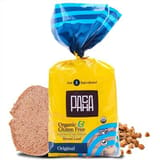 English Muffins Pacha Not ultra-processed · No seed oils Score 95 out of 100 , 27 points higher
 -
 English Muffins Stone & Skillet · 10 oz Not ultra-processed · No soy lecithin Score 90 out of 100 , 22 points higher
 -
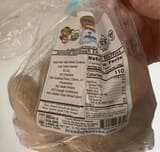 Sprouted Sourdough English Muffins Organic Bread Of Heaven · 21 oz Not ultra-processed · No seed oils Score 99 out of 100 , 31 points higher
 -
 Everything New England Style English Muffins Stone & Skillet · 10 oz Not ultra-processed · No soy lecithin Score 95 out of 100 , 27 points higher
 -
 Original English muffins Lidl Not ultra-processed · No seed oils Score 83 out of 100 , 15 points higher
The same kind of product, at least 10 points higher, sold in the US. Never paid placements.
The Receipt
Classic english muffins
Ingredients
- Wheat gluten minus 2.5 points
- Soybean oil minus 2.5 points
- Canola oil minus 2.5 points
- Soy lecithin minus 1.5 points
Processing
- Ultra-processed (NOVA 4) minus 18 points
- 2 kinds of ultra-processing markers minus 1.5 points
Nutrition per 100 g
- Salt 0.7 g / 100 g minus 3 points
- Energy 211 kcal / 100 g minus 1 points
100 − 32.5 = 67.5 → 68
Nutrition per 100 g
| Energy | 211 kcal |
|---|---|
| Fat | 1.4 g |
| Saturated fat | 0 g |
| Trans fat | 0 g |
| Carbohydrates | 42.3 g |
| Sugars | 2.8 g |
| Added sugars | 1.4 g |
| Fiber | 1.4 g |
| Protein | 7 g |
| Salt | 0.7 g |
Serving: 71 GRM
Ingredients
- UNBLEACHED WHEAT FLOUR (WHEAT FLOUR, MALTED BARLEY FLOUR)
- WATER
- YEAST
- CANE SUGAR CULTURED WHEAT FLOUR
- YELLOW CORNMEAL
- YELLOW CORN FLOUR
- VITAL WHEAT GLUTEN
- SALT
- ORGANIC DISTILLED WHITE VINEGAR
- EXPELLER PRESSED SOYBEAN OIL
- EXPELLER PRESSED CANOLA OIL
- WHEAT GLUTEN
- WHEAT STARCH
- ORGANIC CANOLA OIL
- SOY LECITHIN (EMULSIFIER)
- ASCORBIC ACID
- MICROBIAL ENZYMES
- ORGANIC SOY LECITHIN (EMULSIFIER)
Label text, as published
UNBLEACHED WHEAT FLOUR (WHEAT FLOUR, MALTED BARLEY FLOUR), WATER, YEAST, CANE SUGAR CULTURED WHEAT FLOUR, CONTAINS 2% OR LESS OF THE FOLLOWING: YELLOW CORNMEAL, YELLOW CORN FLOUR, VITAL WHEAT GLUTEN, SALT, ORGANIC DISTILLED WHITE VINEGAR, EXPELLER PRESSED SOYBEAN OIL AND/OR EXPELLER PRESSED CANOLA OIL, WHEAT GLUTEN, WHEAT STARCH, ORGANIC CANOLA OIL, SOY LECITHIN (EMULSIFIER), ASCORBIC ACID, MICROBIAL ENZYMES, ORGANIC SOY LECITHIN (EMULSIFIER).
Allergens and diets
Contains: Soy, Wheat, Gluten
- Vegan
- Vegetarian
- Not gluten-free
- Palm-oil-free
Always check the package: recipes change.
More English muffins on GoodSwap
-
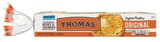 English Muffins Thomas' · 13 oz, 6 muffins Ultra-processedHigh in saltContains added sugarsContains seed oils Score 47 out of 100 Okay
 -
 Light Multi Grain English Muffins Thomas' · 12 oz (340 g) Ultra-processedContains added sugarsContains whole grains Score 47 out of 100 Okay
 -
 English Muffin Dave's Killer Bread · 13.2 oz/374 g Ultra-processedContains added sugarsContains seed oilsCertified organic Score 35 out of 100 Poor
 -
 English Muffins Thomas' · 553 g Ultra-processedContains added sugarsContains seed oils Score 49 out of 100 Okay
 - English Muffins Katz · 8.5 oz/240 g Ultra-processedContains added sugarsContains seed oilsContains whole grains Score 53 out of 100 Okay
More from Whole Foods Market
-
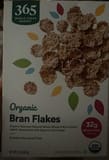 Organic Bran Flakes Whole Foods Market · 15 oz Score 58 out of 100 Okay
 -
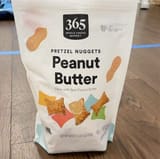 Peanut Butter Pretzel Nuggets Whole Foods Market · 18 oz Score 41 out of 100 Okay
 -
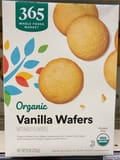 Organic vanilla wafers Whole Foods Market · 9 oz/255 g Score 48 out of 100 Okay
 -
 Kettle cooked sea salt potato chips Whole Foods Market · 10 oz/283 g Score 79 out of 100 Good
Sources
-
“replacement of saturated fat in the diet with linoleic acid effectively lowers serum cholesterol but does not support the hypothesis that this translates to a lower risk of death from coronary heart disease or all causes.”
doi.org
-
“These data provide support for current recommendations to replace saturated fat with polyunsaturated fat for primary prevention of CHD.”
doi.org
-
“For adults, WHO recommends less than 2000 mg/day of sodium (equivalent to less than 5 g/day salt), or just under a teaspoon.”
who.int
-
Dietary Guidelines for Americans, 2025–2030
“Limit foods and beverages that include artificial flavors, petroleum-based dyes, artificial preservatives, and low-calorie non-nutritive sweeteners.”
cdn.realfood.gov
-
“Greater exposure to ultra-processed food was associated with a higher risk of adverse health outcomes, especially cardiometabolic, common mental disorder, and mortality outcomes.”
doi.org