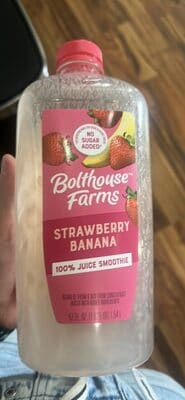
Smoothies
Bolthouse Farms Strawberry Banana 100% Juice Smoothie
52 fl oz/1.625 Quart/1.54 L
Score
- Ultra-processed
- High in sugar
- Contains added sugars
- No synthetic dyes
Why it scores 35
Bolthouse Farms Strawberry Banana 100% Juice Smoothie scores 35 out of 100 (Poor) under GoodSwap’s published rules. What moved the score most:
- minus 20 points Fruit juice concentrate (sweetener): An added sugar. Strong
- minus 18 points Ultra-processed (NOVA 4): Classified NOVA 4: made with industrial ingredients and additives. Strong
- minus 14 points Sugars 11.7 g / 100 ml: Very high in sugar. Strong
Every line of the math is on The Receipt below, with its evidence tier and sources.
Better juices and juice drinks
-
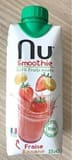 Strawberry banana premium 100% fruit smoothie Nu Not ultra-processed · Less sugar Score 82 out of 100 , 47 points higher
 -
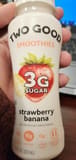 Two Good Smoothie Drinks - Strawberry Banana Two Good · 207 mL Less sugar · No added sugars Score 70 out of 100 , 35 points higher
 -
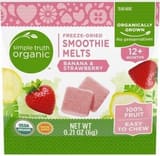 Banana & strawberry freeze-dried smoothie melts Simple Truth Organic Not ultra-processed · No added sugars Score 79 out of 100 , 44 points higher
 -
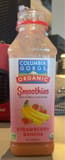 Fruit Puree & Juice Blend Smoothies, Strawberry Banana Columbia Gorge Organic · 15.2 fl oz/450 mL Not ultra-processed · Less sugar Score 90 out of 100 , 55 points higher
 -
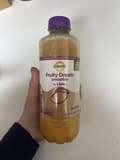 Fruity Dream Smoothie Solevita · 750 mL Not ultra-processed · Less sugar Score 99 out of 100 , 64 points higher
The same kind of product, at least 10 points higher, sold in the US. Never paid placements.
The Receipt
Strawberry Banana 100% Juice Smoothie
Ingredients
- Fruit juice concentrate (sweetener) minus 20 points
- Pectin minus 2.5 points
- Natural flavors minus 2.5 points
Processing
- Ultra-processed (NOVA 4) minus 18 points
- 4 kinds of ultra-processing markers minus 4.5 points
Nutrition per 100 ml
- Sugars 11.7 g / 100 ml minus 14 points
- Energy 54 kcal / 100 ml minus 4 points
100 − 65.5 = 34.5 → 35
Can’t score above 79. Contains fruit juice concentrate (sweetener), an ingredient of high concern. [1][2][3]
Can’t score above 79. High in sugars (above the front-of-pack "high" level). [6]
Nutrition per 100 ml
| Energy | 54 kcal |
|---|---|
| Fat | 0 g |
| Saturated fat | 0 g |
| Trans fat | 0 g |
| Carbohydrates | 13.3 g |
| Sugars | 11.7 g |
| Added sugars | 0 g |
| Fiber | 1.2 g |
| Protein | 0.4 g |
| Salt | 0 g |
Serving: 8 OZA (240 ml)
Ingredients
- STRAWBERRY PUREE
- BANANA PUREE
- PEAR JUICE FROM CONCENTRATE (WATER, PEAR JUICE CONCENTRATE)
- APPLE JUICE FROM CONCENTRATE (WATER, APPLE JUICE CONCENTRATE) (high concern)
- APPLE PUREE FROM CONCENTRATE (WATER, APPLE PUREE CONCENTRATE)
- PECTIN
- NATURAL FLAVORS
- VEGETABLE JUICE FOR COLOR
- VITAMIN C (ASCORBIC ACID)
Label text, as published
STRAWBERRY PUREE, BANANA PUREE, PEAR JUICE FROM CONCENTRATE (WATER, PEAR JUICE CONCENTRATE), APPLE JUICE FROM CONCENTRATE (WATER, APPLE JUICE CONCENTRATE), APPLE PUREE FROM CONCENTRATE (WATER, APPLE PUREE CONCENTRATE), PECTIN, NATURAL FLAVORS, VEGETABLE JUICE FOR COLOR, VITAMIN C (ASCORBIC ACID).
Allergens and diets
- Palm-oil-free
Always check the package: recipes change.
Packaging
Pet 1 polyethylene terephthalate
Context only: no points in v1.
More smoothies on GoodSwap
-
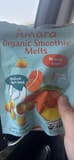 Organic Smoothie Melts Amara · 1 oz High in sugarHigh in saturated fatCertified organicNo additives Score 77 out of 100 Good
 -
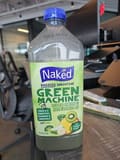 Boosted Smoothie Green Machine Naked · 64 fl oz (2 qt) Ultra-processedHigh in sugarContains added sugarsNo additives Score 40 out of 100 Okay
 -
 Mighty Mango Machine Naked · 64 fl oz/2 qt/1.89 L Ultra-processedHigh in sugarContains added sugarsNo synthetic dyes Score 39 out of 100 Poor
 -
 Fruit & Oat Smoothies Berry Blast Brainiac Ultra-processedHigh in sugarContains whole grains Score 62 out of 100 Good
 -
 Green goodness Bolthouse Farms · 946 mL Ultra-processedContains added sugarsContains caffeineNo additives Score 40 out of 100 Okay
 -
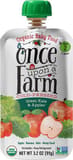 Fruit & Veggie Blend: Green Kale and Apple Once Upon A Farm · 3.2 oz/91 g No additives Score 85 out of 100 Excellent
More from Bolthouse Farms
-
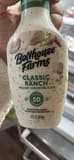 Classic Ranch Yogurt Dressing & Dip Bolthouse Farms · 12 fl oz/355 mL Score 34 out of 100 Poor
 -
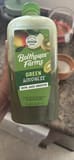 Green Goodness 100% Juice Smoothie Bolthouse Farms · 1540 g Score 44 out of 100 Okay
 -
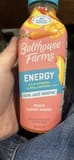 Peach Carrot Mango 100% Juice Smoothie Bolthouse Farms · 15.2 fl oz Score 39 out of 100 Poor
 -
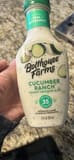 Cucumber Ranch Yogurt Dressing & Dip Bolthouse Farms · 12 fl oz Score 34 out of 100 Poor
Sources
-
Guideline: sugars intake for adults and children
“In both adults and children, WHO recommends reducing the intake of free sugars to less than 10% of total energy intake”
who.int
-
Dietary Guidelines for Americans, 2025–2030
“Limit foods and beverages that include artificial flavors, petroleum-based dyes, artificial preservatives, and low-calorie non-nutritive sweeteners.”
cdn.realfood.gov
-
Added and free sugars should be as low as possible
“Sugar consumption is a known cause of dental caries.”
efsa.europa.eu
-
21 CFR 101.22 Foods; labeling of spices, flavorings, colorings and chemical preservatives
“whose significant function in food is flavoring rather than nutritional.”
ecfr.gov
-
“Table 3: Criteria for drinks (per 100ml)”
assets.publishing.service.gov.uk
-
“Greater exposure to ultra-processed food was associated with a higher risk of adverse health outcomes, especially cardiometabolic, common mental disorder, and mortality outcomes.”
doi.org