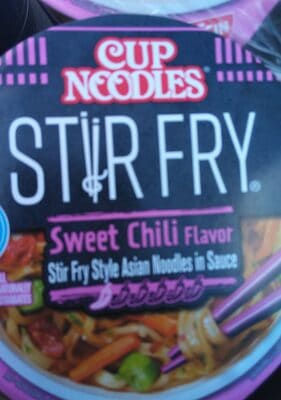
Instant noodles
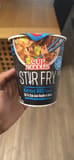
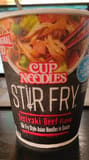
Cup Noodles Stir Fry Sweet Chili Flavor
1
Score
- Ultra-processed
- High in salt
- High in saturated fat
- Contains non-nutritive sweeteners
- Contains added sugars
- Contains seed oils
- Contains palm oil
- No synthetic dyes
Why it scores 5
Cup Noodles Stir Fry Sweet Chili Flavor scores 5 out of 100 (Bad) under GoodSwap’s published rules. What moved the score most:
- minus 20 points Sugar: An added sugar. Strong
- minus 20 points Corn syrup: An added sugar. Strong
- minus 18 points Ultra-processed (NOVA 4): Classified NOVA 4: made with industrial ingredients and additives. Strong
Every line of the math is on The Receipt below, with its evidence tier and sources.
Better instant noodles and ramen
-
 Tom Yum Ramen (Shrimp) Immi · 2.4 oz/68 g No non-nutritive sweeteners · No added sugars Score 49 out of 100 , 44 points higher
 -
 Spicy Beef Plant Based Ramen Immi · 24 oz No non-nutritive sweeteners · No added sugars Score 48 out of 100 , 43 points higher
 -
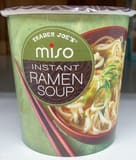 Instant Ramen Soup Trader Joe's Less saturated fat · No non-nutritive sweeteners Score 45 out of 100 , 40 points higher
 -
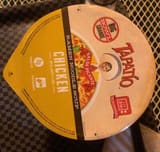 Ramen Noodle Soup Tapatio · 105 g No non-nutritive sweeteners · No added sugars Score 68 out of 100 , 63 points higher
 -
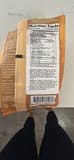 Buckwheat Mushroom Rice Ramen With Vegetable Broth Lotus Foods · 2.8 oz/80 g Not ultra-processed · Less saturated fat Score 67 out of 100 , 62 points higher
The same kind of product, at least 10 points higher, sold in the US. Never paid placements.
The Receipt
Stir Fry Sweet Chili Flavor
Ingredients
- Sugar minus 20 points
- Corn syrup minus 20 points
- Sucralose minus 7.5 points
- Vegetable oil (unspecified) minus 1.5 points
- Palm oil minus 1 points
Processing
- Ultra-processed (NOVA 4) minus 18 points
- 7 kinds of ultra-processing markers minus 8 points
Nutrition per 100 g
- Sugars 8.5 g / 100 g minus 3 points
- Saturated fat 7.3 g / 100 g minus 7 points
- Salt 3.5 g / 100 g minus 9 points
- Energy 451 kcal / 100 g minus 2 points
- Protein 9.8 g / 100 g plus 2 points
100 − 95 = 5
Can’t score above 79. Contains sugar, an ingredient of high concern. [1][2][3]
Can’t score above 79. High in saturated fat and salt (above the front-of-pack "high" level). [17]
Nutrition per 100 g
| Energy | 451 kcal |
|---|---|
| Fat | 15.9 g |
| Saturated fat | 7.3 g |
| Trans fat | 0 g |
| Carbohydrates | 67.1 g |
| Sugars | 8.5 g |
| Added sugars | 6.1 g |
| Fiber | 2.4 g |
| Protein | 9.8 g |
| Salt | 3.5 g |
Serving: 1 package (82 g)
Ingredients
- ENRICHED FLOUR (WHEAT FLOUR, NIACIN, REDUCED IRON, THIAMINE MONONITRATE, RIBOFLAVIN, FOLIC ACID)
- VEGETABLE OIL (PALM OIL, CANOLA OIL, SESAME OIL)
- TAPIOCA STARCH
- SUGAR (high concern)
- SALT
- AUTOLYZED YEAST EXTRACT
- BETA CAROTENE COLOR
- CITRIC ACID
- CONCENTRATED LIME JUICE
- CORN STARCH
- CRUSHED RED CHILI PEPPER
- DISODIUM GUANYLATE
- DISODIUM INOSINATE
- DISODIUM SUCCINATE (not recognized)
- DRIED CARROT STRIP
- DRIED CILANTRO FLAKE
- DRIED GREEN BEAN (not recognized)
- DRIED MINCED GARLIC
- DRIED TOMATO
- GARLIC POWDER
- GLUCOSE (high concern)
- HYDROLYZED CORN PROTEIN
- MALTODEXTRIN
- NATURAL FLAVOR
- ONION POWDER
- SILICON DIOXIDE
- SODIUM PHOSPHATE
- SODIUM TRIPOLYPHOSPHATE
- SOY LECITHIN
- SOYBEAN
- SUCRALOSE (moderate concern)
- TBHQ (PRESERVATIVE)
- VINEGAR
- WHEAT
Label text, as published
ENRICHED FLOUR (WHEAT FLOUR, NIACIN, REDUCED IRON, THIAMINE MONONITRATE, RIBOFLAVIN, FOLIC ACID), VEGETABLE OIL (PALM OIL, CANOLA OIL, SESAME OIL), TAPIOCA STARCH, SUGAR, SALT, CONTAINS LESS THAN 2% OF AUTOLYZED YEAST EXTRACT, BETA CAROTENE COLOR, CITRIC ACID, CONCENTRATED LIME JUICE, CORN STARCH, CRUSHED RED CHILI PEPPER, DISODIUM GUANYLATE, DISODIUM INOSINATE, DISODIUM SUCCINATE, DRIED CARROT STRIP, DRIED CILANTRO FLAKE, DRIED GREEN BEAN, DRIED MINCED GARLIC, DRIED TOMATO, GARLIC POWDER, GLUCOSE, HYDROLYZED CORN PROTEIN, MALTODEXTRIN, NATURAL FLAVOR, ONION POWDER, SILICON DIOXIDE, SODIUM PHOSPHATE, SODIUM TRIPOLYPHOSPHATE, SOY LECITHIN, SOYBEAN, SUCRALOSE, TBHQ (PRESERVATIVE), VINEGAR, WHEAT.
Allergens and diets
Contains: Soy, Wheat, Gluten, Sesame
- Vegetarian
- Not gluten-free
- Not palm-oil-free
Always check the package: recipes change.
More instant noodles on GoodSwap
-
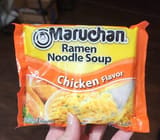 Ramen Noodle Soup Chicken Flavor Maruchan · 85 g Ultra-processedHigh in saltHigh in saturated fatContains added sugars Score 15 out of 100 Bad
 - Instant Lunch, Ramen Noodles With Vegetables, Chicken Maruchan · 2.25 oz/64 g High in saltHigh in saturated fatContains added sugarsContains seed oils Score 28 out of 100 Poor
-
 Ramen Noodle Soup Maruchan · 3 oz Ultra-processedHigh in saltHigh in saturated fatContains added sugars Score 9 out of 100 Bad
 -
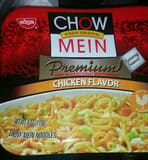 Chow Mein Chicken Nissin · 4 oz (113 g) Ultra-processedHigh in saltHigh in saturated fatContains added sugars Score 6 out of 100 Bad
 -
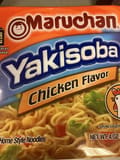 Yakisoba chicken Maruchan · 4 oz/113 g Ultra-processedHigh in saltHigh in saturated fatContains added sugars Score 10 out of 100 Bad
 -
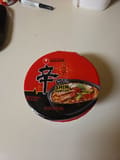 Shin Ramyun Nongshim · 86 g Ultra-processedHigh in saltHigh in saturated fatContains added sugars Score 10 out of 100 Bad
More from Cup Noodles
Sources
-
Guideline: sugars intake for adults and children
“In both adults and children, WHO recommends reducing the intake of free sugars to less than 10% of total energy intake”
who.int
-
Dietary Guidelines for Americans, 2025–2030
“Limit foods and beverages that include artificial flavors, petroleum-based dyes, artificial preservatives, and low-calorie non-nutritive sweeteners.”
cdn.realfood.gov
-
Added and free sugars should be as low as possible
“Sugar consumption is a known cause of dental caries.”
efsa.europa.eu
-
Personalized microbiome-driven effects of non-nutritive sweeteners on human glucose tolerance
“As groups, each administered NNS distinctly altered stool and oral microbiome and plasma metabolome, whereas saccharin and sucralose significantly impaired glycemic responses.”
doi.org
-
“Sucralose-6-acetate significantly increased the expression of genes associated with inflammation, oxidative stress, and cancer”
doi.org
-
“EFSA’s experts concluded that the sweetener sucralose (E 955) continues to be safe for consumers for its currently authorised uses as a food additive.”
efsa.europa.eu
-
WHO advises not to use non-sugar sweeteners for weight control in newly released guideline
“The recommendation is based on the findings of a systematic review of the available evidence which suggests that use of NSS does not confer any long-term benefit in reducing body fat in adults or children.”
who.int
-
“replacement of saturated fat in the diet with linoleic acid effectively lowers serum cholesterol but does not support the hypothesis that this translates to a lower risk of death from coronary heart disease or all causes.”
doi.org
-
“These data provide support for current recommendations to replace saturated fat with polyunsaturated fat for primary prevention of CHD.”
doi.org
-
Saturated fatty acid and trans-fatty acid intake for adults and children: WHO guideline
“WHO recommends that adults and children reduce saturated fatty acid intake to 10% of total energy intake (strong recommendation).”
who.int
-
Process contaminants in vegetable oils and foods
“The highest levels of GE, as well as 3-MCPD and 2-MCPD (including esters) were found in palm oils and palm fats, followed by other oils and fats.”
efsa.europa.eu
-
“Glycidyl fatty acid esters, expressed as glycidol”
eur-lex.europa.eu
-
“For adults, WHO recommends less than 2000 mg/day of sodium (equivalent to less than 5 g/day salt), or just under a teaspoon.”
who.int
-
“Table 3: Criteria for drinks (per 100ml)”
assets.publishing.service.gov.uk
-
“Greater exposure to ultra-processed food was associated with a higher risk of adverse health outcomes, especially cardiometabolic, common mental disorder, and mortality outcomes.”
doi.org