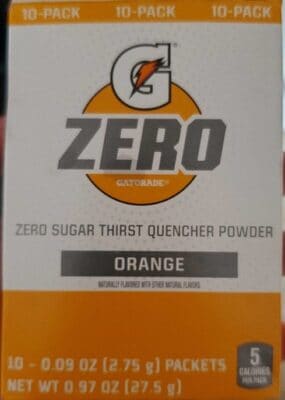
Sweetened beverages
Gatorade Orange zero sugar thirst quencher powder
0.97 oz/27.5 g
Score
- Dye with an EU warning label
- Contains synthetic dyes
- Ultra-processed
- High in salt
- Contains non-nutritive sweeteners
Why it scores 24
Gatorade Orange zero sugar thirst quencher powder scores 24 out of 100 (Poor) under GoodSwap’s published rules. What moved the score most:
- minus 20 points Yellow 6: In the EU and UK, foods with this color must state that it "may have an adverse effect on activity and attention in children". Regulatory
- minus 18 points Ultra-processed (NOVA 4): Classified NOVA 4: made with industrial ingredients and additives. Strong
- minus 9 points Salt 20.5 g / 100 g: Very high in salt. Strong
Every line of the math is on The Receipt below, with its evidence tier and sources.
Better drink mixes and water enhancers
-
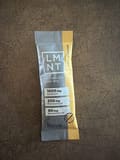 Orange Salt LMNT No EU warning-label dyes · No synthetic dyes Score 66 out of 100 , 42 points higher
 -
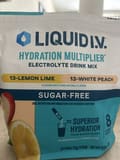 Sugar Free Lemon Lime Liquid I.V. No EU warning-label dyes · No synthetic dyes Score 65 out of 100 , 41 points higher
 -
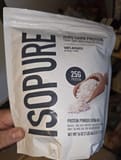 Protein Powder Drink Mix Isopure · 16 oz No EU warning-label dyes · No synthetic dyes Score 73 out of 100 , 49 points higher
 -
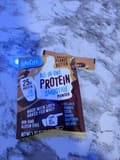 All-In-One Protein Smoothie Powder FlavCity · 46 g No EU warning-label dyes · No synthetic dyes Score 67 out of 100 , 43 points higher
 -
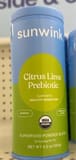 Superfood powder blend Sunwink · 4.2 oz/120 g No EU warning-label dyes · No synthetic dyes Score 76 out of 100 , 52 points higher
The same kind of product, at least 10 points higher, sold in the US. Never paid placements.
The Receipt
Orange zero sugar thirst quencher powder
Ingredients
- Yellow 6 minus 20 points
- Sucralose minus 7.5 points
- Acesulfame potassium (Ace-K) minus 7.5 points
- Potassium phosphate minus 1.5 points
- Modified starch minus 1.5 points
- Maltodextrin minus 1.5 points
- Natural flavors minus 0.5 points
- Silicon dioxide minus 0.5 points
Processing
- Ultra-processed (NOVA 4) minus 18 points
- 6 kinds of ultra-processing markers minus 7.5 points
Nutrition per 100 g
- Salt 20.5 g / 100 g minus 9 points
- Energy 179 kcal / 100 g minus 1 points
100 − 76 = 24
Can’t score above 79. Contains Yellow 6, an ingredient of high concern. [1][2][3][4][5]
Can’t score above 79. High in salt (above the front-of-pack "high" level). [17]
Nutrition per 100 g
| Energy | 179 kcal |
|---|---|
| Fat | 0 g |
| Saturated fat | 0 g |
| Carbohydrates | 71.4 g |
| Sugars | 0 g |
| Added sugars | 0 g |
| Fiber | 0 g |
| Protein | 0 g |
| Salt | 20.5 g |
Serving: 1 packet (2.8 g)
Ingredients
- CITRIC ACID
- SODIUM CITRATE
- SALT
- MONOPOTASSIUM PHOSPHATE
- MODIFIED FOOD STARCH
- MALTODEXTRIN
- SUCRALOSE (moderate concern)
- NATURAL FLAVOR
- SILICON DIOXIDE
- ACESULFAME POTASSIUM (moderate concern)
- YELLOW 6 (high concern)
- TOCOPHEROLS (TO PROTECT FLAVOR)
Label text, as published
CITRIC ACID, SODIUM CITRATE, SALT, MONOPOTASSIUM PHOSPHATE, MODIFIED FOOD STARCH, MALTODEXTRIN, SUCRALOSE, NATURAL FLAVOR, SILICON DIOXIDE, ACESULFAME POTASSIUM, YELLOW 6, TOCOPHEROLS (TO PROTECT FLAVOR).
Allergens and diets
- Palm-oil-free
Always check the package: recipes change.
More sweetened beverages on GoodSwap
-
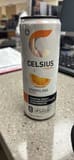 Sparkling Orange Celsius · 12 fl oz (355 mL) Ultra-processedContains non-nutritive sweetenersContains caffeineNo synthetic dyes Score 66 out of 100 Good
 -
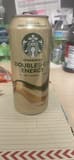 Doubleshot Energy Energy Coffee Beverage Starbucks · 15 oz Ultra-processedContains non-nutritive sweetenersContains added sugarsContains emulsifiers studied for gut effects Score 12 out of 100 Bad
 -
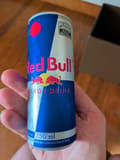 Energy Drink Red Bull · 250 mL Ultra-processedContains added sugarsContains caffeineContains artificial flavors Score 20 out of 100 Poor
 -
 Banana & Almond Butter Protein Smoothie Beverage with Coconut Water & Pea Protein Trader Joe's · 16 fl oz (1 pt) 473 mL Ultra-processed Score 59 out of 100 Okay
 -
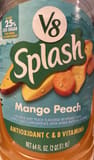 Splash mango peach Campbell's · 64 fl oz Ultra-processedContains non-nutritive sweetenersContains added sugars Score 38 out of 100 Poor
 -
 Pink Drink Starbucks · 14 oz Ultra-processedContains added sugarsContains caffeineNo synthetic dyes Score 39 out of 100 Poor
More from Gatorade

Sources
-
Regulation (EC) No 1333/2008 of 16 December 2008 on food additives
“may have an adverse effect on activity and attention in children.”
eur-lex.europa.eu
-
“may have an adverse effect on activity and attention in children.”
legislation.gov.uk
-
“Artificial colours or a sodium benzoate preservative (or both) in the diet result in increased hyperactivity in 3-year-old and 8/9-year-old children in the general population.”
doi.org
-
Tracking Food Industry Pledges to Remove Petroleum Based Food Dyes
“FD&C Green No. 3, FD&C Red No. 40, FD&C Yellow No. 5, FD&C Yellow No. 6, FD&C Blue No. 1, and FD&C Blue No. 2—by the end of 2027.”
fda.gov
-
California AB 2316 (2024), Pupil nutrition: substances: prohibition
“beginning December 31, 2027, would prohibit a school district, county superintendent of schools, or charter school”
leginfo.legislature.ca.gov
-
Personalized microbiome-driven effects of non-nutritive sweeteners on human glucose tolerance
“As groups, each administered NNS distinctly altered stool and oral microbiome and plasma metabolome, whereas saccharin and sucralose significantly impaired glycemic responses.”
doi.org
-
“Sucralose-6-acetate significantly increased the expression of genes associated with inflammation, oxidative stress, and cancer”
doi.org
-
“EFSA’s experts concluded that the sweetener sucralose (E 955) continues to be safe for consumers for its currently authorised uses as a food additive.”
efsa.europa.eu
-
WHO advises not to use non-sugar sweeteners for weight control in newly released guideline
“The recommendation is based on the findings of a systematic review of the available evidence which suggests that use of NSS does not confer any long-term benefit in reducing body fat in adults or children.”
who.int
-
Dietary Guidelines for Americans, 2025–2030
“Limit foods and beverages that include artificial flavors, petroleum-based dyes, artificial preservatives, and low-calorie non-nutritive sweeteners.”
cdn.realfood.gov
-
Artificial sweeteners and cancer risk: Results from the NutriNet-Santé population-based cohort study
“In this large cohort study, artificial sweeteners (especially aspartame and acesulfame-K), which are used in many food and beverage brands worldwide, were associated with increased cancer risk.”
doi.org
-
Re-evaluation of acesulfame K (E 950) as food additive (plain language summary)
“The acceptable daily intake (ADI) considered safe for all population groups was set at 15 mg/kg body weight (bw) per day.”
efsa.europa.eu
-
EFSA issues new advice on phosphates
“We estimated that dietary exposure to phosphates may exceed the new ADI for infants, toddlers and children with average consumption of phosphates in their diet.”
efsa.europa.eu
-
21 CFR 101.22 Foods; labeling of spices, flavorings, colorings and chemical preservatives
“whose significant function in food is flavoring rather than nutritional.”
ecfr.gov
-
“For adults, WHO recommends less than 2000 mg/day of sodium (equivalent to less than 5 g/day salt), or just under a teaspoon.”
who.int
-
“Table 3: Criteria for drinks (per 100ml)”
assets.publishing.service.gov.uk
-
HHS, FDA to Phase Out Petroleum-Based Synthetic Dyes in Nation’s Food Supply (press release)
“Initiating the process to revoke authorization for two synthetic food colorings—Citrus Red No. 2 and Orange B—within the coming months.”
fda.gov
-
“Greater exposure to ultra-processed food was associated with a higher risk of adverse health outcomes, especially cardiometabolic, common mental disorder, and mortality outcomes.”
doi.org