Breakfast cereals
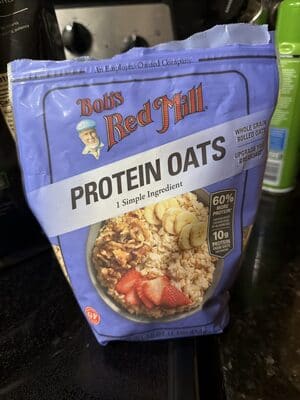
Bob's Red Mill Protein Oats
16 oz
Score
- No additives
- Contains whole grains
Why it scores 100
Bob's Red Mill Protein Oats scores 100 out of 100 (Excellent) under GoodSwap’s published rules. What moved the score most:
- plus 5 points Simple whole food: A few low-concern ingredients, minimally processed. Info
- plus 4 points Fiber 12.5 g / 100 g: A good source of fiber. Strong
- minus 3 points Saturated fat 2.1 g / 100 g: High in saturated fat. Strong
Every line of the math is on The Receipt below, with its evidence tier and sources.
The Receipt
Protein Oats
Nutrition per 100 g
- Saturated fat 2.1 g / 100 g minus 3 points
- Energy 396 kcal / 100 g minus 2 points
- Fiber 12.5 g / 100 g plus 4 points
- Protein 20.8 g / 100 g plus 2 points
Bonuses
- Simple whole food plus 5 points
- No additives plus 3 points
100 + 9 = 100
Nutrition per 100 g
| Energy | 396 kcal |
|---|---|
| Fat | 8.3 g |
| Saturated fat | 2.1 g |
| Trans fat | 0 g |
| Carbohydrates | 66.7 g |
| Sugars | 2.1 g |
| Added sugars | 0 g |
| Fiber | 12.5 g |
| Protein | 20.8 g |
| Salt | 0 g |
Serving: 0.333 cup (48 g)
Ingredients
Label text, as published
WHOLE GRAIN OAT FLAKES.
Allergens and diets
Contains: Gluten
- Vegan
- Vegetarian
- Not gluten-free
- Palm-oil-free
Always check the package: recipes change.
More breakfast cereals on GoodSwap
-
 Grape-Nuts Cereal Post · 20.5 oz (1 lb 4.5 oz) 581 g No additivesContains whole grains Score 93 out of 100 Excellent
 -
 Lightly Sweetened Maple Berry Blend Cereal Morning Summit · 1 box, 2 lb 6 oz High in sugarHigh in saturated fatContains added sugarsNo additives Score 22 out of 100 Poor
 -
 Catalina Crunch Cinnamon Toast Protein Cereal Catalina Crunch · 24 oz Ultra-processedContains non-nutritive sweetenersContains seed oils Score 61 out of 100 Good
 -
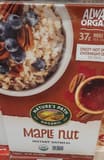 Maple Nut Instant Oatmeal Nature's Path Organic · 8 × 50 g Ultra-processedContains added sugarsCertified organicNo additives Score 38 out of 100 Poor
 -
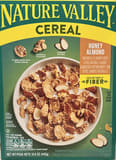 Honey Almond Cereal Nature Valley · 15.6 oz Ultra-processedHigh in sugarContains added sugarsContains seed oils Score 21 out of 100 Poor
 -
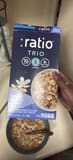 Vanilla Almond Crunch Ratio · 10.4 oz Ultra-processedContains non-nutritive sweetenersContains added sugarsContains sugar alcohols Score 18 out of 100 Bad
More from Bob's Red Mill
-
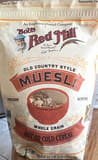 Old Country Style Muesli Bob's Red Mill · 32 g Score 96 out of 100 Excellent
 -
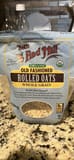 Old Fashioned Rolled Oats Whole Grain Bob's Red Mill · 32 oz (907 g) Score 100 out of 100 Excellent
 -
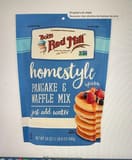 Homestyle Pancake & Waffle Mix - Just add water Bob's Red Mill · 24 oz Score 57 out of 100 Okay
 -
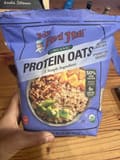 Protein Oats Bob's Red Mill · 32 oz Score 100 out of 100 Excellent
Sources
-
Saturated fatty acid and trans-fatty acid intake for adults and children: WHO guideline
“WHO recommends that adults and children reduce saturated fatty acid intake to 10% of total energy intake (strong recommendation).”
who.int
-
Dietary Guidelines for Americans, 2025–2030
“Limit foods and beverages that include artificial flavors, petroleum-based dyes, artificial preservatives, and low-calorie non-nutritive sweeteners.”
cdn.realfood.gov