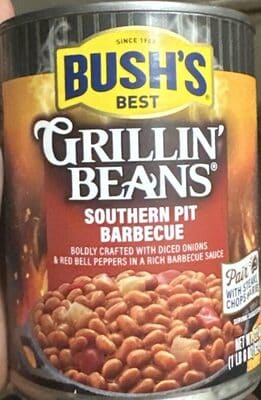
Canned common beans
Bush's Best Grillin' Beans Southern Pit Barbecue
22 oz (624 g)
Score
- Ultra-processed
- Contains added sugars
- No synthetic dyes
Why it scores 29
Bush's Best Grillin' Beans Southern Pit Barbecue scores 29 out of 100 (Poor) under GoodSwap’s published rules. What moved the score most:
- minus 20 points Brown sugar: An added sugar. Strong
- minus 20 points Caramel color: The FDA says classes III and IV, which can contain 4-MEI, are the most commonly used food color additives by volume. Regulatory
- minus 18 points Ultra-processed (NOVA 4): Classified NOVA 4: made with industrial ingredients and additives. Strong
Every line of the math is on The Receipt below, with its evidence tier and sources.
Better baked beans
-
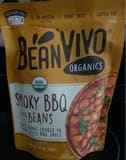 Smoky BBQ Beans Bean Vivo Organics · 10 oz Not ultra-processed · No brown sugar Score 74 out of 100 , 45 points higher
 -
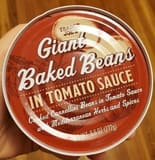 Giant Baked Beans in Tomato Sauce Trader Joe's · 9.6 oz Not ultra-processed · No brown sugar Score 69 out of 100 , 40 points higher
 -
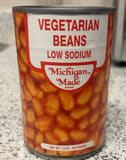 Vegetarian beans Michigan Made · 425 g Not ultra-processed · No brown sugar Score 77 out of 100 , 48 points higher
 -
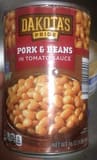 Pork and beans in tomato sauce Not ultra-processed · No brown sugar Score 72 out of 100 , 43 points higher
 -
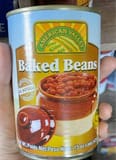 Baked Beans American Valley · 15 oz Not ultra-processed · No brown sugar Score 70 out of 100 , 41 points higher
The same kind of product, at least 10 points higher, sold in the US. Never paid placements.
The Receipt
Grillin' Beans Southern Pit Barbecue
Ingredients
- Brown sugar minus 20 points
- Caramel color minus 20 points
- Modified starch minus 2.5 points
- Natural flavors minus 1.5 points
Processing
- Ultra-processed (NOVA 4) minus 18 points
- 3 kinds of ultra-processing markers minus 3 points
Nutrition per 100 g
- Sugars 11.5 g / 100 g minus 5 points
- Salt 1 g / 100 g minus 3 points
- Fiber 3.8 g / 100 g plus 2 points
100 − 71 = 29
Can’t score above 79. Contains brown sugar, an ingredient of high concern. [1][2][3][4][5][6][7]
Nutrition per 100 g
| Energy | 131 kcal |
|---|---|
| Fat | 0.4 g |
| Saturated fat | 0 g |
| Trans fat | 0 g |
| Carbohydrates | 26.9 g |
| Sugars | 11.5 g |
| Added sugars | 10 g |
| Fiber | 3.8 g |
| Protein | 5.4 g |
| Salt | 1 g |
Serving: 1 serving (130 g)
Ingredients
- Prepared Navy Beans
- Water
- Brown Sugar (high concern)
- Tomato Puree (Tomato Paste, Water)
- Onion
- Red Bell Pepper
- Salt
- Modified Corn Starch
- Mustard (Water, Vinegar, Mustard Seed, Salt, Paprika, Turmeric)
- Garlic Powder
- Natural Flavor
- Paprika
- Spice
- Caramel Color (high concern)
- Natural Smoke Flavor
- Onion Powder
Label text, as published
Prepared Navy Beans, Water, Brown Sugar, Tomato Puree (Tomato Paste, Water). Contains 2% Or Less Of: Onion, Red Bell Pepper, Salt, Modified Corn Starch, Mustard (Water, Vinegar, Mustard Seed, Salt, Paprika, Turmeric), Garlic Powder, Natural Flavor, Paprika, Spice, Caramel Color, Natural Smoke Flavor, Onion Powder.
Allergens and diets
Contains: Mustard
- Palm-oil-free
Always check the package: recipes change.
More canned common beans on GoodSwap
-
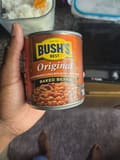 Baked Beans, Original Bush's Best · 16 oz Ultra-processedContains added sugarsNo synthetic dyes Score 23 out of 100 Poor
 -
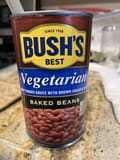 Vegetarian Baked Beans Bush's Best · 130 g Ultra-processedContains added sugarsNo synthetic dyes Score 48 out of 100 Okay
 -
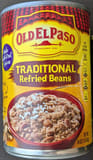 Traditional Refried Beans Old El Paso · 16 oz (1 lb) 453 g Ultra-processedContains added sugarsNo additivesSeed-oil free Score 59 out of 100 Okay
 -
 Maple & Cured Bacon Baked Beans Bush's Best · 130 g Ultra-processedContains added sugarsNo synthetic dyes Score 22 out of 100 Poor
 -
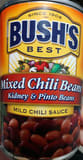 Mixed Chili Beans Bush's · 439 g Ultra-processedContains added sugarsContains seed oils Score 56 out of 100 Okay
 -
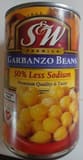 Garbanzos Chick Peas S&W · 15.5 oz/439 g Score 92 out of 100 Excellent
More from Bush's Best
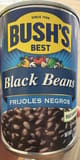
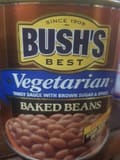
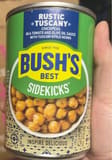
Sources
-
Guideline: sugars intake for adults and children
“In both adults and children, WHO recommends reducing the intake of free sugars to less than 10% of total energy intake”
who.int
-
Dietary Guidelines for Americans, 2025–2030
“Limit foods and beverages that include artificial flavors, petroleum-based dyes, artificial preservatives, and low-calorie non-nutritive sweeteners.”
cdn.realfood.gov
-
Added and free sugars should be as low as possible
“Sugar consumption is a known cause of dental caries.”
efsa.europa.eu
-
Questions & Answers About 4-MEI
“Based on current science, the FDA has no reason to believe that there are any immediate or short-term health risks presented by 4-MEI at the levels expected in food.”
fda.gov
-
Agents Classified by the IARC Monographs, Volumes 1–142 (List of Classifications)
monographs.iarc.who.int
-
Proposition 65 List of Chemicals Known to the State to Cause Cancer or Reproductive Toxicity
“The date refers to the initial appearance of the chemical on the list.”
oehha.ca.gov
-
21 CFR 101.22 Foods; labeling of spices, flavorings, colorings and chemical preservatives
“whose significant function in food is flavoring rather than nutritional.”
ecfr.gov
-
“For adults, WHO recommends less than 2000 mg/day of sodium (equivalent to less than 5 g/day salt), or just under a teaspoon.”
who.int
-
“Greater exposure to ultra-processed food was associated with a higher risk of adverse health outcomes, especially cardiometabolic, common mental disorder, and mortality outcomes.”
doi.org